John Gryphon
Well-Known Member
In a bizarre and startling incident, an 88-year-old man caused a partial evacuation of a hospital in Toulon, France, after arriving with a World War I artillery shell lodged in his rectum. The elderly patient sought medical help to remove the antique explosive, creating an immediate safety concern for staff and other patients. Hospital officials acted swiftly, calling in bomb disposal experts as a precaution and temporarily clearing sections of the facility. Fortunately, after careful examination, the experts determined that the shell posed little risk of detonation, allowing medical personnel to proceed with treatment.
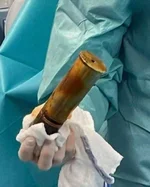
The object, nearly eight inches long and over two inches wide, required surgical removal. The operation was delicate due to the size of the shell and the potential danger it represented. Medical staff successfully removed the shell, and the patient is now recovering in good health. While unusual objects in the rectum are not unheard of, ranging from everyday items to novelty objects, the discovery of a live or antique artillery shell is extraordinarily rare and posed an unprecedented challenge to the surgical and safety teams involved.
Doctors speculated that the shell had been inserted for sexual gratification, an explanation consistent with other reported cases of foreign bodies in the rectum. One physician commented on the incident, noting that while hospitals occasionally encounter objects like fruit, cans, or household items, the arrival of a military-grade shell was unprecedented. The event drew attention not only for its medical complexity but also for the logistical challenges of ensuring hospital safety while attending to a highly unusual emergency.
This extraordinary case serves as a reminder of the unexpected situations that medical professionals can face. Beyond the shock and humour of the situation, it highlights the careful coordination required between surgical teams and safety experts when dealing with potentially hazardous foreign objects. The patient’s successful recovery underscores both the resilience of the human body and the skill of medical teams in managing unusual and high-risk scenarios.
The object, nearly eight inches long and over two inches wide, required surgical removal. The operation was delicate due to the size of the shell and the potential danger it represented. Medical staff successfully removed the shell, and the patient is now recovering in good health. While unusual objects in the rectum are not unheard of, ranging from everyday items to novelty objects, the discovery of a live or antique artillery shell is extraordinarily rare and posed an unprecedented challenge to the surgical and safety teams involved.
Doctors speculated that the shell had been inserted for sexual gratification, an explanation consistent with other reported cases of foreign bodies in the rectum. One physician commented on the incident, noting that while hospitals occasionally encounter objects like fruit, cans, or household items, the arrival of a military-grade shell was unprecedented. The event drew attention not only for its medical complexity but also for the logistical challenges of ensuring hospital safety while attending to a highly unusual emergency.
This extraordinary case serves as a reminder of the unexpected situations that medical professionals can face. Beyond the shock and humour of the situation, it highlights the careful coordination required between surgical teams and safety experts when dealing with potentially hazardous foreign objects. The patient’s successful recovery underscores both the resilience of the human body and the skill of medical teams in managing unusual and high-risk scenarios.