The future is electric

Agreed, and I did say earlier in this thread that the current crop of evs are a poor choice for travelling sales/service people racking up big annual mileages.
However, and with no disrespect, there are fewer and fewer non HGV drivers who drive the sort of annual mileages that you do because much sales work is now done over the internet.
I have accounts with a lot of companies, many of whom had travelling salesman who visited me at least a couple of times every year.
That just doesn't happen now, with all sales work being done by telephone or internet
For all those people with daily commutes of less than 100 miles, there are plenty of evs already on the market (and many more coming) that will do the job just fine.

Cheers

Bruce
No, it sounds like a compliment Bruce. Maybe true in your industry but not in mine. As an industry we tried telesales but they largely stopped. Why, because sales is about relationships and its not possible to have a relationship with a phone or screen and our customers and their customers want and need boots on the ground. Even regional sales guys will do more than 100 miles a day and require overnight stops. The infrastructure is not anywhere close to being ready for the huge demand that will be required if we switch. In the meantime we are sitting targets for the government when there is no real substitute.
This was confirmed when I watched Guy Martin drive from Yorkshire to the top of scotland and back in the latest Hyundai. 27 hours and cost more than the diesel equivalent. Not enough charging stations, full plug in points or points that weren't working. The whole thing is half baked and half cocked
 
A quoted 35 miles on EV would be very handy for the locals runs, and the highly exaggerated 260 mpg would probably be 50% less, I could live with that. It was quick, smooth and very quiet, packed to the hilt with spec……..But £42600! I am sure I have ever had a bigger smile on my face after the two hour drive. So, being able to charge at home, and with a handy 1.6 turbo petrol engine to fall back on, I cannot see any minus points tbh. It was a superb driving experience, so who knows! 🤔🤔🤔

...

Edit: Having a Plug In Hybrid, and never plugging it in……..Is bloody ridiculous!
You might want to check the tech. spec and take a realistic view before committing. Or a longer test drive, a good dealer should let you have it for a day, and do a brim-brim mpg measurement over a couple of 100 miles of your usual sort of driving.

From Hyundai EU website: TUCSON Hybrid

The TUCSON Hybrid is equipped with both a petrol engine and an electric motor: a so-called full-parallel hybrid drive system. They work together with the support of a 1.49 kWh lithium-ion polymer battery to deliver maximum efficiency and inspiring performance. The hybrid powertrain switches seamlessly between the petrol engine and the electric motor – sometimes utilizing both at the same time.

Fuel consumption (combined test cycle) for the Hyundai TUCSON Hybrid 1.6 litre T-GDi 4WD in l/100 km: 6.6 - 5.2; CO2 emissions (combined test cycle) in g/km: 149 - 140 (WLTP). All WLTP-Values here.


6.6 to 5.2 l/100 km is between 35.6 and 45.2 mpg. That might be what you could realistically expect. It's certainly what I would.

The electric motor is 44.2 kW (60 PS). The combined total with the 1.6 petrol engine is 230 PS. Therefore the petrol engine can deliver 170 PS, which is about right for a modern petrol engine of that capacity. And, I'd suggest, perfectly adequate alone, for an SUV of that sort of size. The usual state of tune for that engine is 150 PS.

Not the 265 hp that you stated, which bemused me. 230 PS is 226 hp. And could maybe do so for 2 minutes total. Before the battery gets charged up again by the ICE engine, and/or some regenerative braking. As for running it on the battery alone, 1.49 kWh isn't going to get you much further than six miles. I can't see how they could credibly claim that you could get 31 miles from it.

Now I may be wrong about the battery size in the one you are considering. For example the Prius plugin has a 4.4 kWh battery, (which weighs 80 kg), and can run it around for 30 miles or so, their figures. That presumes nearly 6.8 miles/kWh. On that basis a 1.5 kWh battery might be good for ten miles, under laboratory conditions.

A hybrid also carries around the ICE engine, fuel tank, plus the electric motor and other drivetrain complexities.

Perhaps yours will have a battery of similar size, rather than the puny 1.49 kWh thing that is what Hyundai seem to say that they have. There doesn't seem to be a lot of point in plugging them in, though a 13A plug could fill 1.5 kWh in 30 minutes, or 4.4 kWh in 1.5 hours. Hence why they don't generally do rapid charging. Plus faffing about with cables (on your driveway), assuming that they were fully discharged, which the hybrids try not to let themselves be, in real driving around.

PHEVs ISTM, are a dead end.

FWIW, the Tesla 3 battery, long range version that my friends drive, weighs 480 kg.

Whereas ten gallons of diesel weighs about 36 kilos, and can get me about 450 miles at fast motorway speeds. My 3.5 tonne 6m long campervan has a 125 litre tank, and has several times done well over 800 miles before the light came on, in insanely hot weather (over 40 C) with the massive aircon running full blast.

And of course a fuel tank diminishes in weight as it runs down, say on average half of that. And you don't need to brim them unless planning a long run. Batteries weigh just the same, whether they are full or empty, and in a hybrid you are committed to lugging around all that extra mass, whether it is put to any useful purpose, in reality.

My Tesla driving chums do note that they have to moderate their driving to get the expected range, on A and M roads. Strangely they can get more range on their hillier cross country drives, where average speeds are lower, and the regenerative braking averages the use out, but that makes sense when you think about it.

So I looked at Autocar:

Where I read that The 227bhp full-hybrid improves on these figures significantly, approaching an average of almost 50mpg and emitting 127g/km of CO2

FWIW my old 2.0 140 hp VW diesel can do 50 mpg. and with a chipping could put out 180 hp. with no other mods, but I don't see the point myself. It can do 130 mph as it is, and I have never felt underpowered.
 
A problem which has just occurred to me is this:
The whole decarbonising the electricity grid and transition to EVs relies heavily on being able to balance the electricity grid by using EVs as electricity storage to extract power from when it is dark/not windy etc.
This mechanism presumes that everybody will keep their EVs plugged in all the time.
I don't think that using plugged in EVs to balance the grid is in any way going to be a thing. A few pilot demonstrations have been done to show that the technology might work (if the EVs were reconfigured to be able to discharge out of their connectors, which is not the case at the moment), but obviously nobody is going to want their EV batteries degraded by such fanciful ideas, never mind worrying about finding that they aren't charged up as much as they expected, the next morning.

Besides, I don't expect many EVs that are actually in use, will be plugged in during the daytime, which is when the peak demand occurs.

What may well happen is that smart metering will ration the power during overnight charging. Ideally to minimise the cost to the consumer, but that would presuppose rapid charging for the few hours when the power is cheapest/most available. Or simply to balance the grid. I think that Octopus Energy for one are experimenting with that concept, but even they say that it is for grown ups who understand the risks/benefits, and are prepared to make their own decisions using their app etc. monitoring almost continuously through the day.

If it was simpler, e.g. just enter your required amount when plugged in overnight, say, I need to drive 150 miles tomorrow, and set off at 06:30, do your thing but don't disappoint me. Oh, I would like it to be entirely from renewable sources, but if that can't be done, my priority is to have the car sufficiently powered up for the coming day. For the rest of the week, 50 miles/day will do. Make it so.

But really, who's going to do that, we just want things to work.
 
The days of cheap electricity will be a rapidly receding prospect in the rear view mirror when the government decide to top up the by then dwindling hydrocarbon receipts with the new tech.
 
I have noticed since seeing Teslas on European roads they seem to be driven softly like a girls first Corsa/Fiestas rather than the Audi A6s hammering off to another meeting flash/flash etc.
 
Interesting numbers.
A friend of mine has a Mitsubishi Outlander PHEV and he lives in a small town in rural Aberdeenshire.
His daily journeys are typically less than 20 miles and he easily does that in pure ev mode.
When he is at home, the car is plugged into a standard 13 amp wall outlet
The Outlander has a 13kwh battery so even at a 2 kw charge rate the car is always fully charged every morning.
The trick with electric vehicles is as easy as ABC
ALWAYS
BE
CHARGING

Cheers

Bruce
 
Mild hybrids/soft hybrids/self charging hybrids - whatever you want to call them will improve fuel consumption when driven in cities because they switch themselves off when stopped and start up in electric drive mode when moving off.
They have small battery packs (0.5- 2kwh) and have virtually no pure ev range - generally less than 1 mile
I owned a Lexus RX400H for over 10 years and now own a Lexus RX300H and, for the size of their petrol engines, their fuel consumption is acceptable - but nothing like as good as a diesel.
However, I didn't buy Lexus hybrid cars because they were hybrids - I bought them because of Lexus build quality and reliability
Having said that, the RX400H was quick when both electric motors kicked in to help the 3.3 litre V6 petrol engine
In fact the 400 in the RX400H name was to indicate that the total power output was equivalent to a 4 litre engine.

Cheers

Bruce
 
Interesting getting another point of view/experience Bruce. I drive an ES300 and I agree, the comfort, reliability and build quality with a Lexus is superb. However, I hate the engine and transmission ( CVT ) The one Chris Harris described as " Makes your car sound like a cow giving birth " Enough to make me not get another.
 
Interesting - lots of people dislike CVTs
Personally I like them - well, the Toyota/Lexus CVT anyway - the Nissna CVT is a feckin total disaster
I like the continuous push when accelerating hard - no stutters as the gears change.

Cheers

Bruce
 
You might want to check the tech. spec and take a realistic view before committing. Or a longer test drive, a good dealer should let you have it for a day, and do a brim-brim mpg measurement over a couple of 100 miles of your usual sort of driving.

From Hyundai EU website: TUCSON Hybrid

The TUCSON Hybrid is equipped with both a petrol engine and an electric motor: a so-called full-parallel hybrid drive system. They work together with the support of a 1.49 kWh lithium-ion polymer battery to deliver maximum efficiency and inspiring performance. The hybrid powertrain switches seamlessly between the petrol engine and the electric motor – sometimes utilizing both at the same time.

Fuel consumption (combined test cycle) for the Hyundai TUCSON Hybrid 1.6 litre T-GDi 4WD in l/100 km: 6.6 - 5.2; CO2 emissions (combined test cycle) in g/km: 149 - 140 (WLTP). All WLTP-Values here.


6.6 to 5.2 l/100 km is between 35.6 and 45.2 mpg. That might be what you could realistically expect. It's certainly what I would.

The electric motor is 44.2 kW (60 PS). The combined total with the 1.6 petrol engine is 230 PS. Therefore the petrol engine can deliver 170 PS, which is about right for a modern petrol engine of that capacity. And, I'd suggest, perfectly adequate alone, for an SUV of that sort of size. The usual state of tune for that engine is 150 PS.

Not the 265 hp that you stated, which bemused me. 230 PS is 226 hp. And could maybe do so for 2 minutes total. Before the battery gets charged up again by the ICE engine, and/or some regenerative braking. As for running it on the battery alone, 1.49 kWh isn't going to get you much further than six miles. I can't see how they could credibly claim that you could get 31 miles from it.

Now I may be wrong about the battery size in the one you are considering. For example the Prius plugin has a 4.4 kWh battery, (which weighs 80 kg), and can run it around for 30 miles or so, their figures. That presumes nearly 6.8 miles/kWh. On that basis a 1.5 kWh battery might be good for ten miles, under laboratory conditions.

A hybrid also carries around the ICE engine, fuel tank, plus the electric motor and other drivetrain complexities.

Perhaps yours will have a battery of similar size, rather than the puny 1.49 kWh thing that is what Hyundai seem to say that they have. There doesn't seem to be a lot of point in plugging them in, though a 13A plug could fill 1.5 kWh in 30 minutes, or 4.4 kWh in 1.5 hours. Hence why they don't generally do rapid charging. Plus faffing about with cables (on your driveway), assuming that they were fully discharged, which the hybrids try not to let themselves be, in real driving around.

PHEVs ISTM, are a dead end.

FWIW, the Tesla 3 battery, long range version that my friends drive, weighs 480 kg.

Whereas ten gallons of diesel weighs about 36 kilos, and can get me about 450 miles at fast motorway speeds. My 3.5 tonne 6m long campervan has a 125 litre tank, and has several times done well over 800 miles before the light came on, in insanely hot weather (over 40 C) with the massive aircon running full blast.

And of course a fuel tank diminishes in weight as it runs down, say on average half of that. And you don't need to brim them unless planning a long run. Batteries weigh just the same, whether they are full or empty, and in a hybrid you are committed to lugging around all that extra mass, whether it is put to any useful purpose, in reality.

My Tesla driving chums do note that they have to moderate their driving to get the expected range, on A and M roads. Strangely they can get more range on their hillier cross country drives, where average speeds are lower, and the regenerative braking averages the use out, but that makes sense when you think about it.

So I looked at Autocar:

Where I read that The 227bhp full-hybrid improves on these figures significantly, approaching an average of almost 50mpg and emitting 127g/km of CO2
FWIW my old 2.0 140 hp VW diesel can do 50 mpg. and with a chipping could put out 180 hp. with no other mods, but I don't see the point myself. It can do 130 mph as it is, and I have never felt underpowered.
May I respectfully suggest you read my post, Hyundai Tucson Plug In Hybrid, and then check your inaccurate stats again, for instance the BHP IS 265 (Auto Express), NOT 230 as you state, the Electric motor IS 66.7 Kw, not as you say, 44.2. Where did you get your battery stats from! It is 13.8 kWh NOT 1.49 as you stated.

As for “Faffing” about on my driveway! What faffing about, I could plug a vehicle into the external socket on the side of my garage, all the way to my parked car, all 2 meters of it, in about 20 seconds. Quicker if I get a 7kw set up.

I have no dog in the fight, I am still an ICE head, I have two! But please get your stats right: Hyundai Tucson 1.6 TGDi Plug-In Hybrid Ultimate 4WD Auto.

FWIW, my 2.0 VW Tiguan, 2019, very, very rarely gets above 40mpg, commonly around 36/37mpg, and the drive, comfort and spec is not in the same league. Granted the Tucson I have look at and tested is £42600! But if I was worried about that…….I would not have tested it! 👍
 
In terms of battery size and electric motor size, the Tucson hybrid and Tucson PLUG IN hybrid are very different vehicles
Hybrids typically have batteries of less than 2kwh, while plug in hybrids typically have batteries of 10-15kwh
In a hybrid, the electric motor can only drive the vehicle at low speeds (less than 20-30mph) and for very short distances (less than 1 mile)
Plug in hybrid vehicles operating in ev mode can drive the vehicle at up to motorway speeds for up to 30 miles
Hence the need for bigger batteries and more powerful electric motors.
For comparison, a pure ev would typically have a battery of at least 50kwh and probably somewhere between 60-80kwh

Cheers

Bruce
 
Interesting - lots of people dislike CVTs
Personally I like them - well, the Toyota/Lexus CVT anyway - the Nissna CVT is a feckin total disaster
I like the continuous push when accelerating hard - no stutters as the gears change.

Cheers

Bruce
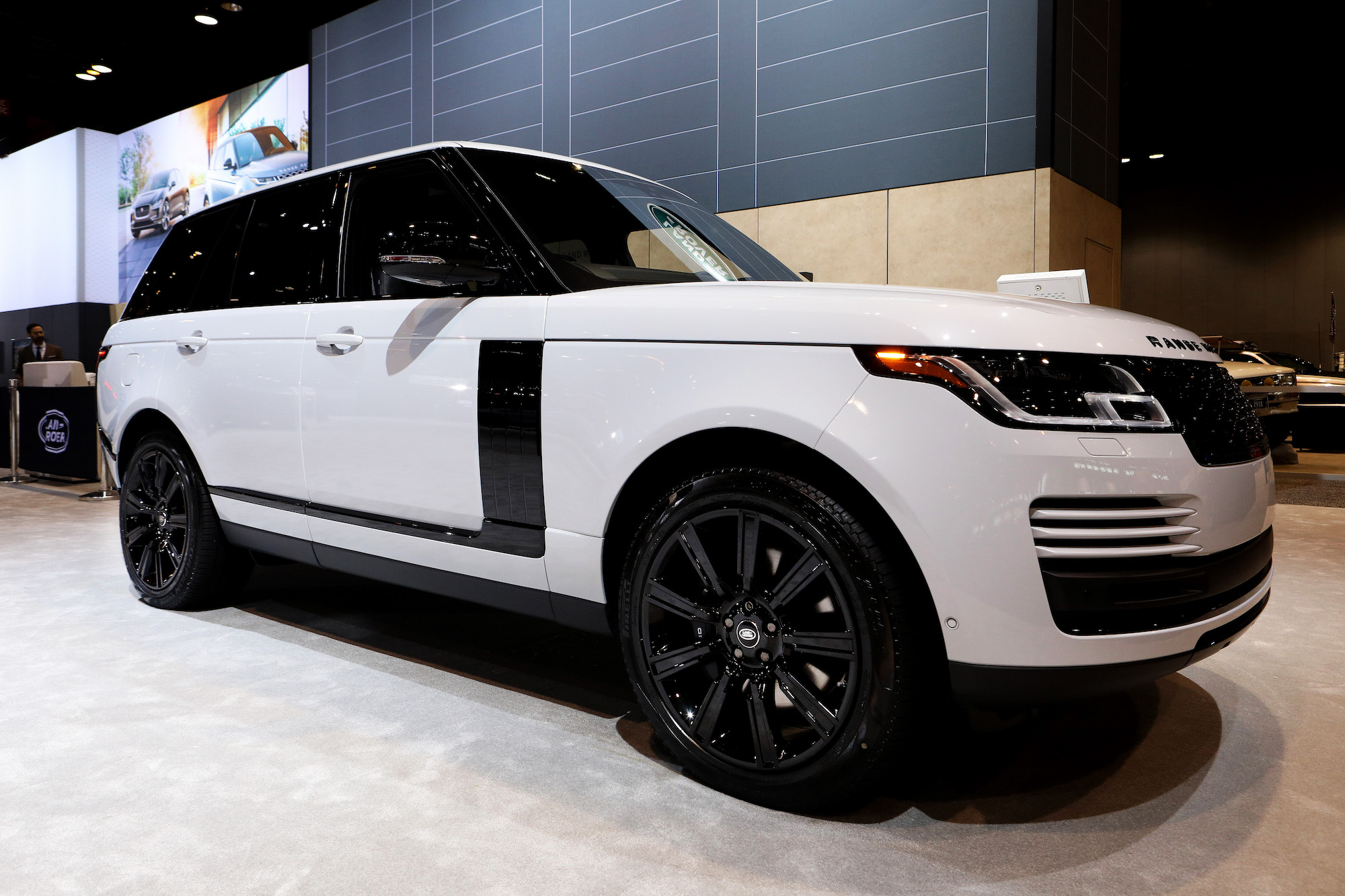
Just like a supercharged rangie then?
 
No, because unlike RangeRovers, Lexus don't break down :lol:
The Lexus RX has won or is in the top three in the JD power reliability survey every year for as long as I can remember
Yet again in 2021, Range Rover came last in the same survey

Cheers

Bruce
 
May I respectfully suggest you read my post, Hyundai Tucson Plug In Hybrid, and then check your inaccurate stats again, for instance the BHP IS 265 (Auto Express), NOT 230 as you state, the Electric motor IS 66.7 Kw, not as you say, 44.2. Where did you get your battery stats from! It is 13.8 kWh NOT 1.49 as you stated.

As I said, I was uncertain whether I had got my facts correct. It turned out that I was quoting the Tucson Hybrid specs, not the plug in version. Sorry for any confusion.

Having looked again, I see that, for the plug in the battery has been increased from 1.49 kWh to 13.9 kWh and the electric motor increased from 44.2 kW (60PS) to 66.9 kW (91 PS).

Interestingly, I observe from the Autocar review Hyundai Tucson Ultimate Plug-in Hybrid 2021 review | Autocar that the extra mass of the big battery has actually reduced the performance compared with the plain hybrid.

In terms of straight-line performance, the Tucson PHEV pays the price for this, with a 0-62mph time of 8.6sec compared to the 7.7sec of its 227bhp full-hybrid sibling.

In the real world I would expect it to be a nicer drive, with the extra 31 PS from the motor, requiring less full power use of the petrol engine. With the benefits of the up to 31 miles of EV range.

It sounds like a well balanced setup that clearly will suit you.

I still think that the mpg figures stated for the plain hybrid might be indicative of what you might see from the heavier plugin though, on longer journeys where petrol power dominates. And of course your electric charging power is not usually free.

At the moment my off-peak electricity costs me 10.8p/kWh (peak rate is 28.4p). Assuming maybe 80% overall efficiency in charging, I reckon that those 31 miles from 13.9 kWh might cost £1.88 off peak, or £4.94 on peak rate electricity. A useful saving using off peak, but hardly much different from petrol costs if you had to use peak rate electricity to top it up, or pay to use a public charger at similar rate.

Basically driving your PHEV in battery only mode seems to require 0.45 kWh per mile. 2.23 miles/kWh.

By contrast, a Tesla 3 Long Range has a 75 kWh battery and a range of 360 miles. Making it 4.8 miles/kWh, which my friends confirm is genuinely achievable in all except 70mph motorway driving, and even then rarely less than 4. And it gets from 0-60 in 4.2 seconds.

So, at 75 kWh, 360 miles, 80% charging efficiency, 10.8p/kWh, it costs £10.13 to do 360 miles. With petrol at say £1.45/litre, £6.60/gallon, that would buy you 1.54 gallons of petrol. Making it the equivalent of 234 mpg. Which is why my friends with them drive them a lot, the electricity costs are almost insignificant for them, less than 3p/mile. And that's before you switch to an EV charging tariff, which might be just 5p/kWh.

As well as enjoying the lower maintenance and simplicity. A quite different sort of vehicle than an SUV of course.

I do find the theory fascinating, but the current plan is to phase out new PHEV production at the same time as ICE, in ten years time. It will be interesting to see how that progresses.
 
And transported to the UK on either a dirty great big oil burner, or a yacht skippered by St Greta's followers, I'm guessing the former.
With EU regulation and growing concerns over sustainability I doubt very much it will be a made in China vehicle. Perhaps a Chinese car but it will be built in Europe
 
MG was sold to the Chinese then they took down the Bromsgrove factory and rebuilt it somewhere in China, now I see lots of MG pseudo suvs being driven around in the UK and they must be imported from China.
 
MG was sold to the Chinese then they took down the Bromsgrove factory and rebuilt it somewhere in China, now I see lots of MG pseudo suvs being driven around in the UK and they must be imported from China.
For now perhaps. But they’ll be met with tariffs impacting price. Imports are of course are allowed to exist but EU regulations will build in protectionist policies to keep EU manufacturing alive and well. Obviously a threat though no doubt but just not ruling out a 130 years of European made vehicles 😁
 
MG was sold to the Chinese then they took down the Bromsgrove factory and rebuilt it somewhere in China, now I see lots of MG pseudo suvs being driven around in the UK and they must be imported from China.
Yes, the MGs are all imported from China. And very competitively priced.

From Autocar:

Today’s company is Chinese-owned MG Motor, a subsidiary of the seven-million-sales-a-year Chinese mass manufacturer SAIC, which acquired both the iconic British brand and its ex-BL, ex-Rover Longbridge manufacturing plant in 2007 and built cars in small numbers there until 2016. Nowadays, SAIC makes 750,000 MG-badged cars for sale around the world and every UK-sold MG is imported from China by MG Motor UK, a sales company with headquarters on Marylebone Road in central London.

They make the MG HS plug in hybrid version, New MG HS plug-in hybrid arrives with 32-mile electric range | Autocar

For a roundup of all the PHEVs currently available in the UK, see Which PHEV to buy? Every plug-in hybrid on sale in the UK | Autocar There a quite a variety.

Outcome and response to ending the sale of new petrol, diesel and hybrid cars and vans is worth studying too. I understand that PHEVs that are capable of travelling a significant distance purely on battery should be allowed to be sold until 2035, but what that distance might be has not been agreed yet. As to whether any of the current crop might meet that requirement, once it is set, who knows ?

Another interesting viewpoint: Once ‘green’ plug-in hybrid cars suddenly look like dinosaurs in Europe

Also see As Cars Go Electric, China Builds a Big Lead in Factories It makes North American predicted progress look pretty poor, but of course it is only a projection, based on announced plans.

I wouldn't be surprised to see some European manufacturers increasingly tying up with e.g. Chinese manufacturers to make their products, they have to to remain competitive, when production costs are so much higher here. It is a global business, with a long history of alliances and moving production about to optimise labour costs and political trade barriers. But I do see Europe, within which I include the UK, continuing to being well advanced in the design side, everyone having been woken up by the disruptive technology of Tesla, which has been quite revolutionary.

1639146283888.png
 
SAIC - who own the MG brand and manufacture MG cars in China - is also in partnership with GM and VW
Basically, the GM and VW vehicles sold in China are made by SAIC and some of those Chinese built GM cars are being sold in the USA.
If you want to know what's happening in the Chinese ev market and how it's going to affect UK/EU/USA markets, you should be watching this guy

Cheers

Bruce
 
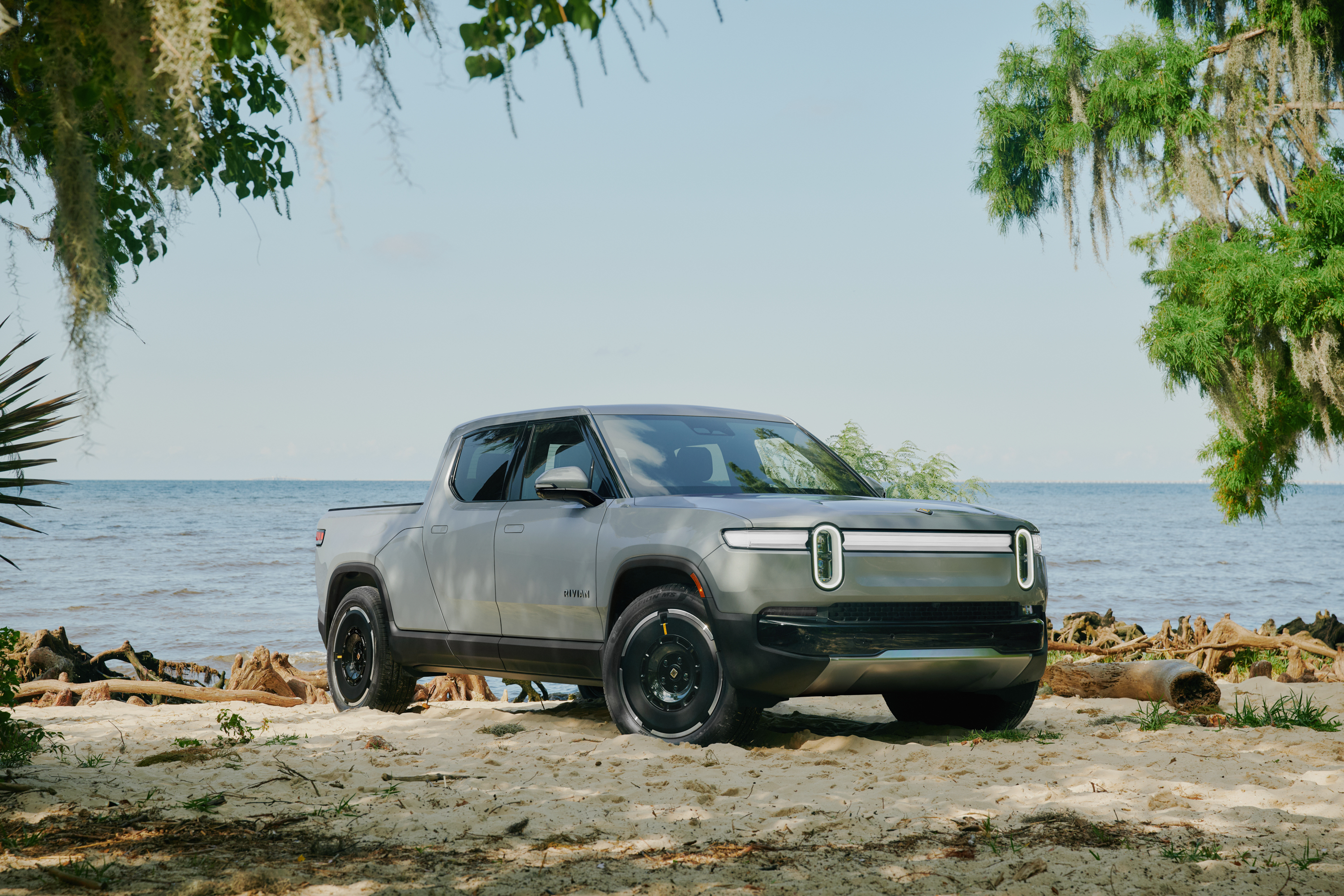
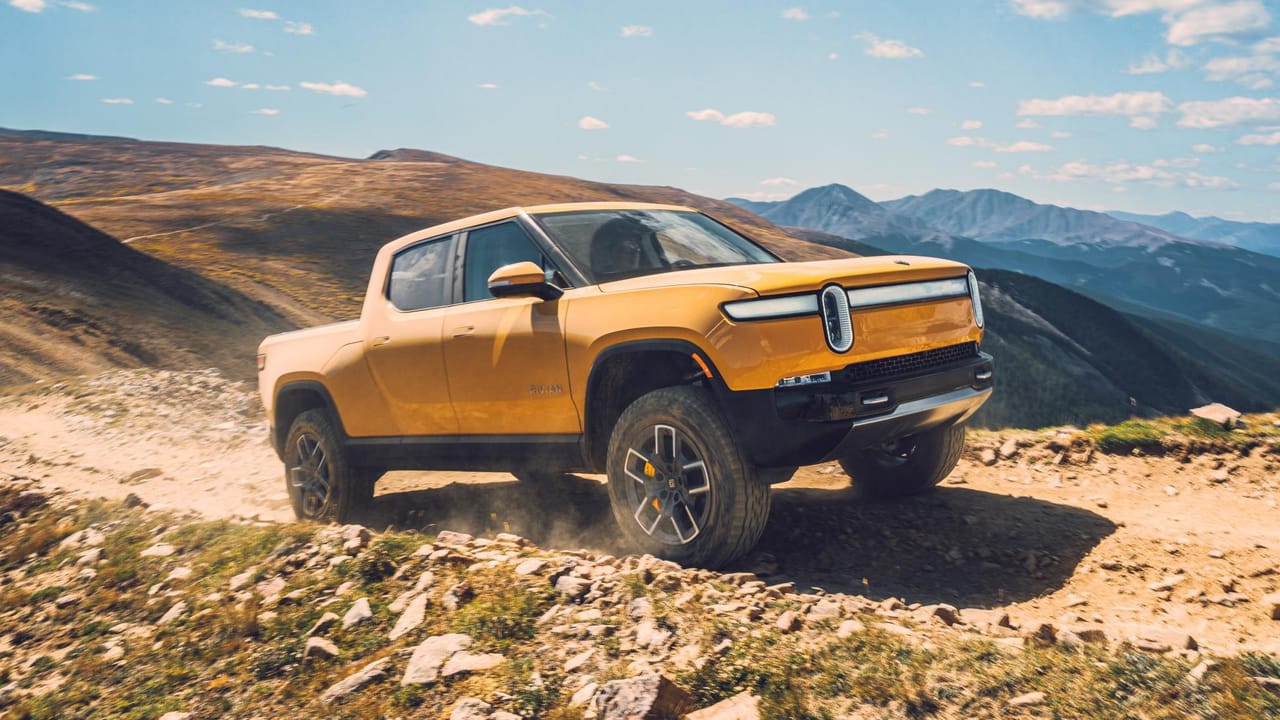
May not be what you want, but I want one of these US made EV utes or the SUV version:


Note that US range tests are more stringent (ie lower range estimate) than EU/UK. Recent reports indicate UK government trying to entice them to build a factory in UK:

It has 4 independent engines - one on each wheel - so is fully off-road capable. Get’s generally great reviews. Driving range looks pretty good c. 70mpg-e

Range, Charging, and Battery Life​

When the R1T hits the market, it will be available with just a 135-kWh battery pack, capable of delivering a claimed driving range of 300 miles. A larger 18o-kWh pack is also available and Rivian says it is capable of around 400 miles per charge.

Fuel Economy and Real-World MPG​

The R1T is one of the first electric pickup trucks to receive a fuel economy rating from the EPA. Fuel economy ratings for the R1T are 74 MPGe city, 66 MPGe highway, and 70 MPGe combined. When the R1T finally hits the market, we hope to have the opportunity to test it on our 75-mph highway fuel economy route and when we do we'll update this story with results. For more information about the R1T's fuel economy, visit the EPA's website.
 
Back
Top