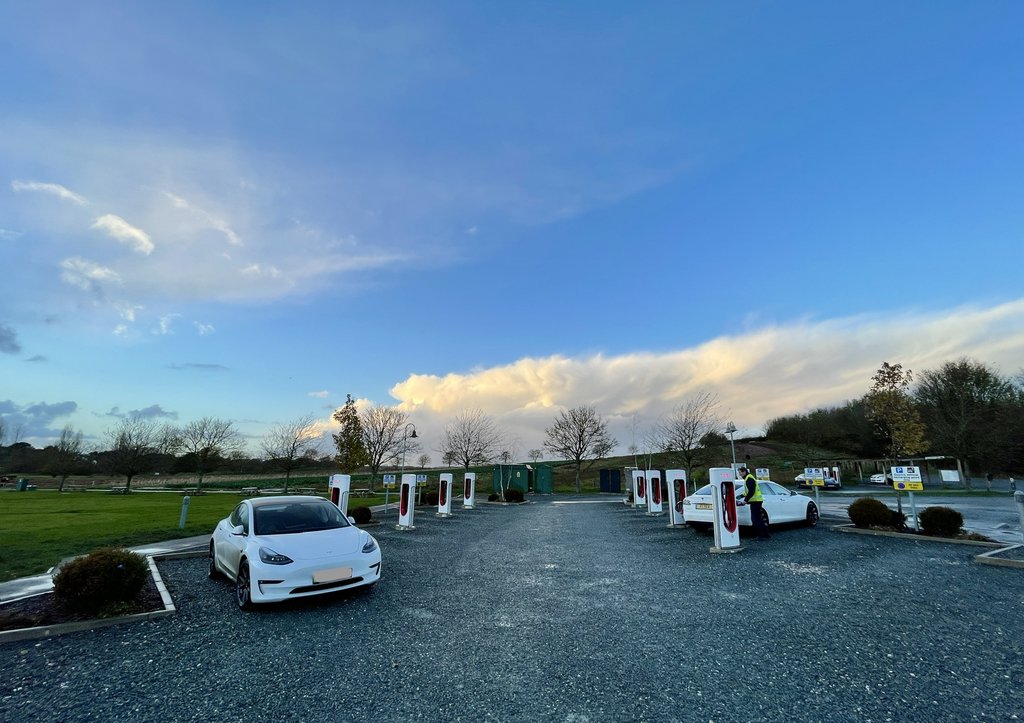
The future is electric

Enthusiasts frequently hold up Norway as an example of the viability of battery EVs. Electric cars are now the majority of new cars in Norway.
However this ignores many of the important factors at play. In Norway there is a strong tax incentive to do this. The majority of EVs are second cars and only a minority used daily, so owners are not switching away from the superior capabilities of normal cars.
Also there are important differences in the electricity sector. In the UK it is twice as expensive, and Norwegians use five times as much electricity as us. They have a structural surplus of capacity, much of which is instantly switchable and carbon free. We have the opposite situation and no credible prospect of having a supply as extensive, cheap and reliably predictable as Norway in the next 50 years.
 
Perhaps we should be using the dwindling fossil fuels to be creating dams by building up the valley sides into Norway style high lakes to enable hydro power in the future, think wet Wales. Brummies get their water from Wales so why not pass it through a turbine blade or two on the way from that reservoir?
 
  • Like
Reactions: ejg
Driving back from Scotland in late October this year, I stopped to top up the tank on my Isuzu truck. I have the 1.9 engine, very economical for the truck size and I have had Isuzu trucks since before 2007.

The EV outlets at the services just inside Scotland were packed. There is a bank for Tesla cars, all of which were in use. There was one other point available a little way off, which I assume was for all other EV. I am aware that these points are not generic.

God knows how long I would have had to wait to re charge.

Whilst I agree EV vehicles have a place, mostly in big cities and towns. I fail to see how we are going to go full electric in years to come. Besides we were all told that diesel vehicles were clean and the best to use a few years back. Somehow I think we are being led up a long garden path. Hydrogen seems a better way to go to me.

Cant wait to see how they are going to get over ships run on diesel. Especially these huge tankers.
 
Don't get me wrong and think that I am totally anti EV because I believe that electric vehicles have their place, but I don't think that they are the answer to everyone's transport needs and certainly not my own.

For the past 35 years we have regularly travelled from Monmouthshire (SE Wales) to Gwynedd (NW Wales) a total one way distance of 181 miles door to door by the shortest and quickest route through mid Wales. There are several alternatives but there is no good route for this journey. Journey times can vary from the usual 4 hours 15 minutes up to 6 hours depending on traffic and road conditions/weather. We normally stay overnight or even for a couple of nights in North Wales but because of commitments have had to make the return journey the same day on several occasions in recent years. In the past we often travelled with family along with luggage and the dogs too, and can travel by car for the cost of half a tank of diesel, slightly more if we have to travel around while in North Wales. So say roughly £40 - £50.
The rail fare for one person would be more than this, and the journey time 5 plus hours if the trains have no delays.
There is no direct bus service between the two locations so the bus route is slightly convoluted and would take nearly 10 hours to complete (one way).

I'm not sure that there is an electric car that can do this journey on a fine day without the need to recharge especially as it is uphill and down dale all the way. Often it has been raining for the entire journey and cold too, no doubt this would have an effect on battery usage. Public use electric charging points in mid Wales are extremely scarce, even fewer than petrol stations and they can be hard enough to come across, hence I always set out with a full tank of fuel enough for my return journey. If we did have to recharge half way through Wales it would be in a remote location with nothing to amuse us while we waited for the battery to have enough wiz to get us to our destination. That is if the recharge point was actually functioning in an area where radio reception and mobile phone reception is somewhat patchy at best.

So for the foreseeable future I can see me sticking to diesel. That's not to say that I wouldn't change to another fuel at some time, hydrogen looking quite promising especially if you look at the development work that JCB have done plus a second electric car for shorter journeys or travelling through urban areas.
 
Cant wait to see how they are going to get over ships run on diesel. Especially these huge tankers.
The latest cruise liners are fueled by Liquified Natural Gas. However they have their range limitations at present as there isn't the refueling infrastructure in place to support them.
 
Many of the posts in this thread highlight the shortcomings of evs, and I agree with some of them.
evs are NOT a solution for every driving situation and are unlikely to be so for a long time to come.
However, they are a perfectly viable solution for a large part of the population.
i.e the large majority that doesn't fish or shoot or live in the boonies
The UK government had said that no new purely ICE cars and light commercials (that include picks ups) can be sold from 2030.
Plug in hybrid vehicles with a minimum of 70 miles zero emission range can be sold until 2035, but after that date, NO new ICE powered cars and light commercial vehicles can be sold
It is accepted that, with present technology, forcing HGVs to become zero emission is not economically feasible (although it will come eventually)
The UK is not alone in this movement away from ICE powered vehicles
Europe and Norway have similar or even stricter plans in place.
As for manufacturers of cars and light commercials - do you think they will be making ICE powered vehicle for the UK market right up until 31 December 2029.?
Of course not, and dealers won't want new ICE powered cars and light commercials sitting on their forecourts on 31 December 2029
That means the supply of new ICE cars and light commercials is going to dry up and be replaced by pure evs and some PHEVs some considerable time before 1 January 2030.
If you want to have an reasonably new ICE pick up in decent shape on 1 January 2030 then you'd better be buying it no later than 5 or 6 years from now.

Cheers

Bruce
 
Many of the posts in this thread highlight the shortcomings of evs, and I agree with some of them.
evs are NOT a solution for every driving situation and are unlikely to be so for a long time to come.
However, they are a perfectly viable solution for a large part of the population.
i.e the large majority that doesn't fish or shoot or live in the boonies
The UK government had said that no new purely ICE cars and light commercials (that include picks ups) can be sold from 2030.
Plug in hybrid vehicles with a minimum of 70 miles zero emission range can be sold until 2035, but after that date, NO new ICE powered cars and light commercial vehicles can be sold
It is accepted that, with present technology, forcing HGVs to become zero emission is not economically feasible (although it will come eventually)
The UK is not alone in this movement away from ICE powered vehicles
Europe and Norway have similar or even stricter plans in place.
As for manufacturers of cars and light commercials - do you think they will be making ICE powered vehicle for the UK market right up until 31 December 2029.?
Of course not, and dealers won't want new ICE powered cars and light commercials sitting on their forecourts on 31 December 2029
That means the supply of new ICE cars and light commercials is going to dry up and be replaced by pure evs and some PHEVs some considerable time before 1 January 2030.
If you want to have an reasonably new ICE pick up in decent shape on 1 January 2030 then you'd better be buying it no later than 5 or 6 years from now.

Cheers

Bruce
But you might be running it after that date on old filtered chip fat as all the gas stations will have closed down after hitting the critical no-sales downward spiral.
 
I drove from West Wales to Cornwall and back yesterday. Stopped to charge twice, each time long enough to use loo and eat a hot pasty: about 15mins (250kW chargers).
"Fuel" cost approx £21.

Max occupancy was 4 of 12 chargers.


C2Precision in Bude is a good shooting shop, btw.
 
Nope. 45k a year field sales guy. The battery life isn't there, more expensive to buy and run and the infrastructure isn't there to support them at garages, hotels etc etc etc.
End result is I end up running a petrol car and getting screwed for tax.
Change car again in August and plan on something like a 330e n just run it on the engine only. Have an XKR at home for weekends that feeds my.............needs ;)
 
Agreed, and I did say earlier in this thread that the current crop of evs are a poor choice for travelling sales/service people racking up big annual mileages.
However, and with no disrespect, there are fewer and fewer non HGV drivers who drive the sort of annual mileages that you do because much sales work is now done over the internet.
I have accounts with a lot of companies, many of whom had travelling salesman who visited me at least a couple of times every year.
That just doesn't happen now, with all sales work being done by telephone or internet
For all those people with daily commutes of less than 100 miles, there are plenty of evs already on the market (and many more coming) that will do the job just fine.

Cheers

Bruce
 
Re public charging:

I just did a back of the envelope calculation for my little town. 100,000 people.

10 x 7kW
18 x 22kW
4 x50kW

Total 666kW

If all of those were running flat out, continuously, for say 12 hours/day, (hardly likely) they could deliver 8,000 kWh per day. At 4 miles/kWh that's 32.000 miles per day. That's 0.32 miles per person per day. If you disregard the four 50kW chargers, we are down to 466 kW, Or enough for 0.22 miles/person/day. And this is assuming full utilisation of every charger for 12 hours/day. Which is, obviously, never going to happen. Maybe divide by ten.

Being able to charge at home overnight transforms things. But many don't and never will, have that option. There is a long long way to go yet, and officially only ten years to do it. But such dates can slip, if politicians get, and listen to, some realistic advice.

Our town requires all the taxis to be hybrids, or pure EV. In practice they are mostly Toyota Prius, no EV that I know of. The latest "plug in" Prius has a range on battery of "up to 32 miles".

And yet they still advertise them as having:
Fuel Economy
188.3 to 235.4 mpg

In whose dreams ? You'd have to be insane to think that might ever happen, unless they were entirely running from the battery, all "up to 32 miles" of it, when new. With the petrol engine just firing up every now and then to keep itself warm and ready for when it needs to kick in. Which is has to be, the electric motor is only 25 hp. Whereas the petrol engine is 96 hp. If you need to put your foot down. The things weigh about 1.3 tonnes, so, no, the electric 25hp motor isn't going to pull the skin off a rice pudding. And the petrol engine takes a while to come up to speed, the transition is far from seamless, when you need to put your foot down, even as simple as entering a busy roundabout or pulling out of a T junction onto a busy road. Or up a motorway slip road. The engine of course has stop start, so isn't ticking over all the time, but that introduces a further lag. Horrid things to drive, in real world conditions, if you are used to an ICE car where you can rev up a little in anticipation, overriding the stop-start before charging forward.

Yes they might minimise emissions when creeping around the town centre, to be displaced a little further away, but we don't have an emissions problem here, on the South Coast. Any taxi that's only doing 32 miles/day, is hardly going to to survive in business.

The town is very hilly too, and every time I've taken a Prius taxi the engine was kicking in all of the time uphill. Downhill yes the battery was probably getting some boost from regeneration braking (I'm guessing that the 25hp electric motor might be able to put some of that back that into the battery under full braking), but I sensed that most of the braking was just coming from the physical disc brakes, to be dissipated as heat.

Every older taxi driver that I talk to resents them. None of them ever plug them in, basically they run on petrol. Less efficiently and at much greater capital cost than the ordinary, more spacious vehicles that they used to use, some even on LPG/Autogas (that used to be a thing I remember).

But they can do the airport runs (120 miles there and back to Gatwick), three times/day, or even more, for some, on a tankful. They have a 43l petrol tank (9.5 gallons). And some of the bigger players can probably negotiate good leasing deals.

On "real world range" once you have subtracted the battery range, that suggests that they can do 66 mpg. Which is helped by the regenerative braking back into the battery on stop start routes. But on long out-of-town journeys on A and M roads the brakes are little used, so that becomes less relevant. Meanwhile you are lugging around the electric motor and battery pack that is contributing almost nothing. I only know one Prius owner myself, she drives from Zermatt to Kensington and back every couple of months, managing her property estate, at motorway speeds mostly, and rarely gets better than 35 mpg from hers. But it does tick the boxes for driving in Zermatt, and Kensington, where supposedly ultra low emissions vehicles are almost mandatory. And no, she never plugs hers in either.

1638906702412.webp
The Toyota Prius Plug-In uses the Type 2 charging standard, which is used for all charging requirements. The Type 2 inlet is used when charging at home or at public slow and fast AC points. Like most PHEVs, the Prius Plug-In has no rapid charging capabilities.
 
I'm hoping hydrogen wins out, for both cars and central heating.... until nuclear fusion is an option.

Over 80% of world's energy still comes from fossil fuels, and until other sources can produce the electrcity for the EVs they are a bit of a nonsense environmentally (local pollution aside).

The technology and production of electric if obvioulsy much further advanced - but hopefully there's room for both hydrogen and electric cars and we don't have another VHS vs Betamax situation!
 
Re public charging:

I just did a back of the envelope calculation for my little town. 100,000 people.

10 x 7kW
18 x 22kW
4 x50kW

Total 666kW

If all of those were running flat out, continuously, for say 12 hours/day, (hardly likely) they could deliver 8,000 kWh per day. At 4 miles/kWh that's 32.000 miles per day. That's 0.32 miles per person per day. If you disregard the four 50kW chargers, we are down to 466 kW, Or enough for 0.22 miles/person/day. And this is assuming full utilisation of every charger for 12 hours/day. Which is, obviously, never going to happen. Maybe divide by ten.

Being able to charge at home overnight transforms things. But many don't and never will, have that option. There is a long long way to go yet, and officially only ten years to do it. But such dates can slip, if politicians get, and listen to, some realistic advice.

Our town requires all the taxis to be hybrids, or pure EV. In practice they are mostly Toyota Prius, no EV that I know of. The latest "plug in" Prius has a range on battery of "up to 32 miles".

And yet they still advertise them as having:
Fuel Economy
188.3 to 235.4 mpg

In whose dreams ? You'd have to be insane to think that might ever happen, unless they were entirely running from the battery, all "up to 32 miles" of it, when new. With the petrol engine just firing up every now and then to keep itself warm and ready for when it needs to kick in. Which is has to be, the electric motor is only 25 hp. Whereas the petrol engine is 96 hp. If you need to put your foot down. The things weigh about 1.3 tonnes, so, no, the electric 25hp motor isn't going to pull the skin off a rice pudding. And the petrol engine takes a while to come up to speed, the transition is far from seamless, when you need to put your foot down, even as simple as entering a busy roundabout or pulling out of a T junction onto a busy road. Or up a motorway slip road. The engine of course has stop start, so isn't ticking over all the time, but that introduces a further lag. Horrid things to drive, in real world conditions, if you are used to an ICE car where you can rev up a little in anticipation, overriding the stop-start before charging forward.

Yes they might minimise emissions when creeping around the town centre, to be displaced a little further away, but we don't have an emissions problem here, on the South Coast. Any taxi that's only doing 32 miles/day, is hardly going to to survive in business.

The town is very hilly too, and every time I've taken a Prius taxi the engine was kicking in all of the time uphill. Downhill yes the battery was probably getting some boost from regeneration braking (I'm guessing that the 25hp electric motor might be able to put some of that back that into the battery under full braking), but I sensed that most of the braking was just coming from the physical disc brakes, to be dissipated as heat.

Every older taxi driver that I talk to resents them. None of them ever plug them in, basically they run on petrol. Less efficiently and at much greater capital cost than the ordinary, more spacious vehicles that they used to use, some even on LPG/Autogas (that used to be a thing I remember).

But they can do the airport runs (120 miles there and back to Gatwick), three times/day, or even more, for some, on a tankful. They have a 43l petrol tank (9.5 gallons). And some of the bigger players can probably negotiate good leasing deals.

On "real world range" once you have subtracted the battery range, that suggests that they can do 66 mpg. Which is helped by the regenerative braking back into the battery on stop start routes. But on long out-of-town journeys on A and M roads the brakes are little used, so that becomes less relevant. Meanwhile you are lugging around the electric motor and battery pack that is contributing almost nothing. I only know one Prius owner myself, she drives from Zermatt to Kensington and back every couple of months, managing her property estate, at motorway speeds mostly, and rarely gets better than 35 mpg from hers. But it does tick the boxes for driving in Zermatt, and Kensington, where supposedly ultra low emissions vehicles are almost mandatory. And no, she never plugs hers in either.

View attachment 233628
The Toyota Prius Plug-In uses the Type 2 charging standard, which is used for all charging requirements. The Type 2 inlet is used when charging at home or at public slow and fast AC points. Like most PHEVs, the Prius Plug-In has no rapid charging capabilities.

I have a two year old VW Tiguan 2.0 diesel and a 12 year old Ford Ranger Pick Up, so certainly no convert to the EV revolution. However, just last week I was offered an extended road test in the all new Hyundai Tucson 1.6 Plug In Ultimate. It was, quite frankly amazing, the lag that you talk of was non existent, the transition from EV to ICE was absolutely seamless, I mean you had no idea, and with 265BHP to hand it was spritely to say the very least.

A quoted 35 miles on EV would be very handy for the locals runs, and the highly exaggerated 260 mpg would probably be 50% less, I could live with that. It was quick, smooth and very quiet, packed to the hilt with spec……..But £42600! I am sure I have ever had a bigger smile on my face after the two hour drive. So, being able to charge at home, and with a handy 1.6 turbo petrol engine to fall back on, I cannot see any minus points tbh. It was a superb driving experience, so who knows! 🤔🤔🤔

Sod it, it’s only money! Bye, bye VW………..The truck is going nowhere though, I love my truck. 👍😀

Edit: Having a Plug In Hybrid, and never plugging it in……..Is bloody ridiculous!
 
Re public charging:

I just did a back of the envelope calculation for my little town. 100,000 people.

10 x 7kW
18 x 22kW
4 x50kW

Total 666kW

If all of those were running flat out, continuously, for say 12 hours/day, (hardly likely) they could deliver 8,000 kWh per day. At 4 miles/kWh that's 32.000 miles per day. That's 0.32 miles per person per day. If you disregard the four 50kW chargers, we are down to 466 kW, Or enough for 0.22 miles/person/day. And this is assuming full utilisation of every charger for 12 hours/day. Which is, obviously, never going to happen. Maybe divide by ten.

Being able to charge at home overnight transforms things. But many don't and never will, have that option. There is a long long way to go yet, and officially only ten years to do it. But such dates can slip, if politicians get, and listen to, some realistic advice.

Our town requires all the taxis to be hybrids, or pure EV. In practice they are mostly Toyota Prius, no EV that I know of. The latest "plug in" Prius has a range on battery of "up to 32 miles".

And yet they still advertise them as having:
Fuel Economy
188.3 to 235.4 mpg

In whose dreams ? You'd have to be insane to think that might ever happen, unless they were entirely running from the battery, all "up to 32 miles" of it, when new. With the petrol engine just firing up every now and then to keep itself warm and ready for when it needs to kick in. Which is has to be, the electric motor is only 25 hp. Whereas the petrol engine is 96 hp. If you need to put your foot down. The things weigh about 1.3 tonnes, so, no, the electric 25hp motor isn't going to pull the skin off a rice pudding. And the petrol engine takes a while to come up to speed, the transition is far from seamless, when you need to put your foot down, even as simple as entering a busy roundabout or pulling out of a T junction onto a busy road. Or up a motorway slip road. The engine of course has stop start, so isn't ticking over all the time, but that introduces a further lag. Horrid things to drive, in real world conditions, if you are used to an ICE car where you can rev up a little in anticipation, overriding the stop-start before charging forward.

Yes they might minimise emissions when creeping around the town centre, to be displaced a little further away, but we don't have an emissions problem here, on the South Coast. Any taxi that's only doing 32 miles/day, is hardly going to to survive in business.

The town is very hilly too, and every time I've taken a Prius taxi the engine was kicking in all of the time uphill. Downhill yes the battery was probably getting some boost from regeneration braking (I'm guessing that the 25hp electric motor might be able to put some of that back that into the battery under full braking), but I sensed that most of the braking was just coming from the physical disc brakes, to be dissipated as heat.

Every older taxi driver that I talk to resents them. None of them ever plug them in, basically they run on petrol. Less efficiently and at much greater capital cost than the ordinary, more spacious vehicles that they used to use, some even on LPG/Autogas (that used to be a thing I remember).

But they can do the airport runs (120 miles there and back to Gatwick), three times/day, or even more, for some, on a tankful. They have a 43l petrol tank (9.5 gallons). And some of the bigger players can probably negotiate good leasing deals.

On "real world range" once you have subtracted the battery range, that suggests that they can do 66 mpg. Which is helped by the regenerative braking back into the battery on stop start routes. But on long out-of-town journeys on A and M roads the brakes are little used, so that becomes less relevant. Meanwhile you are lugging around the electric motor and battery pack that is contributing almost nothing. I only know one Prius owner myself, she drives from Zermatt to Kensington and back every couple of months, managing her property estate, at motorway speeds mostly, and rarely gets better than 35 mpg from hers. But it does tick the boxes for driving in Zermatt, and Kensington, where supposedly ultra low emissions vehicles are almost mandatory. And no, she never plugs hers in either.

View attachment 233628
The Toyota Prius Plug-In uses the Type 2 charging standard, which is used for all charging requirements. The Type 2 inlet is used when charging at home or at public slow and fast AC points. Like most PHEVs, the Prius Plug-In has no rapid charging capabilities.
In your town of 100,000 people how many evs would there actually be and how many of those would need public charging (most would charge at home)
Your calculations are rather pointless unless you know both factors above.
I agree on the overstatement of range on PHEVs, but that's no different from overstatement of fuel consumption on ICE vehicles.
It is openly admitted by the standards organisations for whom range tests/ fuel consumption figures are named, that their tests are not designed to produce accurate real world figures, but rather to ensure that every vehicle is tested using the same procedures so that relative comparisons can be made.
BTW NEDC range always has the highest overestimate
WLTP range is better but EPA range is the most accurate

Cheers

Bruce
 
I have a two year old VW Tiguan 2.0 diesel and a 12 year old Ford Ranger Pick Up, so certainly no convert to the EV revolution. However, just last week I was offered an extended road test in the all new Hyundai Tucson 1.6 Plug In Ultimate. It was, quite frankly amazing, the lag that you talk of was non existent, the transition from EV to ICE was absolutely seamless, I mean you had no idea, and with 265BHP to hand it was spritely to say the very least.

A quoted 35 miles on EV would be very handy for the locals runs, and the highly exaggerated 260 mpg would probably be 50% less, I could live with that. It was quick, smooth and very quiet, packed to the hilt with spec……..But £42600! I am sure I have ever had a bigger smile on my face after the two hour drive. So, being able to charge at home, and with a handy 1.6 turbo petrol engine to fall back on, I cannot see any minus points tbh. It was a superb driving experience, so who knows! 🤔🤔🤔

Sod it, it’s only money! Bye, bye VW………..The truck is going nowhere though, I love my truck. 👍😀

Edit: Having a Plug In Hybrid, and never plugging it in……..Is bloody ridiculous!
I do know that some hybrid vehicles are jolly good. Built for performance, nothing else.

Nevertheless, long term, (well not very long term really) hybrids are currently seen as a way to dodge around the intentions. I think that the latest proposal is that a so-called hybrids that can't actually do more than 200 miles on the battery alone, will be treated as an ICE vehicle. Which will kill off almost all of them.

Whether or not you bother to plug them in. Honestly, very few do. But if they had a battery capable of say 200 miles, rather than just 30 or so, that might make it more sensible to bother to plug them in. But if they had that sort of range, then they would become mostly an EV, with an ICE engine to keep them going for longer. Not really how they are made at the moment.

Meanwhile we are in a transitionary period where some bonkers hybrids continue to be made (265hp combined, WTF), and bypass all sorts of legislation. Get one whilst you can

My humble diesel car is excessive for my real needs, 140 hp and can do about 130 mph. My diesel camper van is more modest, 3.5 tonnes, 6m long, with only 130 hp, but it can do 100 mph with the wind behind it, and 60-70 mph cruise gives nearly 40 mpg, newer ones are even better and cleaner. And it has a 125l fuel tank, that I rarely brim

BTW the outright banning of anything but pure EV isn't actually mandated, at the moment, and the 2030 deadline seems to be a slightly floating goal.

Meanwhile fill your boots
 
In your town of 100,000 people how many evs would there actually be and how many of those would need public charging (most would charge at home)
Your calculations are rather pointless unless you know both factors above.
I agree on the overstatement of range on PHEVs, but that's no different from overstatement of fuel consumption on ICE vehicles.
It is openly admitted by the standards organisations for whom range tests/ fuel consumption figures are named, that their tests are not designed to produce accurate real world figures, but rather to ensure that every vehicle is tested using the same procedures so that relative comparisons can be made.
BTW NEDC range always has the highest overestimate
WLTP range is better but EPA range is the most accurate

Cheers

Bruce
I could not possibly answer any of those questions, I was merely putting it out there that for those who need to use public charging, even just to run around modestly, are in a difficult situation hereabouts, at the moment.

That has to improve.

According to some random search, 7% of new car sales here last year were EVs. Given that our cars last about 15 years, I'm not sure where that puts the actual EV population as a percentage of the fleet, pure guesswork, well under 1%. So it is coming. But not many were buying new cars last year, nor this, so I don't really know what to make of that. Public transport is not an option, even for just me on my own. If there were two or more of us it would be ludicrously expensive. My annual sunk costs into my vehicles (tax, insurance, maintenance) are sunk, albeit rather a lot. They are old enough now that they scarcely depreciate. They only cost me the price of the fuel to run, and the wearing parts, mostly tyres. Which EVs of course wear out too.

But will ultimately have to be replaced of course. When I will consider my options.

I would have few problems, since I have a driveway. Apart from the capital outlay for an EV. So I'm all right jack. As are so many others. However I regularly do trips to North Norfolk (180 miles), and North Northumberland (370 miles), from the South Coast, which would stretch the capabilities of any small EV. I can do them in one hit. Adjusting to EV is not something that I want to do to just yet. Unless maybe there was a good scrappage scheme and other inducements.

As I said, if you are fortunate to be able to charge at home, everything is different and better. A lot has got to change if the 2030 cutoff for new ICE vehicles is going to happen. Yes there will be a further decade or so whilst the old ones come to the end of their lives, and there is still a filling station network to gas them up, also maybe diminishing, though I suspect DERV will continue on for many years yet. My two vehicles are already ten years old, so I think I will have to make some decisions next year. Since they each do about 10,000 miles/year.

This is the plan, but it has hardly evolved into any real substance as yet. We live in interesting times.
 
Last edited:
In your town of 100,000 people how many evs would there actually be and how many of those would need public charging (most would charge at home)
Your calculations are rather pointless unless you know both factors above.
I agree on the overstatement of range on PHEVs, but that's no different from overstatement of fuel consumption on ICE vehicles.
It is openly admitted by the standards organisations for whom range tests/ fuel consumption figures are named, that their tests are not designed to produce accurate real world figures, but rather to ensure that every vehicle is tested using the same procedures so that relative comparisons can be made.
BTW NEDC range always has the highest overestimate
WLTP range is better but EPA range is the most accurate

Cheers

Bruce
I've done a bit more digging, and, according to Electric car statistics - data and projections [Updated Dec 2021] | heycar dated 5/12/20201, it seems that my numbers for public chargers/100,000 people were pretty spot-on, for my town, it seems pretty average. Some extracts, and some slight illiteracy, which makes me question it, but here it is:

Experts predict 2021 car registrations will finish just 1.9 per cent ahead of Covid-blighted 2020 but sales of battery electric vehicles and plug-in hybrid vehicles defy the trends laid down by conventional cars. By comparison, overall registrations of new cars fell for the fourth consecutive month in October – the weakest performance since October 1991.

Battery electric vehicles (BEVs) accounted for 16,155 registrations equaling their 15.2 per cent market share in October, while plug-in hybrid vehicle (PHEVs) registrations grew by 7.9 per cent to 8382 units.

There is 16395 public electric vehicle charging devices available in the UK. Of these, 3500 are rapid EV chargers
In the UK, Scotland has the highest number of EV charging devices per 100,000 of the population (47), followed by England (36), Wales (29) and Northern Ireland (17)


2020 was the best year for new electric car sales with 108,205 new EV registrations
Electric cars account for 10% of all new car registrations in 2021. Petrol is the most popular fuel choice, with a 47% market share


From which I take it that 90% of all new car sales are still ICE. In a declining overall market at the moment. I could not find absolute data for the current percentage of EVs in the overall fleet at the moment, but I expect it to be rather small. That will obviously increase going forward.

And that there are currently 3,500 public rapid chargers in the UK. For a population (including children) of 67 million. That's one per 19,000.

Regarding the current percentage of EVs in the UK fleet, here is the best that I could discover, from Electric vehicle market statistics 2021 - How many electric cars in UK &#63 You could perhaps integrate the area under the curve to make an estimate. There is nine years of data there. On average UK cars last for 15 years.

1638986445264.webp
Personally I don't count PHEVs as I see them as a transitory sort of thing, that skirt around emissions figures by making outrageous claims on false assumptions of how much of the time they run purely on battery, of which very few have any significant capacity to do so. Some only for very brief squirts of massive power, whilst boosting the petrol engine. Enjoyable though. And from whence is the charge in that battery is actually derived? Not from being plugged in I'd suggest. For most the socket to plug them in is just a feature that ticks the box to be "plug in" rarely if ever used, and so currently get a £2500 government grant to help to buy them.

For pure EVs I think that they are currently around 7% of overall sales.

They may linger on past 2030, but will be banned from sale by 2035, on current plans.

According to Sharing your charger could supercharge EV uptake

There are some 300,000 private EV chargers in UK homes, compared to around 42,000 public charging points. However, while the government expects the majority of EV charging to take place at home, around 40 percent of households have no access to off-street parking to install a charger. While many of these households are also less likely to own a car in any case, there is a sizeable number of people who do own cars but simply have nowhere at home to charge an electric version.
 
But you might be running it after that date on old filtered chip fat as all the gas stations will have closed down after hitting the critical no-sales downward spiral.
This is a problem, but the parallel problem for EVs is that a sufficient non-home rapid charging network will probably never be built, mainly because most charging will be done at home. This means that cars will be restricted to the range they left home with. Usually not a problem but an end to much rural tourism, for better or worse.

A problem which has just occurred to me is this:
The whole decarbonising the electricity grid and transition to EVs relies heavily on being able to balance the electricity grid by using EVs as electricity storage to extract power from when it is dark/not windy etc.
This mechanism presumes that everybody will keep their EVs plugged in all the time. However, we already know that over 80% of PHEV owners had NEVER plugged their cars in, despite the alleged significant financial benefits. It seems to me more likely that people will only plug in their EVs when they need to charge them. Therefore much of the grid balancing will not work. This is a serious problem, which I haven't heard any official recognition of at all - and we all now know what high-calibre individuals are running our energy policy.
 
Back
Top