
IdiotOly, just ignore Finch - his "issues" are far more "metaphysical" than practical.
Let him spend his time navel gazing, while we get on with trying to explain to people with more open minds why evs are not the devil incarnate
Cheers
Bruce
You are using an out of date browser. It may not display this or other websites correctly.
You should upgrade or use an alternative browser.
You should upgrade or use an alternative browser.
The future is electric
- Thread starter steve sxs
- Start date

Maybe watch for a prescient perspective on this. From 2012.
Maybe watch for a prescient perspective on this. From 2012.
I enjoyed that, far better than the Scandinavian school girl simplicity of how to make changes.
Thanks for sharing


Oly
Well-Known Member
Maybe watch for a prescient perspective on this. From 2012.
There's some good stuff, but yes it's somewhat dated now at 9yrs old.
At the outset he talks about renewables at 20% being impossible...wind on its own is 18% tonight! Which does show how fast it has been rolled out...offshore in particular.
Also there also appears to be some questions about his credibility (see below...some, less reputable mind, say he's on a nuclear payroll) 'Green' adviser takes cash for access to ministers

Aye, maybe so, but six hours ago wind was only producing 6% of the total, I would need to look at averages during high and low pressure systems moving through.There's some good stuff, but yes it's somewhat dated now at 9yrs old.
At the outset he talks about renewables at 20% being impossible...wind on its own is 18% tonight! Which does show how fast it has been rolled out...offshore in particular.
Also there also appears to be some questions about his credibility (see below...some, less reputable mind, say he's on a nuclear payroll) 'Green' adviser takes cash for access to ministers
It's also not about peak, it's about base, and how quickly you can put extra in the grid when it's needed to balance.
Wind isn't the answer to that conundrum unless mass storage of surplus steps up a pace or 5.
Pumped hydro gravity storage schemes are a net consumer of electricity, yep, you open the tap and you have power to the turbines almost instantly, but then you have to pump it back up ready for the next surge in demand, using more energy than was generated.
Nuclear isn't a demon, it provides constant base load that can be turned up reasonably quickly so that gravity hydro can balance the grid whilst nuclear gets up to full chat.
Aye, maybe so, but six hours ago wind was only producing 6% of the total, I would need to look at averages during high and low pressure systems moving through.
It's also not about peak, it's about base, and how quickly you can put extra in the grid when it's needed to balance.
Wind isn't the answer to that conundrum unless mass storage of surplus steps up a pace or 5.
Pumped hydro gravity storage schemes are a net consumer of electricity, yep, you open the tap and you have power to the turbines almost instantly, but then you have to pump it back up ready for the next surge in demand, using more energy than was generated.
Nuclear isn't a demon, it provides constant base load that can be turned up reasonably quickly so that gravity hydro can balance the grid whilst nuclear gets up to full chat.
Actually no. Nuclear has to be run flat out, all the time. It makes no sense otherwise, the cost is in building and maintaining them, even ultimately decommissioning them. And storing the waste somewhere. Not the fuelling costs, which are relatively insignificant. You can't turn it up and down to any sensible degree. That would stress the reactors badly. Base load only.
As you will see, the other stuff can be wound up and down reasonably quickly, gas in particular.
Pumped storage does peak lopping, for a few hours, then it is exhausted and has to be pumped back up again.
Wind, well it is what it is, and a good contributor most of the time. And should continue to be developed. Though sadly not by any UK industry. But, when the weather isn't right, it is pretty much useless, so something else must make up the deficit.
Balancing the grid is a very involved process, where marketplace rules allow operators to play around, to an extent, and a little can flow to and fro to other countries via the interconnectors, when the price is favourable. But as yet that isn't going to keep the lights on, in a crunch.
Then there is a whole host of power, not necessarily electric, that can rather dominate at times. Industry, and transport for example. Which mostly run from oil and gas. Never mind home heating. Then there is aviation, for which we are a rather large hub, even in these odd times.
Simply watching the electricity supply, as far as we can see what's happening, is just a fraction of other things that are going on every day, interesting though it is..
Bavarianbrit
Well-Known Member
FYI, this is from Nov 2021. Amazon now owns a total of 158,363,834 shares of Rivian, valued at some $20,579,380,228.3 at the company's closing price of $129.95 per share set this afternoon. As Amazon paid just $78 per share for its most recent tranche of Rivian stock, the company has already seen upside of more than $133 million on the purchase.There you go.
Agh sorry, I just saw it has vegan leather seating? with performance stitching.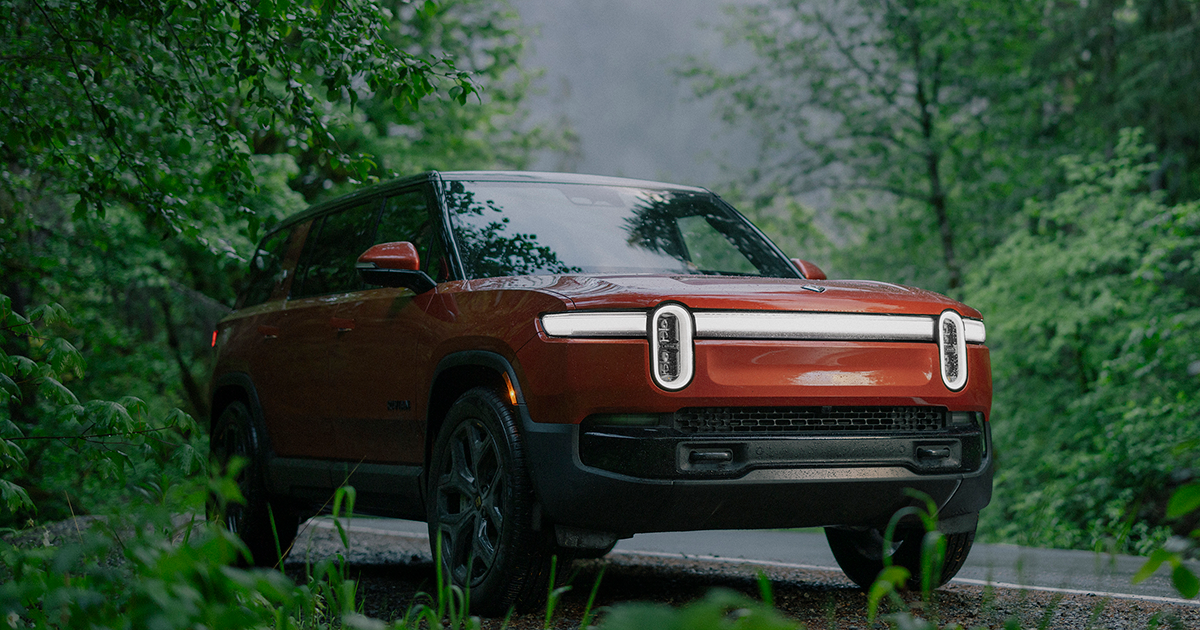
Rivian: Electric Vehicles Designed For Adventure
Discover Rivian's long-range electric vehicles, innovative EV trucks, SUVs and vans built for adventure. Join the movement towards a sustainable future.rivian.com
The company, in which Amazon holds a 20% stake, will start taking orders for its electric delivery vans in 2022, with plans to deliver them to customers by early 2023, according to a new section of Rivian’s website. Rivian has been working to fulfil a contract to produce 100,000 electric vehicle delivery vans for Amazon through 2024.

kenbro
Well-Known Member
Which EV can do 250 miles in one go?More Myth busting:
The average range of an EV is now in excess of 200miles (my bladder nor back can drive for that long anyway!)
Rapid charging (depending on the charger and car capacity) can be between 4 and 60mins with our average being about 20mins...just long enough for a pee stop and a brew.
Charging at home is a joy, just get out and plug in...you realise how much time and effort is spent finding and smelly fueling an ICE car
Being able to use your car as a back up power supply for your house is happening more via vehicle to grid technology
Consumables are also less...fewer brake pads due to mostly regen breaking
Battery fires are incredibly rare, a tiny % when compared to the same number of ICE cars
The are FAST! Instant power means the cheapest EV beats everything off the line
Batteries are mostly lithium and cobalt. This material is then used to power the vehicle its entire life. The majority of the worlds cobalt is used in petrol refining...where its used once. Lithium is sourced from mines or salt water. As batteries are thousands of cells, batteries from broken or old cars are stripped, the few bad cells removed and the rest reused in battery extender packs or as domestic batteries. Battery Upgrades - Cleevely Electric Vehicles Gloucestershire
There's LOADS of charging points, with more coming online each week Charging points and electric vehicles UK 2021 - Zap Map can tell you where they are, when they were last used, how much they cost, what type they are and even if they are presently available.
You can now get an new estate ev with a 250mi range for £26k New Car Offers & Finance | MG Motor UK
EV vans are becoming very competitive with many moving over to the new electric Vivario with over 200mi range from £28k.
Servicing is virtually none existent, fewer consumables (eg exhaust, clutch) and fuel costs are incredibly low in comparison to ICE cars...all making any extra expense paid for very quickly.
EV wade through water brilliantly given no engine intake /exhaust to worry about. Fully waterproof/pest proof even the Nissan Leaf was designed to wade 2ft of water with ease...I'll have to try and dig out the video of a range rover flooding and the Leaf wading past it!
As /when i think of more I'll post.
Or are you talking about Hybrids?
Ken.
kenbro
Well-Known Member
Unless, jimmy, they happen to be amongst the current crop of English home owners who have been without electricity for several days now.Installing EV chargers is much quicker and simpler and safer than digging big holes in the ground and putting fuel tanks with thousands of gallons of highly inflammable liquids into them.
If you want to see what can be done and is being done, just look at the EV charging infrastructure in Norway.
As has been said, there are apps which show which chargers are within the current range of your EV and also how many chargers are free at those charging locations.
Norway: electric and plug-in hybrid car fleet| Statista
The stock of electric and plug-in hybrid cars in Norway came close to ******* units in 2024, representing a significant increase from 2012 when fewer than ****** electric cars were registered in the country. Battery-electric vehicles are at the center of Norway's EV market The Norwegian...www.statista.com
In practice, most evs will rarely, if ever, use charging stations because most ev owners will charge their vehicle at home using cheap (sometimes free, off peak electricity.
Cheers
Bruce
Those that thought they’d (As someone suggested) use their EV to “run” their house and then recharge the car when the ‘leccy came back on, will now have no house power or horse power.
Ken.
Last edited:
Oly
Well-Known Member
Which EV can do 250 miles in one go?
Or are you talking about Hybrids?
Ken.
Nearly all new models, and a lot of existing models. You can compare and order by range on this website (among others). EV Database
As I write, wind is providing 38% of our electricity. The development of wind power in the UK has been a tremendous success, and will continue to be expanded. And we are privileged to live on a windy island, surrounded by large territorial waters on which we may plant massive offshore wind farms (which BTW have to pay rental to the Crown Estate for their foundations, which is a lot of dosh).At the outset he talks about renewables at 20% being impossible...wind on its own is 18% tonight! Which does show how fast it has been rolled out...offshore in particular.
The latest offshore turbines are mindbogglingly huge, 220m diameter, incredible engineering feats in themselves.
Some other continental countries of course have to mostly build theirs on land, so are more constrained in what they might be able to exploit.
But that is missing the point, electricity generation is just a minority of our energy usage, which is overwhelmingly still reliant on mostly gas and oil.
Take a look at https://assets.publishing.service.g...data/file/1032260/UK_Energy_in_Brief_2021.pdf
It is a good read for those interested in the overall picture. In the UK. Different in other countries. I think we are an exemplar in doing what we have done so far.
Page 10 for example summarises our actual energy usage in 2020.

From which you can see that domestic gas usage (i.e. heating and cooking), and transport's use of oil (petrol and diesel) totally dominate at the moment. Greening those usages is a real challenge, hence the emphasis on EVs and heat pumps.
We are nowhere near to 20% renewable (and Nuclear doesn't count as renewable, low, but certainly not zero, carbon though it is). Not even close. It will be many years away yet.
But efforts are being made, of which EVs are going to play a role, to some extent. As may heat pumps.
Fells was talking from a global perspective, and I agree that, globally, achieving 20% renewable is "almost impossible", as it still is for us in the UK, at the moment.
Last edited:
Oly
Well-Known Member
Unless, jimmy, they happen to be amongst the current crop of English home owners who have been without electricity for several days now.
Those that thought they’d (As someone suggested) use their EV to “run” their house and then recharge the car when the ‘leccy came back on, will now have no house power or horse power.
Ken.
But they could have just driven a few miles and topped up.
See this postPost in thread 'The future is electric' The future is electric
Another snippet:

If you take away nuclear, that leaves us with renewables being 14.8%
But then you have to ask, how come biofuel made up 37% of 21.5%, and wind only 18% (of 21.5%) ? Well by far our largest biofuel power station is Drax 2, who source their biofuel from the US and Canada, from chopping down forests, which is somewhat controversial. Sustainable ? maybe maybe not, but that's for Canada and the USA to worry about, not us. And the energy usage of doing that and shipping it over here, is, I suspect, not counted.
BTW, you have to understand what "primary energy" is. It is not the same as e.g. electricity supplied through the grid.
If you take away nuclear, that leaves us with renewables being 14.8%
But then you have to ask, how come biofuel made up 37% of 21.5%, and wind only 18% (of 21.5%) ? Well by far our largest biofuel power station is Drax 2, who source their biofuel from the US and Canada, from chopping down forests, which is somewhat controversial. Sustainable ? maybe maybe not, but that's for Canada and the USA to worry about, not us. And the energy usage of doing that and shipping it over here, is, I suspect, not counted.
BTW, you have to understand what "primary energy" is. It is not the same as e.g. electricity supplied through the grid.
kenbro
Well-Known Member
Not when they’ve used their electric car to temporarily power their home.But they could have just driven a few miles and topped up.
See this postPost in thread 'The future is electric' The future is electric
K.
Oly
Well-Known Member
Not when they’ve used their electric car to temporarily power their home.
K.
When was the last time you ran out of petrol, diesel or heating oil? It's even easier with EVs as they tell you their charge on your phone

Oly
Well-Known Member
As I said in an earlier post, we are unable to charge a EV at home, are you suggesting that my wife drives for an hour and a half until nearly home, stops at the nearest town, finds a charger and sits in the car for another hour while it charges ? Every day ?
I don't think anyone is suggesting anything, only giving advice, hopefully you can make your own choice/arrangements. I'm guessing you don't fuel your petrol or diesel car at home afterall
 .
. At the end of the day only you know your individual situation, location, facilities etc. It is undoubtedly something people are now factoring in when buying a house.
We've never sat at a rapid charger for an hour, when we use them it's for about 10 to 20 minutes, some are as little as 4 minutes for a full charge.
Oly
Well-Known Member
As I said in an earlier post, we are unable to charge a EV at home, are you suggesting that my wife drives for an hour and a half until nearly home, stops at the nearest town, finds a charger and sits in the car for another hour while it charges ? Every day ?
From a very quick Google though I did find this for you...
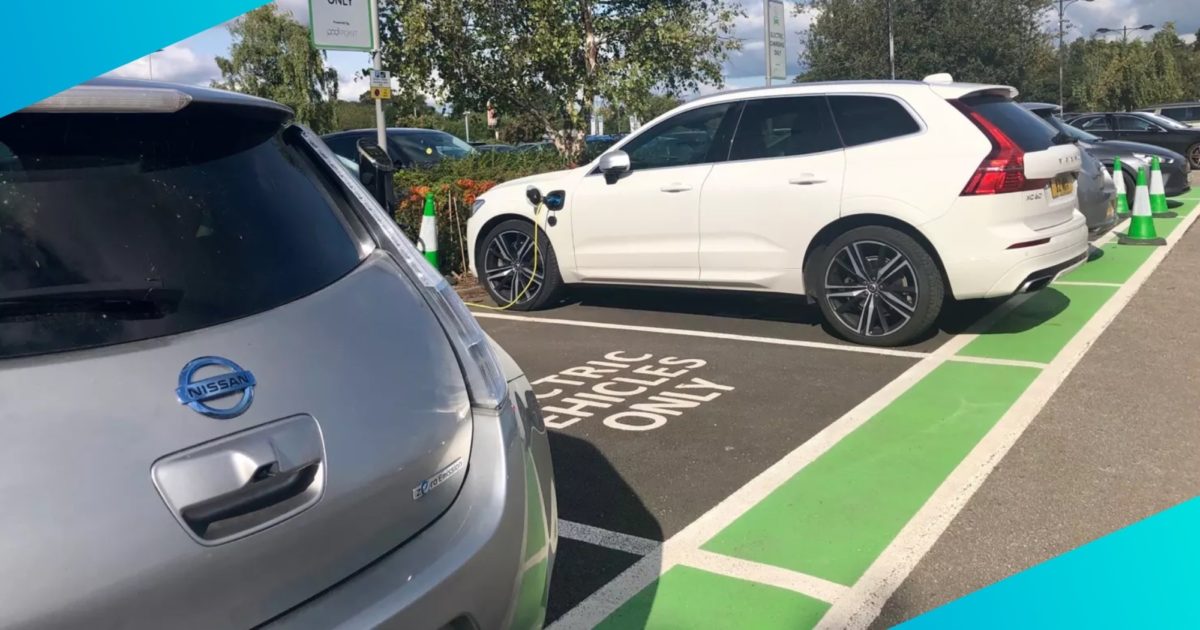
How do people with no driveway charge their electric cars?
How do people with no driveway charge their electric cars?
And

Electric vehicle charging guidance for residents
Guidance on how to safely charge your electric vehicle.
Similar threads


