

Personally I'd discourage the use of the RCBS case lube/pad. It's pretty nasty to use. Either Imperial sizing wax or some type of spray lube (Dillon or equivalent homemade version) would be my recommendation. Also, unless you're shooting benchrest, I doubt a flash hole uniformer/deburring tool is worth it for a new reloader. A Lee manual is also another nice one to have. Hodgdon load data is extremely conservative (almost to the point of being useless IMHO). Everything else looks suitable.this is the kit im buying next week,
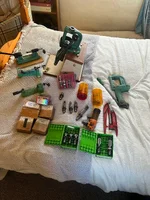
1x rcbs rockchucker press
1x rcbs trim Pro manual case trimmer with .22 and .27 pilots
1x rcbs lube pad
2x rcbs case lubes (1 half full)
1x rcbs case neck lube brush (2 brush sizes)
1x rcbs powder funnel
1x rcbs case neck chamfer tool
1xrcbs and 1x Dilton precision 50 round ammo case
1x mtm 150 round loading tray
2x Lee auto prime hand priming tools (large and small primer trays)
1× Lee powder thrower
1x hornady beam powder scales
1x horbady power dribbler
1 lyman primer pocket uniforming tool (the bit where the primer sits) large primer size
1x lyman flash hole deburring tool
1x hogdon reloading manual (an older one but still valid)
You are using an out of date browser. It may not display this or other websites correctly.
You should upgrade or use an alternative browser.
You should upgrade or use an alternative browser.
Thinking of reloading,
- Thread starter Tikkat1x
- Start date


thanks mate, I will take all that into consideration,
iv just bought the ABC or reloading, and I'm working out if the extra cost of the Hornady manual over the lee manual is worth it, but more than happy to get the lee manual,
thanks for your input, and I'm more than happy to hear anyone's advise, or tips, I'm here to learn, all iv done these last few days is read and watch videos to the point where my heads nearly full
iv just bought the ABC or reloading, and I'm working out if the extra cost of the Hornady manual over the lee manual is worth it, but more than happy to get the lee manual,
thanks for your input, and I'm more than happy to hear anyone's advise, or tips, I'm here to learn, all iv done these last few days is read and watch videos to the point where my heads nearly full
are these any good, i dont want to go to mad straight awayJust a few safety things worth mentioning if you are starting out reloading:
1. Don't reload or process cases in an area that is used for food or that children can access at any time, e.g. your kitchen or living room. If a child eats a spent primer, there is still enough lead styphnate in it to give lead poisoning. Metallic lead and white lead oxide are much less of a problem because they do not dissolve in water, but there is a chap on the US sniper site with life long injuries from lead due to playing in his father's reloading area where he had repeated exposure to lead dust. Same for tumbling cases - not something to do in a house - you need a shed. In a house use wet tumbling. I am of the generation where we used our teeth to close lead fishing weights, poured lead in the house and handled mercury but am now a little wiser.
2. Do not believe other people's loads. Download Gordon's Reloading Tool and use it to check every load. It is free, and revealing. Cross check it with the powder supplier's recommended load data when starting out. How do I know this? I copied loads from a champion shooter that I bought a rifle from once without checking the load data ... that was dumb, especially when they had increased COAL to hard jam. Fortunately, saw the pressure signs on first round then did the sums - it was almost 100,000 psi. Good job it was a huge fat barrel.
3. Do not use any load under 60% full, as sooner or later you will double load. If your load works out at under 60% full, then get a different powder. Most other don'ts are common sense or are widely reported.
On the toys you need:
1. You need two scales. A simple beam scale is ideal, especially with a trickler, but get in addition a cheap scale that shows grains to 0.02 to check: beam scales can stick and the level adjustment can give you a significant error if used blind.
2. Targetmaster tricker and a beam scale, is a steal. £110 well worth spent, even if you go for an RCBS chargemaster later.
3. Chinese verniers are often out by +/-0.2mm. A good vernier is accurate to +/-0.02mm (e.g. Mitutoyu, Sylvac or M-Sure), a micrometer is ten times better than that but you need a few sizes. Go for M-Sure if your budget is limited. How I know this: I am a professional engineer and I do calibrate verniers against calibration blocks once a year, and scrap many calipers especially the sub £30 ones from China. I have never had need to scrap a Mitutoyu, Sylvac or M-Sure.
Other than that, buy what you need once and get the proper kit from the outset. If you don't like it, you can always sell it on here to those further down the food chain.
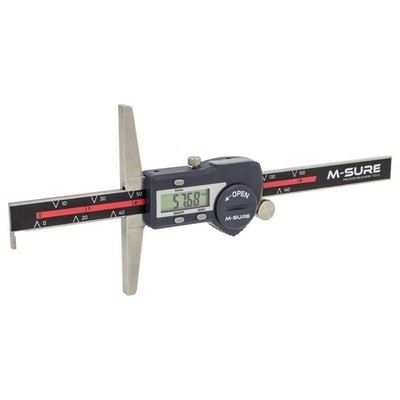
M-SURE Digital Depth Gauge MS-540-150 0-150mm (0-6 inch) MS-540 Series measuring | eBay UK
With a length base. Data output: Yes. Base length 100mm and base width 7.1mm. FULL UK SUPPORT. Base Length: 100mm. 1 x Storage Case. 1 x with hook. Product Contains.
www.ebay.co.uk

are these any good, i dont want to go to mad straight away
M-SURE Digital Depth Gauge MS-540-150 0-150mm (0-6 inch) MS-540 Series measuring | eBay UK
With a length base. Data output: Yes. Base length 100mm and base width 7.1mm. FULL UK SUPPORT. Base Length: 100mm. 1 x Storage Case. 1 x with hook. Product Contains.www.ebay.co.uk
All the M-Sure instruments seem good. They are accurate and hold their accuracy well. When I did a search just now to check they are still UK based, I saw that Allendale Metrology are selling them at half the price we paid for the last batch of M-Sure, in fact, at incredibly low prices. See this link: M-SURE. A nice example of British engineering still alive today.
After buying a few sets of M-Sure a few years ago, noting they did well in living long enough to get to annual calibration then passing well consistently, we have been buying M-Sure instead of Mitutoyu and Sylvac which were our standard "go to" reliable measurement instruments previously.
M-Sure seem to be able to compete with Chinese prices but are in a totally different category. I have seen a lot of junk verniers and run out gauges which people kept bringing in, because they were cheap from China, but when they are calibrated before being allowed to be used, most go straight to the bin as the vernier accuracy was +/-0.1 or 0.2mm, and their consistency is poor. Even the odd Chinese ones that pass calibration, die easily in a machine shop where knocks, coolant, and use take their toll. Mitutoyu, Sylvac and M-Sure just keep working so I am not interested in even looking at anything else - life is too short to waste machining things that are out of tolerance due to the measurement instrument throwing a wobbly.
We now have M-Sure verniers in various sizes, depth gauges, bore gauges and micrometers in different sizes. No complaints.
BTW, I have no financial interests in any of the companies mentioned.
BTW2: Don't buy measurement instruments on Ebay. Buy new.
Last edited:
Just get the 0-150mm vernier caliper to start with. A reloader uses a vernier to check OAL and seating depth. I would also recommend a stick on tape measure.could you please recommend me a pair from there website and i will be your best friend forever
A 0-150mm M-Sure vernier is £23+VAT on the link here for their site: M-SURE MS-220-150 Standard Digital Caliper MS-220 Series 0-150mm (0-6")
In my reloading the vernier is used every time, in fact several times on each cartridge, (the case length, neck diameter, bullet length, overall length).
The tape measure, get one that sticks to your bench: it is great for sorting things fast. Sorting bullet length, bullet weight, COAL, just take a measurement with your vernier or scales and put the bullet or case next to the tape measure for that. For example, if bullets should be 26mm long, then I will get a range from 25 to 27, so put them beside the fraction on the measure divided by 2 (so 1 metre of measure covers 25.00 to 27.00). I take a pack of 100 bullets, sort them by length or weight or both, and remove outliers. Doing that gets rid of my fliers. You would be surprised how far out some bullets are from the average.
A caveat: I reloaded a lot years ago with a Texan chap in California before California took up fentanyl and uber-liberalism, then got back into reloading fairly recently after returning to the UK. All of us are different. I am an engineer so may do things one way or in more detail when others just want plinking rounds or the odd deer round made up, where even an old Lee hammer driven reloading set is good enough. My reason for getting back into reloading was purely precision shooting as an engineering activity: some engineers retire and make watches, violins or fancy optics, others like tuning metal to shoot.
Beyond a vernier caliper and tape, further measurement tools are needed only if you are REALLY into precision shooting or are modifying things, which some on here are, so for them this is exposing how I do it:
- When measuring cartridge concentricity, wall thickness or barrel thickness, I use a digital dial indicator (plus a mandrel or pin gauge set for case measurements, or for barrels made a brass rod with a ball pressed into it to go inside the barrel). Dial indicators are fixed to jigs that clamp to flat plates on granite blocks, or clamp to the lathe bed, so the indicator is the least significant of the costs here and all these are tools that I had anyway.
- I fell into the neck tension spaghetti due to annealing, and FLS die that were giving me wild variations in tension, right down to zero. Forster, Wilson, 21st Century make good die. Somebody else's FLS die drove the need for tools and time. Far cheaper to buy decent die or a mandrel. In measuring neck tension, I use pin gauges and a 0 to 1 inch micrometer, or a small bore gauge and dial indicator depending on what is closest to hand. For private use, Chinese pin gauges are fine as they don't move and last forever. Once one has fallen too far down the neck tension rabbit hole and need a holiday, then you have a load of spend on mandrels etc, a press with a pressure gauge or as I did, fit a load cell to your press, connected to an Arduino connected to a laptop and python script to read it etc to plot strain (distance) over stress (pressure). The M-Sure linear scales have a digital output that the Arduino or PC can read. AMP do one off the shelf for a price, or just ensure the neck is 3''' under the bullet size by using a mandrel and you are good to go.
Last edited:
Agree with you on Hodgdon. Use Gordon's Reloading free tool rather than anybody else's load data.Personally I'd discourage the use of the RCBS case lube/pad. It's pretty nasty to use. Either Imperial sizing wax or some type of spray lube (Dillon or equivalent homemade version) would be my recommendation. Also, unless you're shooting benchrest, I doubt a flash hole uniformer/deburring tool is worth it for a new reloader. A Lee manual is also another nice one to have. Hodgdon load data is extremely conservative (almost to the point of being useless IMHO). Everything else looks suitable.
50% lanolin, 50% castor oil is the lube you need. Far cheaper than the branded stuff. Lanolin is a great rust preventer also: use it on all steel unless it is an oil-only part, e.g. inside a barrel or a seer.
Deburrer tool set for neck, pocket etc, is only £28 on Amazon. Rough necks give poor accuracy, and little point using lube if your neck has a burr that swages the bullet.

^^this^^I use a Lee loader,
Should be able to get one for £20-30. Then add a hammer, a calliper, scales or powder scoops. No need for a press etc.
That’s how you do it if you are looking to save cash. Works fine.
Lee Loader 223 Rem a bit more than I thought but there you go.
thanks mate, iv ordered oneJust get the 0-150mm vernier caliper to start with. A reloader uses a vernier to check OAL and seating depth. I would also recommend a stick on tape measure.
A 0-150mm M-Sure vernier is £23+VAT on the link here for their site: M-SURE MS-220-150 Standard Digital Caliper MS-220 Series 0-150mm (0-6")
In my reloading the vernier is used every time, in fact several times on each cartridge, (the case length, neck diameter, bullet length, overall length).
The tape measure, get one that sticks to your bench: it is great for sorting things fast. Sorting bullet length, bullet weight, COAL, just take a measurement with your vernier or scales and put the bullet or case next to the tape measure for that. For example, if bullets should be 26mm long, then I will get a range from 25 to 27, so put them beside the fraction on the measure divided by 2 (so 1 metre of measure covers 25.00 to 27.00). I take a pack of 100 bullets, sort them by length or weight or both, and remove outliers. Doing that gets rid of my fliers. You would be surprised how far out some bullets are from the average.
A caveat: I reloaded a lot years ago with a Texan chap in California before California took up fentanyl and uber-liberalism, then got back into reloading fairly recently after returning to the UK. All of us are different. I am an engineer so may do things one way or in more detail when others just want plinking rounds or the odd deer round made up, where even an old Lee hammer driven reloading set is good enough. My reason for getting back into reloading was purely precision shooting as an engineering activity: some engineers retire and make watches, violins or fancy optics, others like tuning metal to shoot.
Beyond a vernier caliper and tape, further measurement tools are needed only if you are REALLY into precision shooting or are modifying things, which some on here are, so for them this is exposing how I do it:
- When measuring cartridge concentricity, wall thickness or barrel thickness, I use a digital dial indicator (plus a mandrel or pin gauge set for case measurements, or for barrels made a brass rod with a ball pressed into it to go inside the barrel). Dial indicators are fixed to jigs that clamp to flat plates on granite blocks, or clamp to the lathe bed, so the indicator is the least significant of the costs here and all these are tools that I had anyway.
- I fell into the neck tension spaghetti due to annealing, and FLS die that were giving me wild variations in tension, right down to zero. Forster, Wilson, 21st Century make good die. Somebody else's FLS die drove the need for tools and time. Far cheaper to buy decent die or a mandrel. In measuring neck tension, I use pin gauges and a 0 to 1 inch micrometer, or a small bore gauge and dial indicator depending on what is closest to hand. For private use, Chinese pin gauges are fine as they don't move and last forever. Once one has fallen too far down the neck tension rabbit hole and need a holiday, then you have a load of spend on mandrels etc, a press with a pressure gauge or as I did, fit a load cell to your press, connected to an Arduino connected to a laptop and python script to read it etc to plot strain (distance) over stress (pressure). The M-Sure linear scales have a digital output that the Arduino or PC can read. AMP do one off the shelf for a price, or just ensure the neck is 3''' under the bullet size by using a mandrel and you are good to go.

I was referring to the flash hole deburring tool. I've never seen a huge improvement using one, so categorize that tool as "It might be helpful, it might not; but I've never seen an noticeable improvement".Agree with you on Hodgdon. Use Gordon's Reloading free tool rather than anybody else's load data.
50% lanolin, 50% castor oil is the lube you need. Far cheaper than the branded stuff. Lanolin is a great rust preventer also: use it on all steel unless it is an oil-only part, e.g. inside a barrel or a seer.
Deburrer tool set for neck, pocket etc, is only £28 on Amazon. Rough necks give poor accuracy, and little point using lube if your neck has a burr that swages the bullet.
As to case lube, the 95% alcohol and PEG-75 grade lanolin (cosmetic grade) seems to work best for me with a 1:8-1:10 mix ratio. And it doesn't leave the cases overly "sticky" like lower grades of lanolin. You do have to heat it up though (melt it), but that's easily done in coffee cup in a microwave oven. Once it's melted it's easily emulsified by the alcohol.
JMTCW...

My top tip:
Get a seating die with a bullet alignment sleeve as per item “J” below:

It needn’t be an expensive die such those offered by Redding. I use a standard Hornady Durachrome die without any fancy micrometer adjustment for loading my 22 Hornet and it makes seating those pesky 35g flat based bullets a pain-free task.
K
Get a seating die with a bullet alignment sleeve as per item “J” below:
It needn’t be an expensive die such those offered by Redding. I use a standard Hornady Durachrome die without any fancy micrometer adjustment for loading my 22 Hornet and it makes seating those pesky 35g flat based bullets a pain-free task.
K

CBH Australia
Well-Known Member
Some people crimp and others don't.theres a lee deluxe die set in m y local, and a ultimate set, but from what i can see the difference is a crimping die, and im also thinking i wont need one of them?
Some people buy Lee dies and some go for RCBS,HORNADY, LYMAN while others go for real expensive brands.
Some load accurate ammo with Lee dies. It's probably only 10 bucks more to get the crimp die in the set and then you can decide if you crimp or not
your about right there, for the money its probably best to haveSome load accurate ammo with Lee dies. It's probably only 10 bucks more to get the crimp die in the set
Is the handloaded ammo cheaper? I don't really know in spite of loading my own from 1978 on. What I value is if I have the makings I have ammo. There is a certain satisfaction when you get to hunt with a single shot rifle and bring home a deer killed with a handload. I am also a high volume varminter and if limited to factory offerings I could not afford to do so. Tools are expensive but with decent care last forever. I am open to pm on what you need to buy. Good luck.
I also save target used for load development with reference to book, date etc.iv bought a couple of note pads, plan on writing everything down
I've got a few about from a long time back. They are always a useful to have.
Agreed, flash hole deburring is a waste of time.I was referring to the flash hole deburring tool. I've never seen a huge improvement using one, so categorize that tool as "It might be helpful, it might not; but I've never seen an noticeable improvement".
As to case lube, the 95% alcohol and PEG-75 grade lanolin (cosmetic grade) seems to work best for me with a 1:8-1:10 mix ratio. And it doesn't leave the cases overly "sticky" like lower grades of lanolin. You do have to heat it up though (melt it), but that's easily done in coffee cup in a microwave oven. Once it's melted it's easily emulsified by the alcohol.
JMTCW...
Sounds like you have a good source of lanolin, avoiding the ammo smelling like a sheep pen.
Similar threads
- Replies
- 94
- Views
- 5K

- Replies
- 11
- Views
- 801
- Replies
- 15
- Views
- 1K

- Replies
- 23
- Views
- 1K
- Replies
- 31
- Views
- 4K
