Ticks/Treatment

camodog

Well-Known Member
Good Morning 'All',
Considering the numerous 'threads' regarding tick bites and treatment thereof, I was curious as members thoughts on the following :
I have been involved with farming all my life, from rabbits, poultry, thru' to dairy & beef and hunted all my life here and abroad. I have come into contact with ticks many, many times. Had them attached on numerous occasions, but never for long, always removing them asap !
Reading many of the 'threads,' the inference is that one should immediatly seek medical advice and take antibiotics ! Surely it is not advocated we take these every time we are bitten by a tick ? !
I may have been fortunate, but I have never sought medical advice nor taken antibiotics after a bite. Ticks have always been a 'part of daily life' and treated accordingly. There must be many 'on here' who are bitten frequently and do not seek out their GP every time ?!
I do not intend to diminish in any way the threat posed by a tick bite/lymes and the undisputed discomfort it causes. I am simply interested is there 'another side' ? Do we/us who are exposed more frequently from an early age maybe develope a level of immunity ?
Regards 'All',
'Camodog'.
 
I must admit i wouldn,t know if or when i should see the doc ,like yourself been bitten loads of times over the years through rabbits/foxes/badgers and now deer in fact i picked up 4 last week i found two the same day but the other two where still attached three days later even tho they where nymphs after showers and baths,bloody horrible things i shiver when i find them!
 
Usually have to remove 10-20 attached ticks from myself annually, only ever seen the GP for a test once due to the rash but was
Just irritation in the end.

If I had antibiotics every time I’d be immune to antibiotics within a year!

The tick threat is being commercialised for profit now with all the self test kits, when a little bit of common sense and research goes a long way
 
I'd concur with this - not all ticks carry borrelia (carriage rate varies from zero to low teens as % of tick population) and even if you get bitten by an infected tick you don't necessarily get infected.
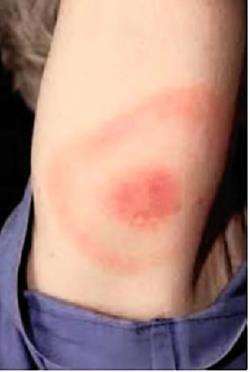
However if you get the bulls eye rash get to GP and get treated asap (no further diagnostic testing is necessary); if you feel unwell after a tick bite with symptoms of lyme then see GP and get tested (they may wait for test result or treat anyway depending on symptoms and time since you were bitten). Most of us get bitten by ticks and don't get infected (multiple times in my case) but you don't know what's around the corner and the next one might be the "one". I still can't talk about the damn things at work without feeling an itch !

Richard
 
I would only take antibiotics if I knew a tick had been attached for a day or longer. Yearsago we didn't need to worry as tick diseases were rare very rare, sadly that is no longer true.
 
I would only take antibiotics if I knew a tick had been attached for a day or longer. Yearsago we didn't need to worry as tick diseases were rare very rare, sadly that is no longer true.

That raises other questions. Were tick diseases rare or did they just not get diagnosed. I suspect the latter and this is the same with a great many medical issues.

That said I do think tick numbers have increased, partly as a result of changing climate and party as a result of an increase in suitable habitat.

Tick Bourne disease in farmer livestock have certainly been prevalent for centuries but are spreading into areas where they never used to be.
 
Tick numbers have gone up as a direct result of the chemicals used to eradicate them being banned, the numbers of ticks are now at similar levels to the turn of the 19th/20th centauries. The numbers of disease carrying ticks has gone through the roof .
It is not a case of more people getting diagnosed, its a case of more people catching them full stop. There have been enough papers written on this over the year here, USA and European0 countries have all submitted studies.
 
Personally this time of year I check myself when I get back home to make sure one of the little buggers hasnt attached itself to me. I use Rovince socks and spray all my clothes with permethrin which seems to be keeping them at bay so far, fingers crossed it stays that way!

If you do find one on you then get it off asap using a tick hook or similar, then keep an eye on the bite site to see if you get a bullseye rash - if you get the rash then its time for a visit to the quacks and a round of antibiotics! But I wouldnt take the meds for every bite, only if I get the rash.

Last year they were pretty bad and this year is looking to be the same so be careful out there folks!

I do also agree with slider - I suspect that tick borne diseases have always been about, its just back in the day the vaguely non specific symptoms of Lymes disease were probably mistaken for something else or ignored completely.
 
Tick numbers have gone up as a direct result of the chemicals used to eradicate them being banned, the numbers of ticks are now at similar levels to the turn of the 19th/20th centauries. The numbers of disease carrying ticks has gone through the roof .
It is not a case of more people getting diagnosed, its a case of more people catching them full stop. There have been enough papers written on this over the year here, USA and European0 countries have all submitted studies.

Totally this. Years without DDT have taken their toll. Although I am sure there have been many benefits as well to all sorts of other organisms, including ourselves I would imagine. You cannot win em all.
 
They seem to be bad this year. I pulled five from pulling and hanging up one roe buck.
I suggest give the wife lots of cuddles after stalking so she can also appreciate the joys of stalking.
 
We are in France at the moment, on Saturday my wife found a tick on the back of her neck, this morning all we could see was a small red lump and it was itchy, we went to the local doctor and came away with a perscription for twenty days of antibiotics,
 
In the past, all livestock had to be dipped several times a year to kill ticks and other bugs. Sheepdip was nasty stuff and killed things nicely.

No longer a mandatory requirement to dip so parasite population has grown. Compound with growth in deer numbers etc

We are also much better at diagnosing disease. In the past many people died in their 40's and 50's from all sorts of infectious diseases -they just faded away.

And if you read old literature there are several anecdotes about how lazy and lethargic rural people could be. Especially with reference to highland populations. There is evidence from archeaological sites that many were riddled with Lyme type disease.
 
Bloody pulled a dead one out my leg last night. Tiny bugger so never noticed.
Wound was clean but will have to be watched for a bit now cause it disentegrated when pulled.
 
Had one hang on for a week or so a couple of years ago without noticing so don't take any risks now days.

Douse my kit in Permethrin, totally cover up, check my outers before putting in the truck, animal goes in a sealed box having crunched all I can see with some plyers, but the reality is most will get you while handing getting into the chiller.

Horrible little things so check check and double check.

Tick body.webpTick out 2.webp
 
Bloody pulled a dead one out my leg last night. Tiny bugger so never noticed.
Wound was clean but will have to be watched for a bit now cause it disentegrated when pulled.

Pulling is the problem, can make a nuisance into a real disaster...rotating in either direction wraps the little barb hairs around the rostrum and allows the tick to come out without disintegrating. The infection/irritation caused by the mouth parts being left in the wound is not likely to be a problem...the real danger is if the tick spasmed and passed saliva or gut contents back into you when you were trying to pull it off which is how the Lime and other nasties get transferred.

The little Springer is a tick magnet and I take off three or four a month around here. My vet recommended the O'Tom twisters after the old Springer had 27 on her after a spell walking on Arran. I bought a box of O'Tom tick twisters and have a pack in every car glove box, beating jacket and stalking set. They do make it so effortless to take the little bleeders off. I haven't had one break up since I discovered them.

Interesting videos and illustrations on the O'Tom website...


"The tick’s rostrum (the part that is embedded in the skin and improperly referred to as “the tick’s head”) is covered with backward pointing spikes that allow the tick to “anchor” in the skin.

By pulling up on the tick, the spikes will rise and lock the rostrum in the skin. The tick may break leaving body parts resting in the skin and causing a painful inflammation, or an infection.


By twisting, the spikes bend into the axis of rotation, and the tick is easily removed, without traction, decreasing the risks of breaking the rostrum."


Alan
 
Last edited:
Thank-you all for your replies. Some interesting comments.
Good to observe people adopting a sensible approach towards this issue. Not becoming too agitated and overreacting to the risk of infection, but remaining aware and cautious is the 'way forward' !
Thanks again for your input, and 'good hunting' !
ATB,
'Camodog'.
 
Pulling is the problem, can make a nuisance into a real disaster...rotating in either direction wraps the little barb hairs around the rostrum and allows the tick to come out without disintegrating. The infection/irritation caused by the mouth parts being left in the wound is not likely to be a problem...the real danger is if the tick spasmed and passed saliva or gut contents back into you when you were trying to pull it off which is how the Lime and other nasties get transferred.

The little Springer is a tick magnet and I take off three or four a month around here. My vet recommended the O'Tom twisters after the old Springer had 27 on her after a spell walking on Arran. I bought a box of O'Tom tick twisters and have a pack in every car glove box, beating jacket and stalking set. They do make it so effortless to take the little bleeders off. I haven't had one break up since I discovered them.

Interesting videos and illustrations on the O'Tom website...


"The tick’s rostrum (the part that is embedded in the skin and improperly referred to as “the tick’s head”) is covered with backward pointing spikes that allow the tick to “anchor” in the skin.

By pulling up on the tick, the spikes will rise and lock the rostrum in the skin. The tick may break leaving body parts resting in the skin and causing a painful inflammation, or an infection.


By twisting, the spikes bend into the axis of rotation, and the tick is easily removed, without traction, decreasing the risks of breaking the rostrum."


Alan


I pulled it with an O'Tom.

I'm a bit of a whizz on Ticks after 30 yrs ferreting and running lurchers etc.

Good post though.
 
I'd concur with this - not all ticks carry borrelia (carriage rate varies from zero to low teens as % of tick population) and even if you get bitten by an infected tick you don't necessarily get infected.
However if you get the bulls eye rash get to GP and get treated asap (no further diagnostic testing is necessary); if you feel unwell after a tick bite with symptoms of lyme then see GP and get tested (they may wait for test result or treat anyway depending on symptoms and time since you were bitten). Most of us get bitten by ticks and don't get infected (multiple times in my case) but you don't know what's around the corner and the next one might be the "one". I still can't talk about the damn things at work without feeling an itch !

Richard

The presence of the bulls eye rash is the only 100% indicator of Lyme...the lab test is not 100% it can be miss it if too early or too late after it has left the blood stream and gone into the tissue which is why it is difficult to test for or to get at it to treat. Unfortunately the bulls eye rash evidently only presents itself less than 50% of the time.

I would only take antibiotics if I knew a tick had been attached for a day or longer. Yearsago we didn't need to worry as tick diseases were rare very rare, sadly that is no longer true.

Yes, the longer the tick is attached the more chance of it passing the bugs across.

Speed being the order of the day...if you get any sort of rash after a bite as opposed to a bit of irritation...it is worth thinking in terms of the anti-biotics...you will have finished the course by the time the lab results come back and by that time the nasties are moving out of the blood stream and more difficult to zap.

The anti-biotic I was given, doxycycline, is the same mix as those given as the prophylactic for anyone going into a Malaria area, so as they go well known and fairly harmless as regards side effects.

Alan
 
The presence of the bulls eye rash is the only 100% indicator of Lyme...the lab test is not 100% it can be miss it if too early or too late after it has left the blood stream and gone into the tissue which is why it is difficult to test for or to get at it to treat. Unfortunately the bulls eye rash evidently only presents itself less than 50% of the time.


Yes, the longer the tick is attached the more chance of it passing the bugs across.

Speed being the order of the day...if you get any sort of rash after a bite as opposed to a bit of irritation...it is worth thinking in terms of the anti-biotics...you will have finished the course by the time the lab results come back and by that time the nasties are moving out of the blood stream and more difficult to zap.

The anti-biotic I was given, doxycycline, is the same mix as those given as the prophylactic for anyone going into a Malaria area, so as they go well known and fairly harmless as regards side effects.

Alan
I now consider it serious enough threat that I carry Doxy with me wherever I go on holiday.
 
Back
Top