No we don't , they are in Wales too.


So, felis silvestris grampia or the Scottish Wild cat, is a sub-species of the European Wildcat, it is the only true Wildcat living in the UK and is now only resident in Scotland, it is also the rarest cat in Europe and possibly the World.No we don't , they are in Wales too.

So, felis silvestris grampia or the Scottish Wild cat, is a sub-species of the European Wildcat, it is the only true Wildcat living in the UK and is now only resident in Scotland, it is also the rarest cat in Europe and possibly the World.
If you know other than that, please enlighten us and the Scientific community would be very interested!
The cats seen in various parts of the UK and often called wild cats are simply feral domestic cats.
Have a read;Scottish Wildcat history and evolution of the felids through miacid, proailurus, Martelli's wildcat lunensis to felis silvestris
Perhaps if you read up about it you would discover that telling feral domestics from true wildcats can be very difficult, that is why DNA is often used.I don't need to read up on it, I just use my eyes, so do's my mate, Feral versions do not have the club shaped tail, or the full stripe coat.


Agree with this , in the past 5 years I have shot 2 very large ferals from the same area both were huge around 5 feet long with weights of 19lb and 21.5 lb. Both were toms , 1 had both ears missing and a very boxy shaped head ginger in colour , the other was a dun colour again boxy head and built like a tank.
Perhaps if you read up about it you would discover that telling feral domestics from true wildcats can be very difficult, that is why DNA is often used.
However you are entitled to your opinions as am I.

Agree with this , in the past 5 years I have shot 2 very large ferals from the same area both were huge around 5 feet long with weights of 19lb and 21.5 lb. Both were toms , 1 had both ears missing and a very boxy shaped head ginger in colour , the other was a dun colour again boxy head and built like a tank.

Some people seem to have very short memories.
This was covered in a previous thread and I pointed out that back in the early eighties the late Arthur Cadman trapped a lynx near Cannich to the south west of Inverness.
There was no argument about this as the lynx was then taken to the Highland Wildlife Park at Kingussie where it lived out the rest of its days in captivity.
After it died of old age it was set up and I think it can now be seen in Inverness Museum.
I spoke to Arthur about this before he caught it as I was a bit sceptical myself but he said that he had seen the tracks and was confident of catching it and eventually he did!
I can totally agree with that.The Kellas cat carries the DNA of both wildcat and domestic cat most probably the result of wildcat feral cat matings, however many what would appear to be true wildcats also carry domestic cat DNA which muddies the water somewhat.
Having seen a Kellas cat at close quarters I can well understand how someone catching a fleeting glimpse of one , could believe they have seen a big cat, well actually they have but not in the accepted sense.
 Hmm.
Hmm.
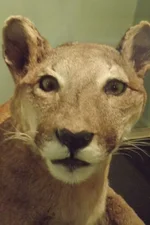
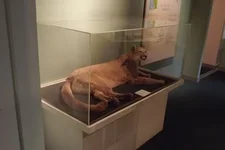
She was called Felicity at the wildlife park but having seen her alive I was fairly sure she was a lynx, might have a photo somewhere.Yes it was a Puma called Felicity and deliberately released in 1980? she was then trapped and housed at the highland wildlife park , where she died a few years later, she now resides in inverness.
I think Cadman wrote about it but he did not catch it, a farmer did that.