Resin Encapsulation

Klenchblaize

Well-Known Member
Hi

Continuing the "something different" theme has anyone tried preserving deer heads in solid blocks of resin? A couple of nice roe heads would make an interesting pair of book ends and must be possible if it can be done to a bird:
See the source image

K
 
Last edited:
It does look kind of creepy methinks. Reminds me somewhat of specimens being kept in waterglass in school biology labs of old.
 
I like this idea. It would be prevent damage and dust build up.

I have a malformed head that I would do if anyone can do it. My three daughters like to play with it and in a hectic house accidents happen.
 
Im going to give it a go il post my findings when I try it
Good luck and please do post all details if successful.

Having looked at a few UTube vids it's probably best to experiment with small encapsulations before going for a deer head as that's a lot of costly resin product to waste if you don't get it spot on.

K
 
Good luck and please do post all details if successful.

Having looked at a few UTube vids it's probably best to experiment with small encapsulations before going for a deer head as that's a lot of costly resin product to waste if you don't get it spot on.

K
Good point I have access to a fair amount of it and I will most definitely post my findings got a few **** roe heads from guests floating around so il probably bite the bullet
 
I'm particularly keen to establish how you get whatever item you are encapsulating to stay 'floating' in the middle of the resin without a viable support and not sunk to the bottom.

Does this require some kind of vacuum tank?

K
 
I'm particularly keen to establish how you get whatever item you are encapsulating to stay 'floating' in the middle of the resin without a viable support and not sunk to the bottom.

Does this require some kind of vacuum tank?

K
From watching a lot of live edge resin wood products being made they pour the resin in layers due to the heat produced as it cures, if done properly you can't see any lines between the layers once set and polished. With this in mind I assume yiu could simply pour a base, let it set then sit the head on it, pour up another layer, let it set then finish off? As long as air bubbles are removed along the way it should look very good.
 
  • Like
Reactions: WW.
I'm particularly keen to establish how you get whatever item you are encapsulating to stay 'floating' in the middle of the resin without a viable support and not sunk to the bottom.

Does this require some kind of vacuum tank?

K
This has reminded me of one of my enthusiasms, and maybe will encourage me to take it up again.

Firstly, no, the object cannot be cast in one go, it would be ruined by the heat generated internally as it sets. It over-heats, fractures and fills with cracks if you try that. The resin has to be built up in layers, each layer allowed to set and cool before the next one poured. It's a laborious and lengthy process, over several days. The bigger the block, the longer it takes to build up. That's how your bird appears to be floating. It's sitting on top of the first set clear layer, then the next layer poured around it, set, then at least one more layer poured on. Look into the sides and you might just be able to make out slight optical discontinuities between the layers. Dust to be kept out at all times. Temperature and humidity suitable. Maximum layer thickness depends on the resin used, I've linked to some examples later, but even the "deep-casting" resin that I found is specified for a maximum of 50mm per layer. To embed a skull would take quite a few layers, poured and set one at a time, over several days, to have any chance of a result.

Don't be tempted to rush things. These cracks were often not immediately apparent, but developed over days, even weeks, as my resin continued it's final cure. And don't try to pour layers to manufacturers' maximum spec., better to be conservative and do them a bit thinner and take your time, which might be over the course of a week or more. After the first few it won't take long to say mix and pour one layer per day. Casting a big block of resin like this can't be rushed.

I used to make small encapsulations many years ago, as a teenager, encouraged by my artistic grandmother. In those days all there was was "Plasticraft" polyester resin, which was difficult stuff to use, very smelly, and if the cast was thicker than say 10 mm at a time, the exothermic setting reaction would over-heat and crack it, and these were just paperweight sized objects which cooled quickly.

I developed a technique of building things in layers, the first layer being clear, partially set, this layer became the top of the paperweight, then a layer containing components (pebbles, sometimes tumbled to a polish, bits of glass picked up from the beach, shells, dried flowers, beautiful old marbles, insects etc.), set, then another layer of parts, etc. This way the components "float" inside the block. My masterpiece was a paperweight made from a broken watch, dismantled, then embedded a layer at a time to make a sort of exploded diagram. I never made anything bigger than a few inches across, the resin was very expensive I now realise, but Grandma bought it for me so I didn't know.

Mixing carefully and thoroughly to avoid aeration, and pricking out any bubbles from each layer was an important part of the process. I mixed the resin cold from the fridge to extend the working time, layered, then warmed the mould to cure, after 15 minutes or so at the correct temperature the layer was solid enough to do the next after I had force-cooled it in chilly water, for the same time again, using the same batch of mixed cold resin, kept in the fridge. It would keep for several hours in a workable state when chilled. Any longer than say an hour between layers, and the layers became visible from the sides, that polyester resin had to go "wet on wet", before the solvents in the surface of the exposed layer had dried out. The final layer always had a sticky surface, which had to be sanded down and polished, after a week or more to get everything fully cured. A small paperweight could take half a day to do, then at least week to cure before the sanding and polishing. Sniffing the fumes all afternoon was probably not good for me.

Making a mould would be the first challenge, you need something with a perfect surface finish, maybe you could make a box from plate glass, cut and edges ground and polished, buffed with release wax, sealed outside with tape or a bead of RTV silicone, held together by an external frame allowing it to be dismantled. Similar to an aquarium, but made to take apart afterwards. Maybe even an old aquarium, dismantled, or a new one in kit form. There would still be sanding and polishing needed, and that also needs experimentation to find the right materials.

I used tapered glass tumblers, generally they released easily, but once one stuck and we had to break it off.

Nowadays there are many choices of specialist resins for clear-casting, very expensive, here's one UK supplier, with some information about their different properties and application information: My old Plasticraft objects have yellowed over the years, modern specialist resins are formulated to resist this. They are also made with appropriate viscosity to penetrate and minimise trapped bubbles, the old Plasticraft was not very good at this.


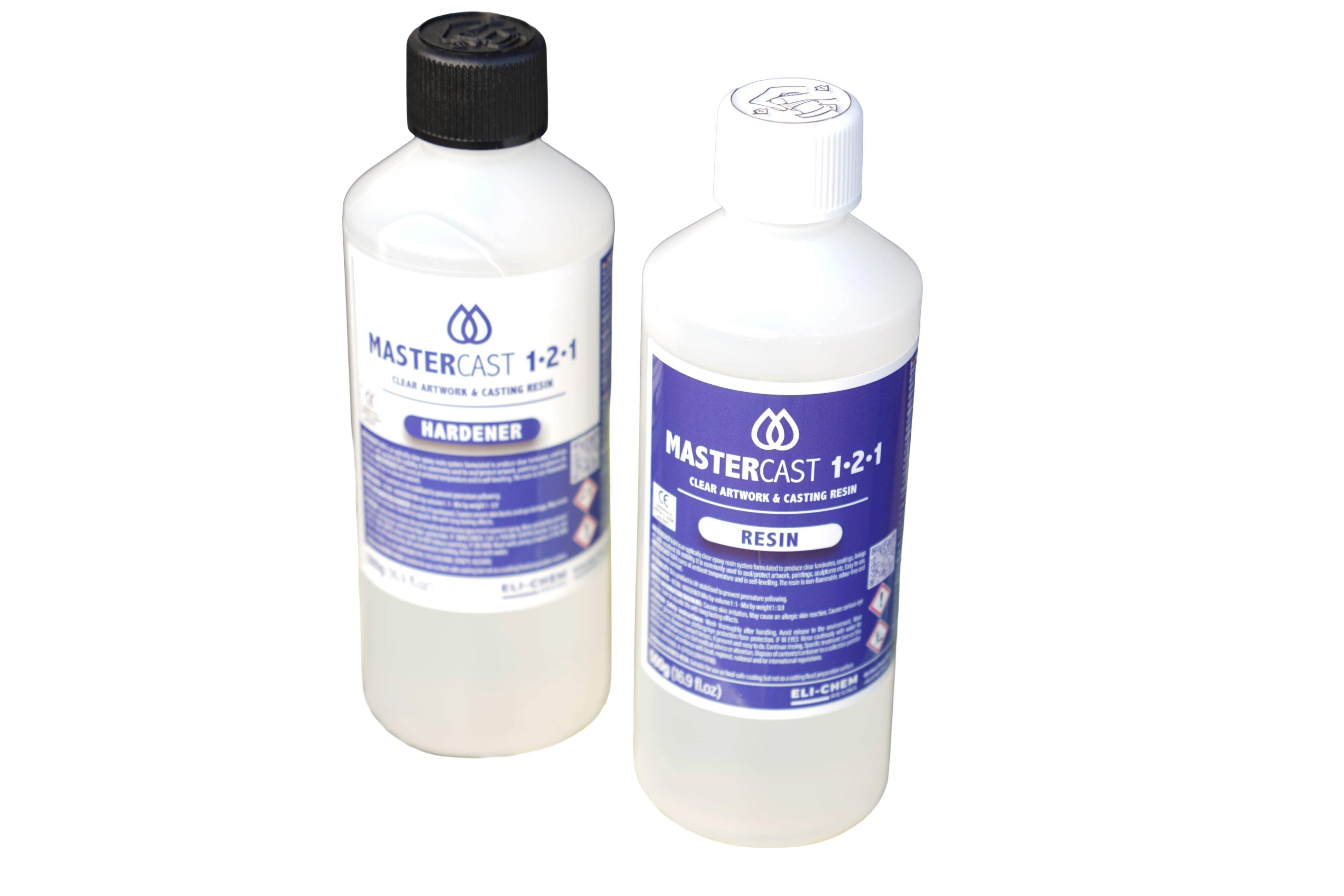
This one looks ideal for the job: Resin River Tables - Deep Cast Clear Casting Resin - Eli-Chem Resins, there are some impressive looking examples on that page. Even then "deep casting" means maximum 50mm per layer, so it's not a matter of just sloshing in litres of the stuff in one go. At nearly £100 for 3 litres that would be an expensive mistake. The stuff also has a shelf life, so only buy enough for the project, and keep it refrigerated until ready to use it.

If having a go at this, I'd start small to begin, understand the materials, develop a technique, then work up to a big-pour. Learn how to do this well, and it could become a lucrative sideline, but then you might not want to share all your secrets ...

Preservation of organic specimens is a consideration, I never got beyond insects, beetles, butterflies, pressed flowers etc, which we put in a desiccator to dry out. These also had to be done in layers, you couldn't just slosh the resin over them, some just floated to the surface. For something like a bird etc. I imagine some taxidermy processes would need to be used first.

That bird is a fantastic looking piece and must have taken some skill. Envious.

Final thoughts:

If trying this myself, first I'd fill the invisible internal cavities, cranium etc, with e.g. plaster, to avoid wasting expensive resin or being a pocket for air bubbles. Then thoroughly dry it out over several weeks (low oven of the Aga etc.)

Then brush on a varnish of suitable resin, perhaps the casting one, maybe one of the ones for treating paintings, perhaps several layers, to get it as glossy as possible, meaning the later poured layers should flow easily with minimal trapped air bubbles.

Then set up the mould, and start pouring layers, say maximum 1/day. Let cure for at least another week before taking it out of the mould, the resin will still be quite soft before then, and you don't want to scratch it at this stage, that's a big old chunk of resin to be handling.

And keep it in a well controlled thermal environment, no sudden temperature changes.
 
I too have memories of Plasticraft from the 1970's. I have a couple of items I made for relatives who have long passed away and I was given them back as momentoes. They are still clear which is quite a surprise.

You're right, the resin was really smelly.
 
This has reminded me of one of my enthusiasms, and maybe will encourage me to take it up again.

Firstly, no, the object cannot be cast in one go, it would be ruined by the heat generated internally as it sets. It over-heats, fractures and fills with cracks if you try that. The resin has to be built up in layers, each layer allowed to set and cool before the next one poured. It's a laborious and lengthy process, over several days. The bigger the block, the longer it takes to build up. That's how your bird appears to be floating. It's sitting on top of the first set clear layer, then the next layer poured around it, set, then at least one more layer poured on. Look into the sides and you might just be able to make out slight optical discontinuities between the layers. Dust to be kept out at all times. Temperature and humidity suitable. Maximum layer thickness depends on the resin used, I've linked to some examples later, but even the "deep-casting" resin that I found is specified for a maximum of 50mm per layer. To embed a skull would take quite a few layers, poured and set one at a time, over several days, to have any chance of a result.

Don't be tempted to rush things. These cracks were often not immediately apparent, but developed over days, even weeks, as my resin continued it's final cure. And don't try to pour layers to manufacturers' maximum spec., better to be conservative and do them a bit thinner and take your time, which might be over the course of a week or more. After the first few it won't take long to say mix and pour one layer per day. Casting a big block of resin like this can't be rushed.

I used to make small encapsulations many years ago, as a teenager, encouraged by my artistic grandmother. In those days all there was was "Plasticraft" polyester resin, which was difficult stuff to use, very smelly, and if the cast was thicker than say 10 mm at a time, the exothermic setting reaction would over-heat and crack it, and these were just paperweight sized objects which cooled quickly.

I developed a technique of building things in layers, the first layer being clear, partially set, this layer became the top of the paperweight, then a layer containing components (pebbles, sometimes tumbled to a polish, bits of glass picked up from the beach, shells, dried flowers, beautiful old marbles, insects etc.), set, then another layer of parts, etc. This way the components "float" inside the block. My masterpiece was a paperweight made from a broken watch, dismantled, then embedded a layer at a time to make a sort of exploded diagram. I never made anything bigger than a few inches across, the resin was very expensive I now realise, but Grandma bought it for me so I didn't know.

Mixing carefully and thoroughly to avoid aeration, and pricking out any bubbles from each layer was an important part of the process. I mixed the resin cold from the fridge to extend the working time, layered, then warmed the mould to cure, after 15 minutes or so at the correct temperature the layer was solid enough to do the next after I had force-cooled it in chilly water, for the same time again, using the same batch of mixed cold resin, kept in the fridge. It would keep for several hours in a workable state when chilled. Any longer than say an hour between layers, and the layers became visible from the sides, that polyester resin had to go "wet on wet", before the solvents in the surface of the exposed layer had dried out. The final layer always had a sticky surface, which had to be sanded down and polished, after a week or more to get everything fully cured. A small paperweight could take half a day to do, then at least week to cure before the sanding and polishing. Sniffing the fumes all afternoon was probably not good for me.

Making a mould would be the first challenge, you need something with a perfect surface finish, maybe you could make a box from plate glass, cut and edges ground and polished, buffed with release wax, sealed outside with tape or a bead of RTV silicone, held together by an external frame allowing it to be dismantled. Similar to an aquarium, but made to take apart afterwards. Maybe even an old aquarium, dismantled, or a new one in kit form. There would still be sanding and polishing needed, and that also needs experimentation to find the right materials.

I used tapered glass tumblers, generally they released easily, but once one stuck and we had to break it off.

Nowadays there are many choices of specialist resins for clear-casting, very expensive, here's one UK supplier, with some information about their different properties and application information: My old Plasticraft objects have yellowed over the years, modern specialist resins are formulated to resist this. They are also made with appropriate viscosity to penetrate and minimise trapped bubbles, the old Plasticraft was not very good at this.


This one looks ideal for the job: Resin River Tables - Deep Cast Clear Casting Resin - Eli-Chem Resins, there are some impressive looking examples on that page. Even then "deep casting" means maximum 50mm per layer, so it's not a matter of just sloshing in litres of the stuff in one go. At nearly £100 for 3 litres that would be an expensive mistake. The stuff also has a shelf life, so only buy enough for the project, and keep it refrigerated until ready to use it.

If having a go at this, I'd start small to begin, understand the materials, develop a technique, then work up to a big-pour. Learn how to do this well, and it could become a lucrative sideline, but then you might not want to share all your secrets ...

Preservation of organic specimens is a consideration, I never got beyond insects, beetles, butterflies, pressed flowers etc, which we put in a desiccator to dry out. These also had to be done in layers, you couldn't just slosh the resin over them, some just floated to the surface. For something like a bird etc. I imagine some taxidermy processes would need to be used first.

That bird is a fantastic looking piece and must have taken some skill. Envious.

Final thoughts:

If trying this myself, first I'd fill the invisible internal cavities, cranium etc, with e.g. plaster, to avoid wasting expensive resin or being a pocket for air bubbles. Then thoroughly dry it out over several weeks (low oven of the Aga etc.)

Then brush on a varnish of suitable resin, perhaps the casting one, maybe one of the ones for treating paintings, perhaps several layers, to get it as glossy as possible, meaning the later poured layers should flow easily with minimal trapped air bubbles.

Then set up the mould, and start pouring layers, say maximum 1/day. Let cure for at least another week before taking it out of the mould, the resin will still be quite soft before then, and you don't want to scratch it at this stage, that's a big old chunk of resin to be handling.

And keep it in a well controlled thermal environment, no sudden temperature changes.
Very helpful and thanks for taking the time to post.

Had a feeling it will be more involved than this: "It's not a matter of just sloshing in litres of the stuff in one go."

K
 
Yes very helpful I have a candidate head to use so il be looking into it when I'm back from holiday
 
Back
Top