Sorry! I didn't finish the thought on the bore rider! Yes, the bullet dimensions are more critical in that the nose of the bullet must ride on the tops of the rifling lands to be effective. If unsupported, the nose is free to woggle about instead of being guided by the bore. Undersized noses work fine at low velocity loadings but seldom produce good results at high velocity. My "quick test" of a bore-riding bullet's suitability is to drop it into the muzzle, nose first. If it drops to the driving bands with a clank, it's too small. If it's a push fit, ok.
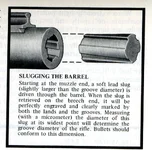
When buying a mold for a new rifle, it's best to measure the bore diameter directly. You can tap in a pure lead slug and find a way to accurately measure the areas between the lands, or borrow a small hole gage from a machinist. (engineer) Most bore riding 30 cals will have a nose diameter of .301" if done correctly. If your bore is larger than nominal and you still want to use a bore rider, you simply switch to a mold designed for the .303 British. Sized to .310 or .311 inches these bullets will take up the nose slack. Part of the beauty of cast bullets is the ability to custom fit the bullet to your throat.

~Muir




 ~Muir
~Muir


