
You are using an out of date browser. It may not display this or other websites correctly.
You should upgrade or use an alternative browser.
You should upgrade or use an alternative browser.
Any others cynical about a vaccine?
- Thread starter deerstalker.308
- Start date

- Status
- Not open for further replies.
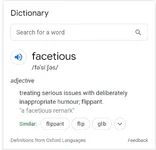
So you got the joke, good man.
And well done for looking up that big word.

Allergic to WHAT, exactly?
If any govt accelerates a medicine into widespread usage with reduced testing, greater scrutiny must attend every failure in population.
Anaphylactoid reaction can kill.
Unless the mechanism of failure is understood, we cannot know in whom a similar reaction might happen.
Crossing the road can kill you too.If any govt accelerates a medicine into widespread usage with reduced testing, greater scrutiny must attend every failure in population.
Anaphylactoid reaction can kill.
Unless the mechanism of failure is understood, we cannot know in whom a similar reaction might happen.
And Covid 19 is a known killer.

Perhaps I misunderstood?I know what youre thinking,
Crossing the road can kill you too.
And Covid 19 is a known killer.
Which takes fewer lives than 1-in-1000. And the majority of those who succumb will be in their 80s [in the UK]
And if you are one of the 999 who have been exposed to and survived the virus, the idea of taking this vaccine feels a lot like rolling the dice twice.
So now you are able to speak on behalf of everyone who has had the virus and survived?Which takes fewer lives than 1-in-1000. And the majority of those who succumb will be in their 80s [in the UK]
And if you are one of the 999 who have been exposed to and survived the virus, the idea of taking this vaccine feels a lot like rolling the dice twice.
You are some man for one man.


Rasputin
Well-Known Member
So now you are able to speak on behalf of everyone who has had the virus and survived?
You are some man for one man.
Why on earth would anyone who has had covid then have a vaccine that lasts six months unless they have been brainwashed? There’s literally no argument to have it.
Ah it's probably only for some stupid reason like they don't want to get it again and die.Why on earth would anyone who has had covid then have a vaccine that lasts six months unless they have been brainwashed? There’s literally no argument to have it.

Woodsmoke
Well-Known Member
So if you have actually had it you can feasibly get it again?Ah it's probably only for some stupid reason like they don't want to get it again and die.
Meaning any vaccine would be of no use anyway?
So . . . the whole 'herd immunity' bollocks is in fact, erm, 'bollocks'?
Are lemmings herd animals? Asking for a friend . . .
You sure are special.So if you have actually had it you can feasibly get it again?
Meaning any vaccine would be of no use anyway?
So . . . the whole 'herd immunity' bollocks is in fact, erm, 'bollocks'?
Are lemmings herd animals? Asking for a friend . . .
Woodsmoke
Well-Known Member
Thank you. You too have a special place in my affectionrYou sure are special.
You sure are special.
I mean, he is right though.
The vaccine relies on inducing the body to synthesise viral coat proteins which are recognised by the body as 'the virus' causing it to mount an immune response, ultimately leading to immunological memory which means that in the case of a real infection, it can more effectively mount a T cell mediated response immune response as it is more immediately recognised as a threat.
If one has already had the virus (and they know for sure that they definitely did have it per a recognised antibody test, not just 'I had the sniffles and a cough, defo survived the 'rona'), then the body has already acquired this immunological memory and so the vaccine will achive nothing.
Now if such a person can still get the virus again and the body doesn't clear it before symptoms are exhibited, then that suggests that the mutation rates within those immunological receptor sites is great enough that within the time period between infections, the virus has mutated enough to no longer be recognised by those memory T cells. If that's the case, then the vaccine (which presents the same sites to the immune system), won't work. The immunological memory it induces is obsolete within a short enough time frame that it offers no protection against the current strain(s) one might encounter 'in the wild'. That's why you have a new flu vaccine each year.
Now I'd suggest that actually, the rate of mutation is probably not high enough for this to be the case, and so the vaccine will be effective. I'd suggest that anyone concerned about COVID, should indeed get it. It will work, and you will have protection. But if this suggestion (that the vaccine works) is true, then having previously been infected will also offer the same protection, so there's no value in getting vaccinated and the dose you did take could have offered someone else the protection that you already possess.
It’s not a suggestion that the vaccine works, it’s been proven that it works.I mean, he is right though.
The vaccine relies on inducing the body to synthesise viral coat proteins which are recognised by the body as 'the virus' causing it to mount an immune response, ultimately leading to immunological memory which means that in the case of a real infection, it can more effectively mount a T cell mediated response immune response as it is more immediately recognised as a threat.
If one has already had the virus (and they know for sure that they definitely did have it per a recognised antibody test, not just 'I had the sniffles and a cough, defo survived the 'rona'), then the body has already acquired this immunological memory and so the vaccine will achive nothing.
Now if such a person can still get the virus again and the body doesn't clear it before symptoms are exhibited, then that suggests that the mutation rates within those immunological receptor sites is great enough that within the time period between infections, the virus has mutated enough to no longer be recognised by those memory T cells. If that's the case, then the vaccine (which presents the same sites to the immune system), won't work. The immunological memory it induces is obsolete within a short enough time frame that it offers no protection against the current strain(s) one might encounter 'in the wild'. That's why you have a new flu vaccine each year.
Now I'd suggest that actually, the rate of mutation is probably not high enough for this to be the case, and so the vaccine will be effective. I'd suggest that anyone concerned about COVID, should indeed get it. It will work, and you will have protection. But if this suggestion (that the vaccine works) is true, then having previously been infected will also offer the same protection, so there's no value in getting vaccinated and the dose you did take could have offered someone else the protection that you already possess.
There is no proof that someone who has had the virus is immune to getting infected again.
It’s not a suggestion that the vaccine works, it’s been proven that it works.
There is no proof that someone who has had the virus is immune to getting infected again.
Immunologically, these two statements are mutually exclusive.
Don't get me wrong, I'm quite confident that the vaccine does absolutely work. It wouldn't have been approved otherwise.
But it is not scientifically possible that BOTH the vaccine works, and a person who has caught COVID is susceptible to catching it again and the infection progressing to symptoms. It's simply not the way that the immune response the vaccine induces works.
I found your assertion interesting, so I've looked a little further into the AstraZeneca vaccine data, the phase 3 trial results of which can be found here: https://www.thelancet.com/journals/lancet/article/PIIS0140-6736(20)32661-1/fulltext
It is in fact true that you can have the virus and then recontract it again. There appear to be several genetically distinct strains floating around which are distinct enough in spike protein epitopes to evade memory T cell response [1]. The prevalence of reinfection is even lower than the general infection rate and severity appears to be lower. However, it is also notable that the B cell antigen response drops off rapidly against even the strain you have encountered [2] and that the resilience of memory T cell populations is currently unknown, with studies suggesting that 6 months is a good estimate, and even that doesn't guarantee resistance [3][4].
This brings us on to the vaccine. As per the Stage 3 clinical trials linked above, the vaccine does work, for a while. Safety is generally fine, efficacy is fairly high, but with a caveat.
I quote the authors of the Stage 3 clinical trial, published yesterday: "In this interim analysis, we have not been able to assess duration of protection, since the first trials were initiated in April, 2020, such that all disease episodes have accrued within 6 months of the first dose being administered. Further evidence will be required to determine duration of protection and the need for additional booster doses of vaccine."
The length of the accelerated Stage 3 study was from administration of the first dose, to 14 days after administration of the booster vaccine; 73 days in total. During that time, the vaccine is effective, against the COVID strains observed by the trial cohort (and note that genetically distinct strains appear to vary geogrpahically [1]). But judging by the tailing of the antigen response, the rate of genetic drift reported and the reported and uncertain tailing of the memory T cell response, it is eminently possible that immunity will not persist for very long at all.
That might not be a problem, if we can genuinely achieve herd immunity through vaccination and eliminate the virus totally, globally. However, if vaccination is patchy or incomplete and a reservoir of virus persists anywhere, it's quite likely that you'll have a covid vaccine now, a booster a few weeks later and then boosters every 3 months for the foreseeable, possibly with variable spike protein epitopes to keep abreast of genetic drift.
Would I therefore agree with your second statement that 'The vaccine works, that's a fact.' Well yes, but with reservations.
As the authors say "Until widespread immunity halts the spread of SARS-CoV-2, physical distancing measures and novel therapies are needed to control COVID-19. In the meantime, an efficacious vaccine has the potential to have a major impact on the pandemic if used in populations at risk of severe disease."
It's a tool, not a panacea, and questions like this, is why a Stage 3 vaccination trial usually runs for a couple years, with observation out to at least 18months for persistence and robustness of immune response. 73 days really isn't that long to be immune at all...
[1] Emergence of Drift Variants That May Affect COVID-19 Vaccine Development and Antibody Treatment - PubMed
[2] Persistence and decay of human antibody responses to the receptor binding domain of SARS-CoV-2 spike protein in COVID-19 patients | Science Immunology
[3] Covid-19: T cell response lasts for at least six months after infection, study shows
[4] SARS-CoV-2 T cell immunity: Specificity, function, durability, and role in protection | Science Immunology
It is in fact true that you can have the virus and then recontract it again. There appear to be several genetically distinct strains floating around which are distinct enough in spike protein epitopes to evade memory T cell response [1]. The prevalence of reinfection is even lower than the general infection rate and severity appears to be lower. However, it is also notable that the B cell antigen response drops off rapidly against even the strain you have encountered [2] and that the resilience of memory T cell populations is currently unknown, with studies suggesting that 6 months is a good estimate, and even that doesn't guarantee resistance [3][4].
This brings us on to the vaccine. As per the Stage 3 clinical trials linked above, the vaccine does work, for a while. Safety is generally fine, efficacy is fairly high, but with a caveat.
I quote the authors of the Stage 3 clinical trial, published yesterday: "In this interim analysis, we have not been able to assess duration of protection, since the first trials were initiated in April, 2020, such that all disease episodes have accrued within 6 months of the first dose being administered. Further evidence will be required to determine duration of protection and the need for additional booster doses of vaccine."
The length of the accelerated Stage 3 study was from administration of the first dose, to 14 days after administration of the booster vaccine; 73 days in total. During that time, the vaccine is effective, against the COVID strains observed by the trial cohort (and note that genetically distinct strains appear to vary geogrpahically [1]). But judging by the tailing of the antigen response, the rate of genetic drift reported and the reported and uncertain tailing of the memory T cell response, it is eminently possible that immunity will not persist for very long at all.
That might not be a problem, if we can genuinely achieve herd immunity through vaccination and eliminate the virus totally, globally. However, if vaccination is patchy or incomplete and a reservoir of virus persists anywhere, it's quite likely that you'll have a covid vaccine now, a booster a few weeks later and then boosters every 3 months for the foreseeable, possibly with variable spike protein epitopes to keep abreast of genetic drift.
Would I therefore agree with your second statement that 'The vaccine works, that's a fact.' Well yes, but with reservations.
As the authors say "Until widespread immunity halts the spread of SARS-CoV-2, physical distancing measures and novel therapies are needed to control COVID-19. In the meantime, an efficacious vaccine has the potential to have a major impact on the pandemic if used in populations at risk of severe disease."
It's a tool, not a panacea, and questions like this, is why a Stage 3 vaccination trial usually runs for a couple years, with observation out to at least 18months for persistence and robustness of immune response. 73 days really isn't that long to be immune at all...
[1] Emergence of Drift Variants That May Affect COVID-19 Vaccine Development and Antibody Treatment - PubMed
[2] Persistence and decay of human antibody responses to the receptor binding domain of SARS-CoV-2 spike protein in COVID-19 patients | Science Immunology
[3] Covid-19: T cell response lasts for at least six months after infection, study shows
[4] SARS-CoV-2 T cell immunity: Specificity, function, durability, and role in protection | Science Immunology
Rasputin
Well-Known Member
Ah it's probably only for some stupid reason like they don't want to get it again and die.
Parking aside the survival rate is off the charts high for anyone not old and crap. Let’s just got a minute imagine that you’re body can’t defend itself so you chose a vaccine that lasts six months and then start a dependency on getting six monthly covid injections. Sounds awesome.
Ridiculous people need get a grip of this and harden up.

 jab
jab 
- Status
- Not open for further replies.
Similar threads


