

I’ll be honest and say it’s unlikely I’ll email them, 100+ emails a day means I try and avoid them!I would share it if I still had it, unfortunately they only provided access for 30 days, which has long elapsed.
They did however reply within a week or so when I requested it, if you were interested it's a very quick email to send and they would provide you with the same data.
Ben
You are using an out of date browser. It may not display this or other websites correctly.
You should upgrade or use an alternative browser.
You should upgrade or use an alternative browser.
Comparing Terminal Performance of Non-lead/Copper Bullets on UK Deer
- Thread starter User00040
- Start date


Rutland lad
Well-Known Member
I am getting bored of posting on this subject now. These rounds work. No question about it. Below is yesterdays muntjac shot at 1545hrs at 202 metres (my longest ever shot on muntjac) with my 6.5x55.
Load is RS60 powder, Lapua case, Fox Classic Hunter bullet 123 grain. Animal facing left - shot entered on lhs and does its job. Animal ran 10m as I’d normally shoot it through shoulder but this was a chest shot at the request of the landowner. Muntjac will nearly always run on in these circumstances and I’ve shot quite a few, hence why I’d always go for the shoulder which does drop them on the spot. Please overcome your fear of something new. Find the right round for your rifle and you won’t look back.
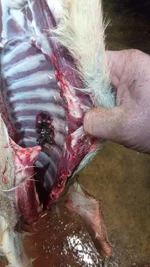
Load is RS60 powder, Lapua case, Fox Classic Hunter bullet 123 grain. Animal facing left - shot entered on lhs and does its job. Animal ran 10m as I’d normally shoot it through shoulder but this was a chest shot at the request of the landowner. Muntjac will nearly always run on in these circumstances and I’ve shot quite a few, hence why I’d always go for the shoulder which does drop them on the spot. Please overcome your fear of something new. Find the right round for your rifle and you won’t look back.
Might be of interest to some, here is part of a Barnes TTSX 110 grain .277" bullet, the wee plastic tip, recovered on the exit wound of a Roe Doe (low chest shot, uphill, about 150m away, extensive internal organ damage through expansion in chest cavity and offside shoulder, deer expired very quickly).
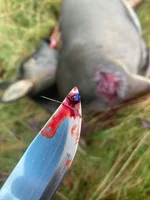

It counts as a single observationFirst live use of copper last night. Sako powerhead 110g in.270.
Bang, whump, flop. Does that count as a technical assessment??
volume data is more relevant when identifying anomalies.
We have provided several hundred rounds of ammo types where the agency have used 400+ in the field.
That is relevant
5-10 here and there is useful but not conclusive when they are so many variables in play
Bullet weight/diameter/Sectional Density/expansion design/material
Range/terminal velocity
Range/ entry angle
POI - bone/no bone
Angle- quartering/broadside
Aware Unaware
Species difference
The recording individual (if you are being forced to use or having to try something NOT from personally decisions them you are leas likely to be objective when collating data
(Ever had a lead bullet not do its job? Did you blame the metal construction of the bullet or concede that **** happens and there may be other aspects at fault?
If tou have never had a lead bullet do something wierd, shoot more and then comment!
Non linear passthrough - bullet turning/deflection
Surface blow up
Failed expansion
Had them all happen in small number with all bullet types over the years
Not just mono metals
Non lead requires a little more forethought to match bullet to barrel to quarry but its not some lottery to get a solid performance

How hard to get “expanding” performance though??!Non lead requires a little more forethought to match bullet to barrel to quarry but its not some lottery to get a solid performance


Smokedude
Well-Known Member
Has DRT imported any here in the UK? Would like to give them a go.
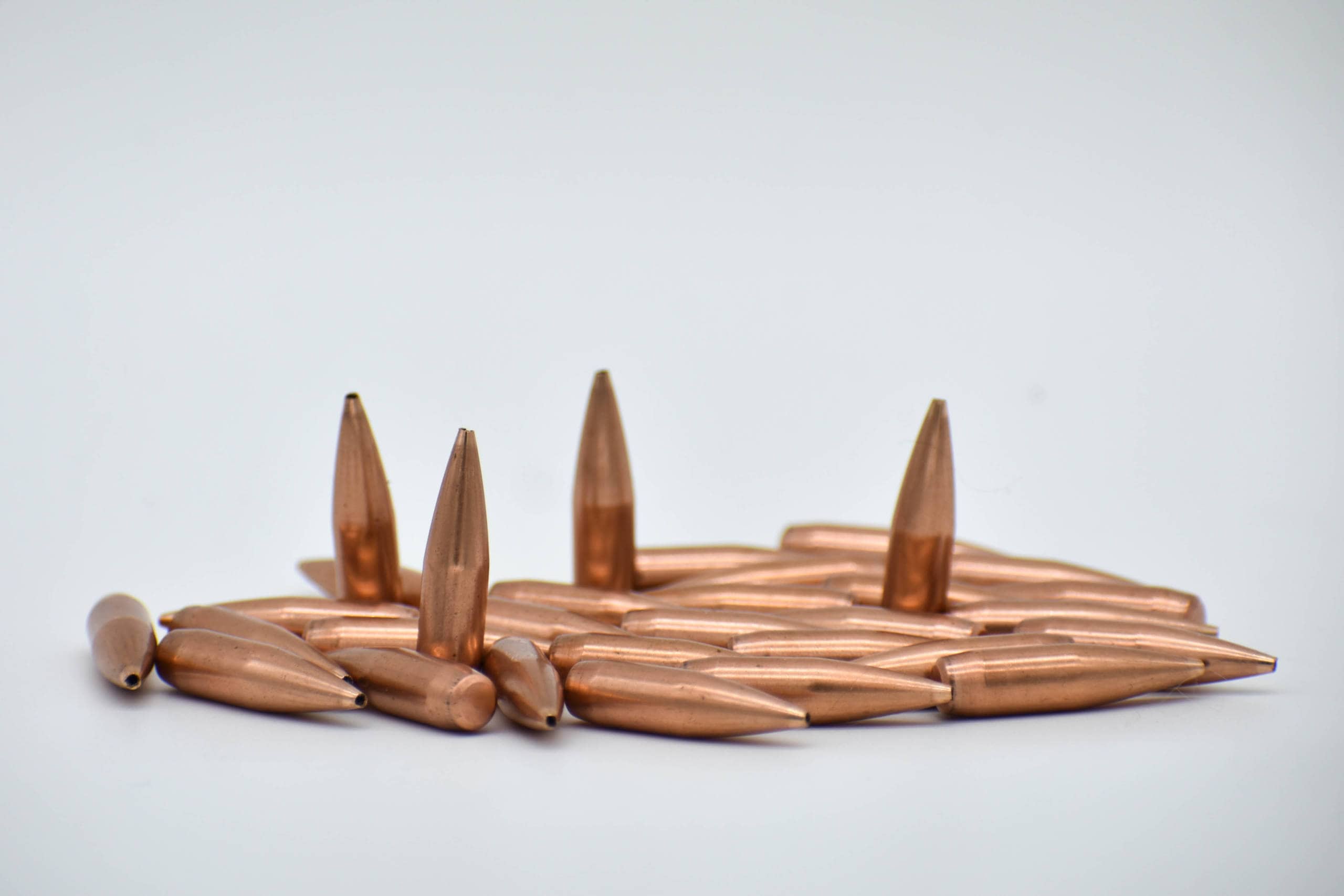
 drtammo.com
Terminal Shock 175 gr: Lethal Accuracy & Massive Damage
Experience lethal accuracy with the Terminal Shock 175 gr bullet. Perfect for large game and snipers, it delivers massive damage up to 1000 yards.
drtammo.com

Brave Echo Niner
Well-Known Member
I contacted DRT a few weeks back with the same question of how to get some - they currently have no importer in the UK, the only way to get them was to become an importer which was something I considered, but I wasn’t sure if many people need that sort of long range performance here in the UK and what the market would be for it, especially given the relatively high cost it would be at to the end buyer. Especially where we have designs such as the Virtus Precision Merlin which will expand at low velocities too at a more sensible price point.Has DRT imported any here in the UK? Would like to give them a go.
Terminal Shock 175 gr: Lethal Accuracy & Massive Damage
Experience lethal accuracy with the Terminal Shock 175 gr bullet. Perfect for large game and snipers, it delivers massive damage up to 1000 yards.
Ben
Smokedude
Well-Known Member
Thanks for the reply Ben, just would like to give these a go.I contacted DRT a few weeks back with the same question of how to get some - they currently have no importer in the UK, the only way to get them was to become an importer which was something I considered, but I wasn’t sure if many people need that sort of long range performance here in the UK and what the market would be for it, especially given the relatively high cost it would be at to the end buyer. Especially where we have designs such as the Virtus Precision Merlin which will expand at low velocities too at a more sensible price point.
Ben
My stalking concession is very technical with only a handful of safe back stops.
Ive actually thought about taken a small step ladder with wide feet or building a portable platform so I can gain a bit of height to angle the shots into the ground. Similar to France and driven boar.
Even with lead I’m really wear, but not so keen on these monolith.
Also from a humane point of view. We all know that hunting isn’t shooting blocks of jell.
So yeah I’d like to give these a spin.
Might have to bring some back form the over the ditch.
If I do I’ll let you know how they go.
If it’s not safe with copper, it’s not safe with lead. A safe backstop is a safe backstop.Even with lead I’m really wear, but not so keen on these monolith.
Not according to a range officer I was talking to yesterday. Apparently he was conducting a BDS range day recently where one person was using coppers and had to ask him to change to lead core bullets or cease after a zing was heard when a few shots in.If it’s not safe with copper, it’s not safe with lead. A safe backstop is a safe backstop.
Brave Echo Niner
Well-Known Member
He should try standing near someone shooting 123 Gr Lapua Scenars - They're almost as bad as .22LRs for Richocet.Not according to a range officer I was talking to yesterday. Apparently he was conducting a BDS range day recently where one person was using coppers and had to ask him to change to lead core bullets or cease after a zing was heard when a few shots in.
Any bullet can ricochet is the reality and I can say IME monolithic have made no noticeable difference to the frequency of it occurring.
Ben
Whether there is or isn’t a difference between lead cup and core and copper monolithics is somewhat immaterial.
Can you quantify the difference? And how does that difference manifest itself in real world shooting conditions, taking into account the dozens of other factors effecting the likelihood of ricochet?
Simple fact is that we cannot make any meaningful judgement in the field and no one should be saying “that’s safe for lead but not for copper”. There are too many variables at play.
Safe is safe.
Can you quantify the difference? And how does that difference manifest itself in real world shooting conditions, taking into account the dozens of other factors effecting the likelihood of ricochet?
Simple fact is that we cannot make any meaningful judgement in the field and no one should be saying “that’s safe for lead but not for copper”. There are too many variables at play.
Safe is safe.

Out of interest which range was that at please?Not according to a range officer I was talking to yesterday. Apparently he was conducting a BDS range day recently where one person was using coppers and had to ask him to change to lead core bullets or cease after a zing was heard when a few shots in.
No Idea sorry, I didn`t ask.Out of interest which range was that at please?
Smokedude
Well-Known Member
You have taken that way out of contect, and by editing it to the above quote is just miss leading. Maybe you had better go back and reread all of what I wrote.If it’s not safe with copper, it’s not safe with lead. A safe backstop is a safe backstop.
Here it is so you dont need to scroll up.
"Thanks for the reply Ben, just would like to give these a go.
My stalking concession is very technical with only a handful of safe back stops.
Ive actually thought about taken a small step ladder with wide feet or building a portable platform so I can gain a bit of height to angle the shots into the ground. Similar to France and driven boar.
Even with lead I’m really wear, but not so keen on these monolith.
Also from a humane point of view. We all know that hunting isn’t shooting blocks of jell.
So yeah I’d like to give these a spin.
Might have to bring some back form the over the ditch.
If I do I’ll let you know how they go."
Anyway if anyone has had any experance with DRT ammo I for one owuld be interested in what you found.
I think that is the point that the range officer I was talking to was trying to make. The backstop was deemed to make the shooting safe, but the audible zing from the coppers proved otherwise.Whether there is or isn’t a difference between lead cup and core and copper monolithics is somewhat immaterial.
Can you quantify the difference? And how does that difference manifest itself in real world shooting conditions, taking into account the dozens of other factors effecting the likelihood of ricochet?
Simple fact is that we cannot make any meaningful judgement in the field and no one should be saying “that’s safe for lead but not for copper”. There are too many variables at play.
Safe is safe.
Brave Echo Niner
Well-Known Member
I would say if you read the above points what we're saying is that it's not down to it being a monolithic, yes I'm sure a zing was heard but that's not a phenomenon that only occurred with monolithic bullets.I think that is the point that the range officer I was talking to was trying to make. The backstop was deemed to make the shooting safe, but the audible zing from the coppers proved otherwise.
I have had many audible 'zings' on HO approved ranges with very good backstops with lead core bullets as well as some with copper monolithics. What the RO has done in this instance is taken a single instance of something happening, attributed it to one factor in the equation without the sample size to prove it was that factor that caused it. A classic knee jerk reaction.
To identify an increased ricochet risk you would need to shoot thousands and thousands of both lead and copper bullets under identical conditions, documenting each shot and working out statistically how many actually ricocheted, then working it out as a percentage and then determine if the difference seen had statistical significance, or if it was within the range of natural variance.
A very different matter to oh one ricocheted so it must ricochet more.
I cannot tell you if a monolithic bullet ricochets more, I haven't done the above testing, but the one shot the RO heard does not prove what you are stating.
Ben

On virtus precision site they state the reason they develop as they do it due to ricochets they've previously had with the likes of Barnes... Or certainly words to that effect. The people who have written write ups in their site who presumably helped develop them also stated the same thing.I would say if you read the above points what we're saying is that it's not down to it being a monolithic, yes I'm sure a zing was heard but that's not a phenomenon that only occurred with monolithic bullets.
I have had many audible 'zings' on HO approved ranges with very good backstops with lead core bullets as well as some with copper monolithics. What the RO has done in this instance is taken a single instance of something happening, attributed it to one factor in the equation without the sample size to prove it was that factor that caused it. A classic knee jerk reaction.
To identify an increased ricochet risk you would need to shoot thousands and thousands of both lead and copper bullets under identical conditions, documenting each shot and working out statistically how many actually ricocheted, then working it out as a percentage and then determine if the difference seen had statistical significance, or if it was within the range of natural variance.
A very different matter to oh one ricocheted so it must ricochet more.
I cannot tell you if a monolithic bullet ricochets more, I haven't done the above testing, but the one shot the RO heard does not prove what you are stating.
Ben
What a number of people forget is once copper has gone through, without as much expansion as a cup and core, they exit with a much higher velocity and are still quite a large lump of copper. That in itself would lead to more zings in to the distance. The above isn't to start an argument, just basic physics. Designed to pass through-dont expand as much-higher velocity carried out the other side. I'd liken it to an FMJ and we all know they zing

Smokedude
Well-Known Member
Thats why I'd like to try these DRT.On virtus precision site they state the reason they develop as they do it due to ricochets they've previously had with the likes of Barnes... Or certainly words to that effect. The people who have written write ups in their site who presumably helped develop them also stated the same thing.
What a number of people forget is once copper has gone through, without as much expansion as a cup and core, they exit with a much higher velocity and are still quite a large lump of copper. That in itself would lead to more zings in to the distance. The above isn't to start an argument, just basic physics. Designed to pass through-dont expand as much-higher velocity carried out the other side. I'd liken it to an FMJ and we all know they zing
Id rather the bullet do its physics inside the animal. So that the humane kill is achieved.
Shot placement is obviously still king. (As is identifying your firing zone) But the humane kill is as a hunter and stalker what I am about.
If they can design a non lead bullet to behave like the old cup and core then Id take that any day over what is on offer at present.
I do feel that the manufacturers have missed the boat here. Maybe not there fault that the boat left rather fast but they do I feel need to up there game.
The NRA did a extensive test of bullets and documented their ricochet potential
Lead, cup and core, steel jacketed, dangerous game bullets, expanding Monolithics, target Monolithics etc etc
Fired into the standard backstop with regulation grade sand.
Paper witness boards to catch splatter or mark ricochet.
They concluded there was no significant increase in ricochet potential between any of the bullet types when shooting into a target backstop
If the range officer above concluded that lead was somehow less prone to that from hearing one ricochet then he must have excellent eyesight and hearing to pick up the different metal types as they whizz away…..
Lead, cup and core, steel jacketed, dangerous game bullets, expanding Monolithics, target Monolithics etc etc
Fired into the standard backstop with regulation grade sand.
Paper witness boards to catch splatter or mark ricochet.
They concluded there was no significant increase in ricochet potential between any of the bullet types when shooting into a target backstop
If the range officer above concluded that lead was somehow less prone to that from hearing one ricochet then he must have excellent eyesight and hearing to pick up the different metal types as they whizz away…..
Similar threads
- Replies
- 22
- Views
- 783

- Replies
- 45
- Views
- 2K


