
You are using an out of date browser. It may not display this or other websites correctly.
You should upgrade or use an alternative browser.
You should upgrade or use an alternative browser.
Which lone worker/tracking app or device??
- Thread starter liongeorge
- Start date


long_range_rob
Well-Known Member
We use people safe as an app and/or a little personal locator. Brought in as a safety measure but almost immediately being used as a disciplinary tool. Now I refuse to use either. P.S. the app chews through your phone battery at about 200% of the normal rate.We use at work an app run by people safe, and for areas where signal is very poor or zero, I have just been told a SpotX device is on its way it can be a standalone device or can be run along side our app. The only downsides are cost approx £20 per month alongside the app, and like all devices requiring signal of any kind tree cover is its enemy.
Anything that is not a SPOT, Garmin Inreach or PLB i.e Saterllite based communication, will be using a phone signal. It is worth remembering that an emergency call will be carried on ALL mobile networks, not just the one you are subscribed to. So you will have a 1 in 4 chance of getting a signal out or maybe a bit less as many are located on the same site / mast. That said there are some places that have zero coverage from any operator and you will need a sat based system.
I have a garmin Inreach for remote, high risk travel area's on a basic plan I can stop and start as needed.
I have a garmin Inreach for remote, high risk travel area's on a basic plan I can stop and start as needed.
liongeorge
Well-Known Member
Going to try it until I get something properTry Life360 it’s free and if it doesn’t work you have lost nothing

liongeorge
Well-Known Member
I have a Vodafone sim and an Anywhere sim there are lots of areas I go to with zero signal on any network. It's hopeless around here. I get people from all over the place come around this area and are amazed at how crap it is especially as it's in the middle of the South of England!Anything that is not a SPOT, Garmin Inreach or PLB i.e Saterllite based communication, will be using a phone signal. It is worth remembering that an emergency call will be carried on ALL mobile networks, not just the one you are subscribed to. So you will have a 1 in 4 chance of getting a signal out or maybe a bit less as many are located on the same site / mast. That said there are some places that have zero coverage from any operator and you will need a sat based system.
I have a garmin Inreach for remote, high risk travel area's on a basic plan I can stop and start as needed.

How does one become special ?This is what special shooting contractors useso must be good. I don't think you need a signal but will check.

Deutsch - Drahthaar
Well-Known Member
I have one that's 9 year old and battery still fine. However, think the battery can be replaced but needs sending off somewhere. I keep it in the house when not in use as cold lessens battery life.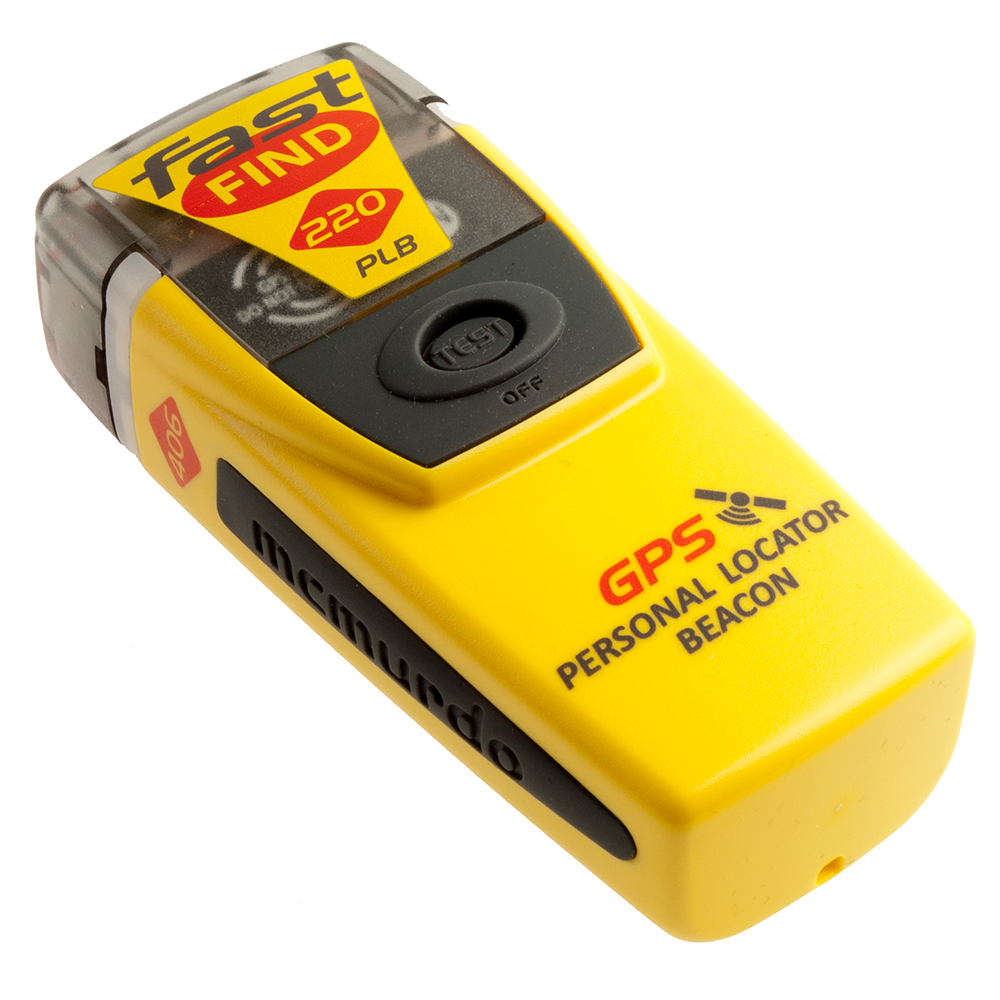
McMurdo FastFind 220 GPS PLB
The compact McMurdo FastFind PLB with GPS comes with no subscription or call charges as standard. Buy the FastFind 220 today for FREE UK delivery!www.marinesuperstore.com
Just get one of these
Best product in a real emergency if you are conscious to activate it.
Deutsch - Drahthaar
Well-Known Member
PLB's such as Fast Find 220 are linked to government satellites so are extremely accurate. Some other systems use private GPS satellites and were tested in the field some years back by FCS and were found to be many meters out.you don't need a signal for a PLB, they work off satellites

splash
Well-Known Member
Same with all of them ! If you’re having a serious medical problem chances are it’s only body recovery anywayEr, if it doesn’t work and you’re lying face down in a ditch then surely you lose quite a bit???

Having spent over 20 years designing, optimising and managing project for 3 out of the 4 main UK operators plus a few overseas, I can tell you that its no supprise.I have a Vodafone sim and an Anywhere sim there are lots of areas I go to with zero signal on any network. It's hopeless around here. I get people from all over the place come around this area and are amazed at how crap it is especially as it's in the middle of the South of England!

caorach
Well-Known Member
Get a PLB, cost about £200, battery lasts around 7 years, no subscription charges, signal goes to HM coastguard not some call centre in the US.
This is the only answer if you want to ensure rescue in a life threatening emergency. PLBs are certified to give the highest chance of working and are the same international system that is used on aircraft and ships. When you activate a PLB the signal is monitored by government agencies across the world, the coastguard in the UK, and not someone on minimum wage in a call centre while the electronics are built to a certified standard.
However, the other systems have the advantage of being able to send non-emergency signals so people on facebook, or the internet, or whatever can see where you are. This might provide reassurance for for friends and family if they are concerned about you being out and about. For this reason the commercial messaging devices which, some accounts indicate, can be somewhat unreliable, can be very useful if you have to do a "lone working" risk assessment type document as you can have a check in every hour or something. On paper this looks good even if it is actually much less reliable than the PLB network where you only send a signal if in trouble.
I personally carry a PLB as I spend quite a lot of time alone in very remote places and I prime anyone who might worry with the fact that if the coastguard don't contact them then I'm either safe or dead and there's nothing they can do in either case, given this then providing them with regular check ins doesn't give them much additional information and in view of the reputation of the commercial devices to occasionally fail to connect then they can actually raise the potential to really scare someone. I also guess that people who see regular fails to check in might stop worrying about them.

Sealgair nam fiadh
Well-Known Member

Garmin inReach Mini 2
Now sell them in the shop they are so good
£300
Now sell them in the shop they are so good
£300
caorach
Well-Known Member
I have one that's 9 year old and battery still fine. However, think the battery can be replaced but needs sending off somewhere. I keep it in the house when not in use as cold lessens battery life.
Best product in a real emergency if you are conscious to activate it.
I don't want to sound like one of the internet doom merchants and I'm sure you probably know this but...
PLBs need to be certified to a certain standard and one of the "standards" they must meet is that, when activated, the battery will continue to operate the device for 24 hours. So the battery life that the manufacturer quotes is the point at which the battery will no longer meet the certification standard, there will still be plenty of life left in the battery but in an emergency you can't expect it to work for 24 hours and probably no one can guess how long it will continue to work for. This is why the batteries are replaced even though there's plenty of juice left in them.
Most PLBs these days transmit the distress signal plus your GPS coordinates but the PLB also transmits a relatively weak "homing signal" on 121.5MHz that is used by rescuers to pinpoint your exact location once they get close to you. For this reason having a PLB that transmits for a goodly length of time is a big advantage in a rescue situation, having any PLB even if it only works for a short time is still better than nothing.
Purely out of interest the time before a rescue operation is launched is around 45 minutes (again the exact details of this form part of the certification and definition of the system so the coastguard and PLB must meet this certification) for non-GPS equipped PLBs and a matter of a few minutes for the GPS equipped PLBs. Having a GPS equipped PLB potentially knocks about 40 minutes off your rescue time. If you are located in the most remote areas where any search operation is likely to require a helicopter then there is a time allowed for the helicopter to actually get off the ground, I believe here this is 1 hour but don't know where I got this number from so if someone knows better they may care to correct me. In Scotland the Helicopters are based in Prestwick, Inverness, Sumburgh, and Stornoway so they can take a goodly while to fly to any search area plus they can be busy at other jobs. Clearly helicopters can only fly in suitable weather, if the helicopter can't go the mountain rescue or coastguard team will be sent (more than likely they will be sent even if a helicopter can go) and they take a finite time to assemble, get their gear, coordinate a rescue, get to the area, and start walking. If you are in a genuinely remote area then the time to get a rescue team to your location, assuming bad weather, is going to be many hours and once they get to your general location they will be using their direction finding gear to home in on your 121.5MHz signal from your PLB. If your PLB batteries have died at this point then life hasn't got easier for anyone involved.

Look at a Bivy Stick (in the UK look up at GTC). It’s Iridium Sat based so works where there is no phone signals and basically provides the Sat link to an App on your phone. You can send/receive text message, report position routinely and the device has a SOS button which is linked to a 24/7 manned rescue centre. Bivy is produced by ACR who do most PLBs and unlike them, allows two-way messaging and position reporting at the frequency you think is appropriate. I used to carry a Sat phone but this is more flexible and if I roll the quad I think I’ll be able to hit the SOS button - I carry it on my bino harness on my left shoulder. They now have UK mobile numbers too and billing (it’s a subscription service but unused credits do roll over) is in GBP.

 gtc.co.uk
Over my DMG we are required to use WhatsApp live location if stalking solo on the ground. Sadly, in practice it does not work well as there are significant areas with absolutely no phone coverage and I can be out of contact for significant amounts of time. The Bivy stick means that if anything does happen I do have a means of summoning help at all times.
ACR Bivy Stick 2-Way Satellite Communicator
Compact, powerful, Iridium-powered Bivy Stick satellite communicator from ACR turns your smartphone into a fully-functioning satellite communication device.
gtc.co.uk
Over my DMG we are required to use WhatsApp live location if stalking solo on the ground. Sadly, in practice it does not work well as there are significant areas with absolutely no phone coverage and I can be out of contact for significant amounts of time. The Bivy stick means that if anything does happen I do have a means of summoning help at all times.
Last edited:

One on top of two
Well-Known Member
I just use my Iwatch
Tracks me .
If I fall and hurt myself , it will call emergency services , if I’m out cold at the bottom of a ditch it will detect my slip/fall and will contact my misus and emergency services and give them my location .
They have OS maps , weather warnings ,total hands free the list goes on .
An apple Iwatch 7 saved a local to us farmer mate at the start of the year when he had a heart attack while sub-soiling in a field all on his own.
I almost forgot I also carry a Garmin fortrex 701 ballistic edition too . Got to have a plan B .
Tracks me .
If I fall and hurt myself , it will call emergency services , if I’m out cold at the bottom of a ditch it will detect my slip/fall and will contact my misus and emergency services and give them my location .
They have OS maps , weather warnings ,total hands free the list goes on .
An apple Iwatch 7 saved a local to us farmer mate at the start of the year when he had a heart attack while sub-soiling in a field all on his own.
I almost forgot I also carry a Garmin fortrex 701 ballistic edition too . Got to have a plan B .
The Teltonik does need mobile signal, so as you're in places with nothing on any network, it's probably not the one for you.I have a Vodafone sim and an Anywhere sim there are lots of areas I go to with zero signal on any network. It's hopeless around here. I get people from all over the place come around this area and are amazed at how crap it is especially as it's in the middle of the South of England!
Deutsch - Drahthaar
Well-Known Member
My PLB has a battery test button/function to ensure battery is adequately charged and tells you when to get it replaced.I don't want to sound like one of the internet doom merchants and I'm sure you probably know this but...
PLBs need to be certified to a certain standard and one of the "standards" they must meet is that, when activated, the battery will continue to operate the device for 24 hours. So the battery life that the manufacturer quotes is the point at which the battery will no longer meet the certification standard, there will still be plenty of life left in the battery but in an emergency you can't expect it to work for 24 hours and probably no one can guess how long it will continue to work for. This is why the batteries are replaced even though there's plenty of juice left in them.
Most PLBs these days transmit the distress signal plus your GPS coordinates but the PLB also transmits a relatively weak "homing signal" on 121.5MHz that is used by rescuers to pinpoint your exact location once they get close to you. For this reason having a PLB that transmits for a goodly length of time is a big advantage in a rescue situation, having any PLB even if it only works for a short time is still better than nothing.
Purely out of interest the time before a rescue operation is launched is around 45 minutes (again the exact details of this form part of the certification and definition of the system so the coastguard and PLB must meet this certification) for non-GPS equipped PLBs and a matter of a few minutes for the GPS equipped PLBs. Having a GPS equipped PLB potentially knocks about 40 minutes off your rescue time. If you are located in the most remote areas where any search operation is likely to require a helicopter then there is a time allowed for the helicopter to actually get off the ground, I believe here this is 1 hour but don't know where I got this number from so if someone knows better they may care to correct me. In Scotland the Helicopters are based in Prestwick, Inverness, Sumburgh, and Stornoway so they can take a goodly while to fly to any search area plus they can be busy at other jobs. Clearly helicopters can only fly in suitable weather, if the helicopter can't go the mountain rescue or coastguard team will be sent (more than likely they will be sent even if a helicopter can go) and they take a finite time to assemble, get their gear, coordinate a rescue, get to the area, and start walking. If you are in a genuinely remote area then the time to get a rescue team to your location, assuming bad weather, is going to be many hours and once they get to your general location they will be using their direction finding gear to home in on your 121.5MHz signal from your PLB. If your PLB batteries have died at this point then life hasn't got easier for anyone involved.

Heym SR20
Well-Known Member
I still think that one of the best methods of ensuring your safety is not relying on devices. Let people know where you are going to be along with a check in time. If you haven’t checked in then help can be alerted.
When I was culling on the hill or working alone out in the fields in the days long before mobiles we carried a radio to keep in touch with others.
Electronic devices are wonderful support devices, but fundamentally are no substitute for good basic practice and just being bloody careful.
And if you are going to be doing things that are potentially dangerous should you really be alone?
Appreciate that it may be a question of money etc, but often an assistant will greatly improve productivity well over and above the additional cost.
When I was culling on the hill or working alone out in the fields in the days long before mobiles we carried a radio to keep in touch with others.
Electronic devices are wonderful support devices, but fundamentally are no substitute for good basic practice and just being bloody careful.
And if you are going to be doing things that are potentially dangerous should you really be alone?
Appreciate that it may be a question of money etc, but often an assistant will greatly improve productivity well over and above the additional cost.
Similar threads

- Replies
- 36
- Views
- 2K


- Replies
- 11
- Views
- 1K


- Replies
- 31
- Views
- 2K


- Article
- Replies
- 17
- Views
- 2K

- Replies
- 4
- Views
- 782

