Thought this might be of interest to others here.
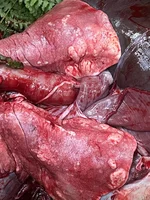
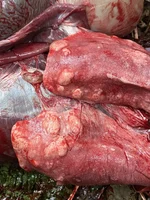
Back in early August I shot a roe buck that, upon examination, had some suspicious looking patches on the lungs:
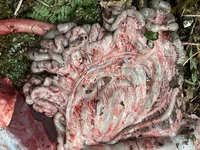
However nothing unusual with the retro-pharangyal, sub-maxillary or mesenteric lymph nodes:
Nor in the pleural cavity:
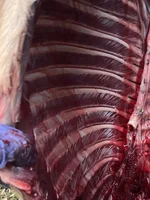
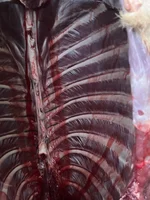
As some will know, we are close to a known bTB hotspot and have encountered several cases of bTB in muntjac in the past, so on the precautionary principle I contacted APHA and, efficient as ever, they came out the very next day to take samples. The carcass was then double-bagged and disposed of via the local Hunt kennels for incineration.
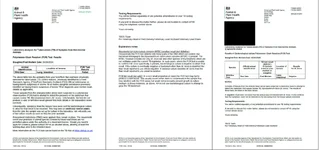
Having done this, things then went cold, so I chased up with APHA this week and today received notification that the PCR test was negative. They will be sending samples on for bacteriological culture. However independent to this I also had the opportunity to share the photos with the BDS Chief Vet who diagnosed that, rather than bTB, this is instead a case of protostrongyle lungworm. The lack of lesions on the mesenteric was a signal indicator, and the lesions (if incised) would have been very different to those of bTB (red with possible signs of worm larvae, vs pistachio-coloured and cheesy/grainy).
In retrospect it was probably unnecessary to contact APHA and dispose of the carcass, but having never encountered lungworm in roe before this was a prime example of “every day is a school day”.
I hope the photos may help others should they come across anything similar.
Back in early August I shot a roe buck that, upon examination, had some suspicious looking patches on the lungs:
However nothing unusual with the retro-pharangyal, sub-maxillary or mesenteric lymph nodes:
Nor in the pleural cavity:
As some will know, we are close to a known bTB hotspot and have encountered several cases of bTB in muntjac in the past, so on the precautionary principle I contacted APHA and, efficient as ever, they came out the very next day to take samples. The carcass was then double-bagged and disposed of via the local Hunt kennels for incineration.
Having done this, things then went cold, so I chased up with APHA this week and today received notification that the PCR test was negative. They will be sending samples on for bacteriological culture. However independent to this I also had the opportunity to share the photos with the BDS Chief Vet who diagnosed that, rather than bTB, this is instead a case of protostrongyle lungworm. The lack of lesions on the mesenteric was a signal indicator, and the lesions (if incised) would have been very different to those of bTB (red with possible signs of worm larvae, vs pistachio-coloured and cheesy/grainy).
In retrospect it was probably unnecessary to contact APHA and dispose of the carcass, but having never encountered lungworm in roe before this was a prime example of “every day is a school day”.
I hope the photos may help others should they come across anything similar.