Historic/Vintage Sporting Rifles suitable for historic matches and stalking (rifle/calibre)

Jack3

Well-Known Member
I'm vaguely looking for a historic sporting rifle (pre-1946) which I can use to shoot in the BSRC Historic Match and other historic matches at Bisley, but also take out on the odd stalk for a bit of fun.

I would be interested to hear recommendations for rifles and calibres. At the moment I'm leaning towards 7x57 and I've seen some beautiful looking old Mannlicher Schoenauers.

Any other suggestions/advice when it comes to historic rifles? And any recommended RFD?

Thanks.
 
A Swede Model 46 sporter. Made in the forties 6.5x55. Accurate and cheap. Alternatively a 648 is an 8x57. I have three of these. Accurate.~Muir
 
It would be difficult to beat the best (in .275”)

P1000699.jpeg


It’s worth bearing in mind that modern ‘sporterisations’ of old actions is unlikely to comply with the rules (certainly outside of the spirit of them).
 
Shooting a deer with open sights is really not that difficult. Back in the day putting several rounds in a 4” circle at 100 yards with a lee enfield or the SLR was pretty much the basic shooting test for most infantry men.

Many hunters could do a lot better, and those leaf sights with 300yards weren’t just for show.

But as most old stalkers would have told you, the secret was getting in as close as you can. Then bring the bead up the back of the foreleg and squeeze the trigger.

Secret was practice. Many of the older stalkers who grew up with open sights are now mostly long gone. I am in my mid 50’s and learnt my rifle shooting with open sights. Thats what we did.

These days I have used open sights on occasion. My combination gun has very good opens, but with a scope in a claw mount thats fast to attach.

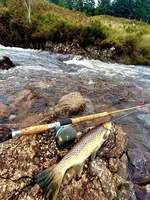
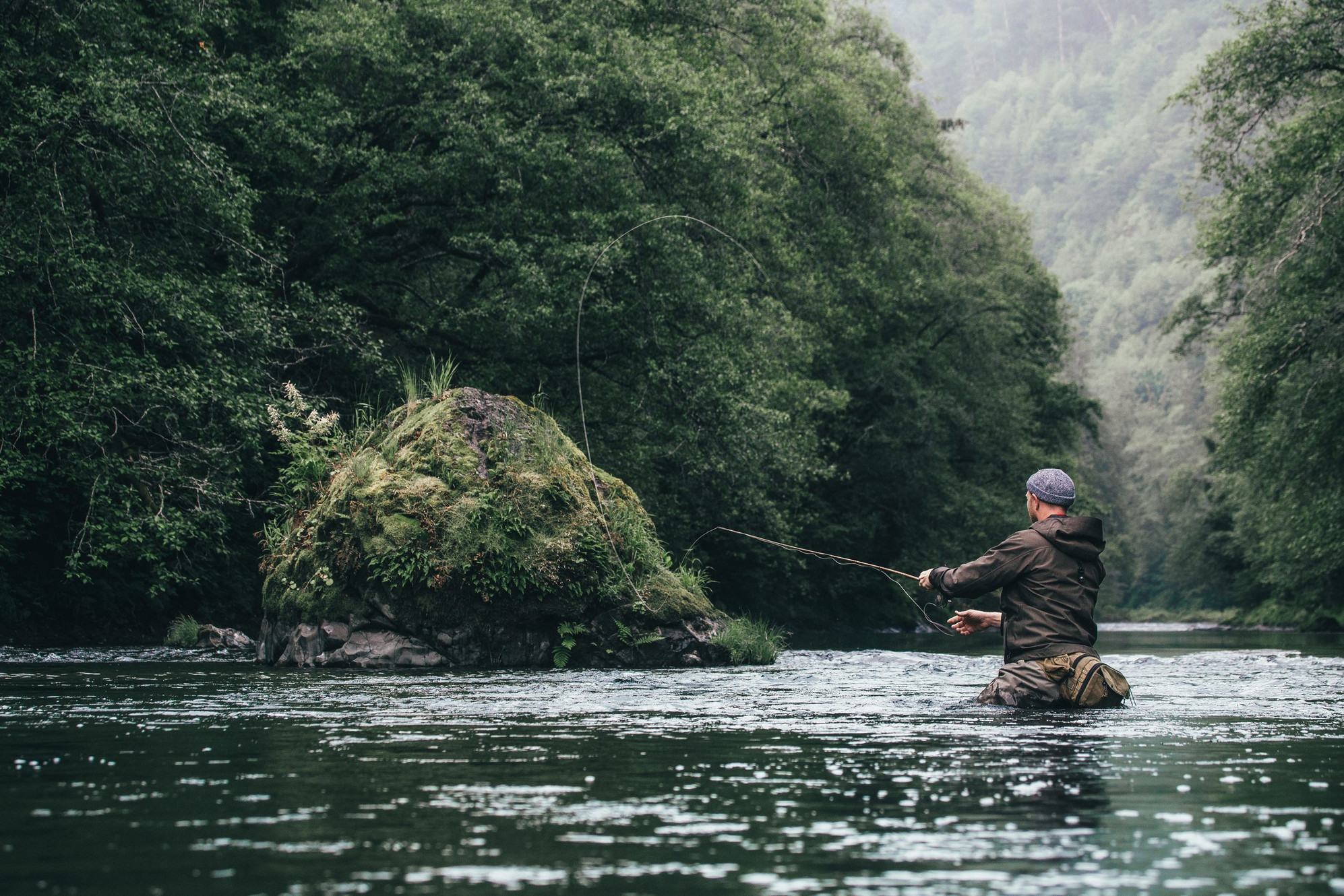
Split cane rods are things of beauty. Old ones may well have dried out and glues cracked, but a decent split cane is just lovely to use. No they are not easy to cast, nor can throw a long line.

I built a little 8ft No 3 weight trout rod nearly 30 years ago using a rod kit from Norman Agutters. I have many trout on it, from small little river trout, to a couple of times some of the big river test browns. A split cane rod is much much slower than a carbon rod. Raise the rod, have a cup of tea and then push it forward. It will put a line beautifully and delicately. You won’t cast half way across a lake for stocked rainbows, but that’s not its job. Rivers and hill lochans its a joy. Agutters still in business offering rods, rod kits and blanks. If you can tie a fly building a rod on a blank is easy enough.

 
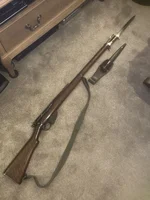
After a visit to the Trafalgar Meeting at Bisley on Saturday, and a good look around the trade fair, I've decided to look more closely at the old Lee Speed. They seem to tick a lot of boxes for me and .303 loaded ammo and reloading components appear to be much easier to get hold of compared to 7x57 and 6.5x54. Also much cheaper than many of the Mauser-actioned sporting rifles of the same era...

I've started researching the rifle and the numerous variations and I think the Lee Speed No.4 looks the most attractive. I gather the earlier versions with 'metford rifling' were designed for black powder and not as well suited to modern loaded ammo.

Any Lee Speed experts on here have any suggestions/recommendations and things to look out for?
 
The main difference between Metford and Enfield rifling is the service life with Cordite. I don’t know of any testing particularly with modern powders. Metford rifles barrels last very long with BP but not very well with Cordite. You can use it with modern powders if it’s suitably “nitro” proofed. Metford rifled rifles is scarce.

With any old rifles, look out for corrosion and pitting down the bores. Ideally you also need to measure bore diameter, some (Especially 303’s) are well used and while the bore might be shiny it may be shot out with an oversized bore. You can still potentially shoot them as long as you load bullets sized to the bore. Don’t mix them with regular ammo or you’ll blow up another rifle.

Throat erosion is very common and may be fine for limited use while you still get accuracy. Pitting near the muzzle end is looking for trouble (in terms of accuracy).

You can significantly extend the service life of an old rifle by using round nose flat base bullets. These are not affected much by wear or light pitting and you can still get good accuracy from rifles in which boat tail bullets will tumble.

6.5x54 is not too bad to feed, you just need a few cases to get started, dies are available.

7x57 is no harder to feed than 303.

Don’t forget about 8x57 and other popular European calibres :) Just watch out for bore sizes in 8x57j, again these are scarce but they do pop up occasionally.

Another consideration is whether you want to use a scope or open sight? Most classic rifles never had scopes mounted and should not. If you want a scoped rifle, buy one that’s already ruined.
 
i put a schmidt- rubin 1889 on ticket in 7.5x53.5 to see what it would do and my goodness was it accurate and fast to operate !

it would shoot around an inch (i drilled and tapped it for a scope)

should never have let it go really
 
The main difference between Metford and Enfield rifling is the service life with Cordite. I don’t know of any testing particularly with modern powders. Metford rifles barrels last very long with BP but not very well with Cordite. You can use it with modern powders if it’s suitably “nitro” proofed. Metford rifled rifles is scarce.

With any old rifles, look out for corrosion and pitting down the bores. Ideally you also need to measure bore diameter, some (Especially 303’s) are well used and while the bore might be shiny it may be shot out with an oversized bore. You can still potentially shoot them as long as you load bullets sized to the bore. Don’t mix them with regular ammo or you’ll blow up another rifle.

Throat erosion is very common and may be fine for limited use while you still get accuracy. Pitting near the muzzle end is looking for trouble (in terms of accuracy).

You can significantly extend the service life of an old rifle by using round nose flat base bullets. These are not affected much by wear or light pitting and you can still get good accuracy from rifles in which boat tail bullets will tumble.

6.5x54 is not too bad to feed, you just need a few cases to get started, dies are available.

7x57 is no harder to feed than 303.

Don’t forget about 8x57 and other popular European calibres :) Just watch out for bore sizes in 8x57j, again these are scarce but they do pop up occasionally.

Another consideration is whether you want to use a scope or open sight? Most classic rifles never had scopes mounted and should not. If you want a scoped rifle, buy one that’s already ruined.
Very helpful - thank you!!
 
i put a schmidt- rubin 1889 on ticket in 7.5x53.5 to see what it would do and my goodness was it accurate and fast to operate !

it would shoot around an inch (i drilled and tapped it for a scope)

should never have let it go really
They're cracking rifles- Not sure if its to "new", but my 80 something year old K31 is great to shoot with iron sights, which i have done out to 1000 yards and been happy to hit the target. Once you get the sight picture correct it can also be quite consistent with grouping at that range. Arguably a better made rifle than the enfield, ammunition available off the shelf and i understand there are still a lot of surplus rifles kicking around as well..
 
Back
Top