Rebirth of a Rook Rifle

@Heym SR20

Any news about this project?

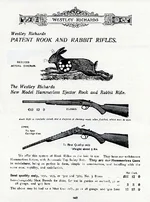
I am a sucker for rook rifles and have been since I read an article about a guy sleeving a Westley Richards with a 6x70R barrel almost 20 years ago.

This caliber is legal for all small game up to roe deer here in Sweden and I want one.
 
@Heym SR20

Any news about this project?

I am a sucker for rook rifles and have been since I read an article about a guy sleeving a Westley Richards with a 6x70R barrel almost 20 years ago.

This caliber is legal for all small game up to roe deer here in Sweden and I want one.
Bear in mind that the pressure of a hot 6mm cartridge may well be too much for the actions of many 100+ year old rook rifles. .32-20 is always a good choice.

HB
 
It has been a somewhat frustrating project and I have learned so so much about gunsmithing. Skills that I didn’t even know that I needed, but that I now have taught myself.

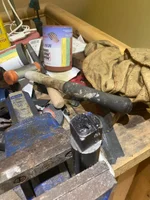
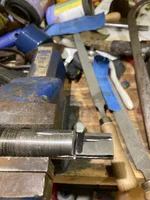
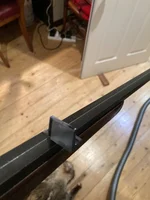
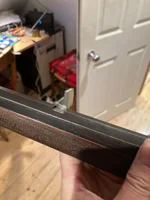
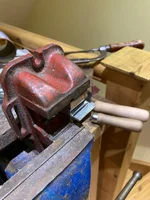
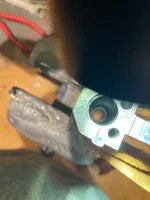
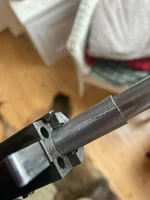
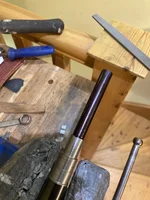
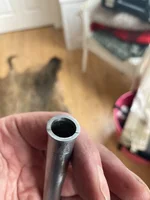
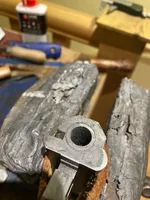
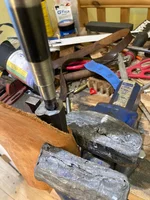
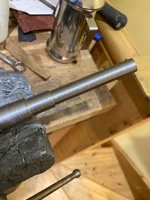
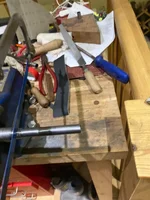
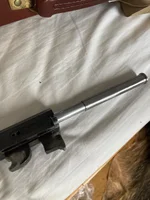
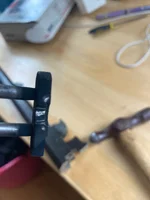
Here are just a few of taking a bit of an old barrel and making a new rear sight.
 

Attachments

  • IMG_8954.webp
    IMG_8954.webp
    224.9 KB · Views: 55
  • IMG_8964.webp
    IMG_8964.webp
    196.6 KB · Views: 55
  • IMG_8965.webp
    IMG_8965.webp
    120.6 KB · Views: 55
  • IMG_8967.webp
    IMG_8967.webp
    119.1 KB · Views: 54
  • IMG_8968.webp
    IMG_8968.webp
    249.6 KB · Views: 55
Mention of the 6x70R. This cartridge was specifically designed as a low pressure cartridge to work old break action shotguns and Drillings as an Einstecklauf (a removable barrel).

It runs at about 37,000 psi - on a par with the Hornet. I did give it serious consideration, but finding cases, dies etc is really somewhat difficult.
 
So, back to the story. The barrel finally arrived from Germany after well over a year. It was part of a consignment, and got caught up in all the bollox of German export permits and then sat in UK customs for many months until some crelk finally got around to processing the consignment and shipped it to my RFD after not only being charged customs clearance fees but also storage whilst they cleared it.

Once I had the bits in my little hands the project could begin. Part of this was learning to live with Long COVID and there were days and weeks when my brain and hands just seem completely disconnected so it got left alone.

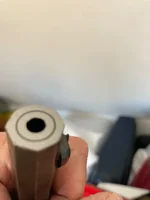
First job was to make a sleeve for the breech end to take up the space in the chamber. First I cleaned up the 410 chamber with an expanding reamer, lots of oil and turning by hand. I wanted to turn to a parallel side rather than tapered. IMG_8178.webp

Then took a piece of 10 mm bored steel tube and filed up a tube that fitted both the chamber and the barrel tube.


IMG_8218.webp

And then I thought about it, and talked it through with gunsmith friends. Whilst mild steel would be fine, a mild steel tube a) didn’t fill the rim, and b) was made of chocolate.

So scrounged an old sako steel barrel. After a few abortive attempts, and learning how to drive a Colchester lathe I turned up a blank


IMG_8249.webp

Which after quite a bit of draw filing and smoking in became


IMG_8256.webpIMG_8254.webp

A sleeve that fitted the chamber and filled the rim on the barrel.
 
To continue, my challenge on the lathe was turning up a thin walled long tube, as it got thinner the tail support just flared things out. So I made a blank that was bored to take the barrel tube, but walls still a bit thick and oversized.

Colour it with sharpie, draw file a bit, and test, and repeat. IMG_8250.jpeg

And keep easing it down till it was almost there fitting both the chamber and the rim.


IMG_8246.jpeg

Then cut it off leaving plenty of thickness at the rim to dress it properly

IMG_8251.jpeg

IMG_8257.jpeg

This was a huge learning curve and whilst it seems simple, I scrapped at least the first two attempts. Somebody much more experienced would no doubt do it differently. I do have access to a lathe, but it’s not the most precise, is the other side of town and is very much a “farm” lathe.

I got it to a point where it all slid nicely together, then a tap of a hammer to finally seat would lock it all together.
 
I had better not ask how many man-hours you have expended so far...
But an excellent project!
HB
Haven’t a clue. To be honest haven’t even bothered trying to count. And what actually is doing the job, versus what’s learning the skills and figuring it out. And a lot of time is spent just working out how to do things. image.jpg

I definitely subscribe to Richard Bach’s theory that there is a parallel world of gunsmiths, or in his case aviation engineers, who are in leather aprons and done it all before. They are absolute fonts of knowledge - it’s just accessing them thats the problem. You need to look at the problem from every angle, and try and follow it through step by step and then backwards. Then forget about it and do something completely different.

The engineers and gunsmiths will beaver away at an answer and when you least expecting it they will deliver the solution that is totally obvious and you can’t understand why you hadn’t discovered it before. :)
 
I am not going bore you all with step by step through all the various stages of learning to make firing pins (I think I have made at least three), primers flowing back into firing pin holes, making new pins to replace corroded threads, fettling an extractor and rejointing it twice. A few strokes too many with emery paper, and had to reweld the hook and start again.
 

Attachments

  • IMG_8358.webp
    IMG_8358.webp
    75.8 KB · Views: 32
  • IMG_8361.webp
    IMG_8361.webp
    54.2 KB · Views: 28
  • IMG_8657.webp
    IMG_8657.webp
    46.2 KB · Views: 32
  • IMG_8810.webp
    IMG_8810.webp
    147.3 KB · Views: 31
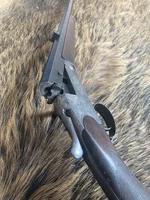
And here she is now in all her glory. A sweet little thing to shoot. Most factory ammo I seem to be able to find - winchester, Remington is utterly crap, and the Hornady Superformance is hotly loaded. Shooting with open sights is fun and am holding a two to three inch group and 50 or so metres off hand. Most of the testing has just been working on firing pins, etc. It’s a little trigger plate action, cocked by the top lever, and the spring must be the age of the gun. At it youngest it will be Pre First War, more likely made when Queen Victoria was on the throne, and main mode of transport was on foot.

I went and invested in a set of dies and 1 Kg tub of Vhit N110. 10grains is a max load, so 1 kg will give me free shooting for a long time.

I have ordered some little 40 grain Fox bullets, but in the meantime using some 40gn VMAX.


IMG_9249.webp
 
On Reflection

Will I build Another?

Absolutely. I would do things differently. This little gun was probably beyond “economic repair” and would have gone in the sealed bid auction as parts. So I took the view that it was a learning project and if I completely cocked it up, then the bits would make nice ornaments, desk toys or knife handles.

There is still lots to fettle. Firing pin probably needs to be bushed as a disk set striker, but that’s a job requiring a good lathe or mill which I don’t have.

Silver Steel - I wish I had known about this stuff much earlier in the process. It’s primary steel that has magical properties. With sharp files, a blow torch, a turning device and a sharpie pen and measuring device you can make anything.

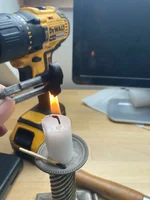
Chuck a piece in the drill, clamp the drill in the vice, sharp and in 20 minutes an hour later you have a hand pin, firing pin or the blank for a reamer. Careful filling allows you to cut teeth.

Heat it to a cherry red and plunge it into rapeseed oil and it goes extremely hard. You can sharpen it with a grinding stone, but it will cut steel easily. Heating it again and learning to read the colours or using different types of oil till they flash and burn (different oils and fats have different flash points) allows you to reduce the hardness but improve the toughness. This is a very key skill to learn. And i wish I had had these before I started. But I didn’t know or appreciate that I needed them.

You can make parts for gun, make tools to make other parts, make tools to take them apart and put back together etc etc. It’s the way things were done. Yes it takes a bit of time, but by the time you have hunted through the inter webulator or searched in vain shops you have made a tool and done the job.

A lathe would be nice to have. But I don’t really have room for one.

Thread cutting is a skill I need to learn. Old guns have many different threads. Smiths made their own screws on the own lathes, which were probably made by hand initially so threads of one smith will be different to others. Lathes and mills allow repeat jobs to be done more quickly, but you have all the set up time.

I have really learned the power of a file. I am in no ways an expert yet. But if you take your time you get more accurate.

But truth be told I have probably completed the first couple of weeks or perhaps a month as an apprentice.

Now off to the range.
 
Haven’t a clue. To be honest haven’t even bothered trying to count. And what actually is doing the job, versus what’s learning the skills and figuring it out. And a lot of time is spent just working out how to do things. View attachment 429896

I definitely subscribe to Richard Bach’s theory that there is a parallel world of gunsmiths, or in his case aviation engineers, who are in leather aprons and done it all before. They are absolute fonts of knowledge - it’s just accessing them thats the problem. You need to look at the problem from every angle, and try and follow it through step by step and then backwards. Then forget about it and do something completely different.

The engineers and gunsmiths will beaver away at an answer and when you least expecting it they will deliver the solution that is totally obvious and you can’t understand why you hadn’t discovered it before. :)
A girlfriend gave me a copy of "Jonathan Livingstone Seagull" in California in 1972. Still a good, quick read.
Also the 'Last Whole Earth Catalog' in those distant Pre-Internet days...

HB
 
My first Rook was a .380 with the name of Greys of Inverness engraved on the barrel, after the first few shots I discovered it had a manky chamber, extraction wasn’t easy to say the least. Chatting to an engineer friend about it he took the barrel and sleeved the chamber, superb work l could hardly tell it had been done, it shot superbly after that.

It was great to reread the whole of your post, almost wish l hadn’t sold most of my Rook’s now, l still have a couple left along with a few Rook Rifle cases. All my Rook accessories sold to one guy who also bought a Holland and Holland case, what a nice guy.
 
Last edited:
My first Rook was a .380 with the name of Greys of Inverness engraved on the barrel, after the first few shots I discovered it had a manky chamber, extraction wasn’t easy to say the least. Chatting to an engineer friend about it he took the barrel and sleeved the chamber, superb work l could hardly tell it had been done, it shot superbly after that.

It was great to reread the whole of your post, almost wish l hadn’t sold most of my Rook’s now, l still have a couple left along with a few Rook Rifle cases. All my Rook accessories sold to one guy who also bought a Holland and Holland case.
Many Rook rifles suffered from erosion of the chamber, caused by firing the shorter, cheaper revolver cartridges in the rifle. Of course the pre-war primers were also corrosive, so the front of the chamber became pitted. Sleeving is a good solution.

HB
 
On Reflection

Will I build Another?

Absolutely. I would do things differently. This little gun was probably beyond “economic repair” and would have gone in the sealed bid auction as parts. So I took the view that it was a learning project and if I completely cocked it up, then the bits would make nice ornaments, desk toys or knife handles.

There is still lots to fettle. Firing pin probably needs to be bushed as a disk set striker, but that’s a job requiring a good lathe or mill which I don’t have.

Silver Steel - I wish I had known about this stuff much earlier in the process. It’s primary steel that has magical properties. With sharp files, a blow torch, a turning device and a sharpie pen and measuring device you can make anything.

Chuck a piece in the drill, clamp the drill in the vice, sharp and in 20 minutes an hour later you have a hand pin, firing pin or the blank for a reamer. Careful filling allows you to cut teeth.

Heat it to a cherry red and plunge it into rapeseed oil and it goes extremely hard. You can sharpen it with a grinding stone, but it will cut steel easily. Heating it again and learning to read the colours or using different types of oil till they flash and burn (different oils and fats have different flash points) allows you to reduce the hardness but improve the toughness. This is a very key skill to learn. And i wish I had had these before I started. But I didn’t know or appreciate that I needed them.

You can make parts for gun, make tools to make other parts, make tools to take them apart and put back together etc etc. It’s the way things were done. Yes it takes a bit of time, but by the time you have hunted through the inter webulator or searched in vain shops you have made a tool and done the job.

A lathe would be nice to have. But I don’t really have room for one.

Thread cutting is a skill I need to learn. Old guns have many different threads. Smiths made their own screws on the own lathes, which were probably made by hand initially so threads of one smith will be different to others. Lathes and mills allow repeat jobs to be done more quickly, but you have all the set up time.

I have really learned the power of a file. I am in no ways an expert yet. But if you take your time you get more accurate.

But truth be told I have probably completed the first couple of weeks or perhaps a month as an apprentice.

Now off to the range.
You will love me but, emery is cloth, sand is paper emerycloth / strips, sandpaper. Hardening is first and the the next process to toughen the steel is known as tempering.
I have 3 suitcases and some big cartons full of Model Engineer & Engineering in miniature magazines dating from the 1930s through the war years and up to the 1990s. I will never read them again and hate to see them go in the tip when I pop off.
They are in Germany but if someone wanted the whole caboodle I could bring them back in the car 11th August to Dover. You would learn every trick for the man in a shed from them.
I did an engineering apprenticeship so know most of the stuff anyway.
 
You will love me but, emery is cloth, sand is paper emerycloth / strips, sandpaper. Hardening is first and the the next process to toughen the steel is known as tempering.
I have 3 suitcases and some big cartons full of Model Engineer & Engineering in miniature magazines dating from the 1930s through the war years and up to the 1990s. I will never read them again and hate to see them go in the tip when I pop off.
They are in Germany but if someone wanted the whole caboodle I could bring them back in the car 11th August to Dover. You would learn every trick for the man in a shed from them.
I did an engineering apprenticeship so know most of the stuff anyway.
Reminds me of going to the recycling centre one day and seeing an old lady tip box after box of vintage porn mags in, I’m guessing her husband died and left something in the attic 😂 the site staff were all hovering like bees waiting for her to leave 🤢
 
You will love me but, emery is cloth, sand is paper emerycloth / strips, sandpaper. Hardening is first and the the next process to toughen the steel is known as tempering.
I have 3 suitcases and some big cartons full of Model Engineer & Engineering in miniature magazines dating from the 1930s through the war years and up to the 1990s. I will never read them again and hate to see them go in the tip when I pop off.
They are in Germany but if someone wanted the whole caboodle I could bring them back in the car 11th August to Dover. You would learn every trick for the man in a shed from them.
I did an engineering apprenticeship so know most of the stuff anyway.
A real Gem of an item. Ebay or an auction of model engineering stuff and I am sure they will attract good attention.
 
Back
Top