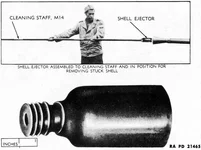
I do remember the US medical forces operating on a bloke that had a propelled grenade lodged into his body...They had a huge sand bag curtain 'just in case' and the op was successful too. It says "mortar" below but I always remembered it as a grenade..no matter.
A remarkable story from the Vietnam War involves South Vietnamese soldier
Nguyen Van Luong, who survived after a live, unexploded
60mm mortar shell became lodged in his body.
In October 1966, an incoming mortar round struck the hatch of the armored personnel carrier Luong was riding in, then hit his helmet, and finally entered his body just above the collarbone, sliding down between his skin and rib cage. The explosive failed to detonate upon impact, turning him into a "human time bomb".
You may have read my post today re fear to
@Mountain Bug ....this job would have the sphincter working like a gasping carp.
The Daring Surgery
Luong was rushed to a U.S. Navy hospital in Da Nang. The situation was extremely dangerous; any movement, pressure, or the use of electrocautery (which uses electricity to seal blood vessels and could have triggered the detonator) might cause the shell to explode, killing everyone in the operating room.
The operation was led by U.S. Navy Chief of Surgery
Dr. Harry Dinsmore. To minimize risk, staff evacuated nearby rooms, and the surgical team worked behind a wall of sandbags built around the operating table.
The procedure involved:
- An explosives expert, identified as "Lyons" or a similar name in various accounts, stood by and helped stabilize the device.
- Dr. Dinsmore made a careful incision to reach the shell, working only with hand tools to avoid any potential sparks or electrical current.
- The surgeon carefully loosened the shell and an explosive expert removed it and ran it outside to be safely disarmed.
The surgery was successful, and Luong, who primarily sustained muscle damage, made a full recovery within weeks and returned to his unit. Dr. Dinsmore was later awarded the Navy Cross for his heroism.
This extraordinary case, along with similar incidents involving RPGs in later conflicts, has been widely documented and is a testament to incredible wartime survival and medical bravery.