Appropriate Load, NRL Hunter, deer vs match?

Devon Stalker

Well-Known Member
Hi All

Ok so I’m a deer stalker, currently use Sako Powerhead Blade in my .308 for deer, but have recently started reloading and hope to shortly have developed a Virtus load in 155gr. When I started stalking I began with copper as could see the transition on the horizon and I can say I’ve had no major issues with it.

I’m hoping to do the NRL Hunter comp in November, but am not sure what round to use… should I stick with Sako or my newly developed Virtus, or move to something heavier (perhaps a match round) for the longer range targets (could be 100-1,000m)? Moving to match feels like defeating the object of the comp, a bit.

Shooting a Mauser M13 Impact in .308, 11in twist.

The other thing in my mind is that my objective with the competition is to be a better hunter, however Sako state their Blade is effective to 200m, as (I think) do Virtus. Due to terminal velocity I gather. So while the comp will be good experience, is it realistic to think that ‘an other’ copper projectile will have the terminal ballistics to appropriately cull a deer at an extended range (not 1,000 for me but say 300-400 for argument’s sake)? Or is this pie in the sky?

Any guidance would be appreciated.
 
I believe targets are out to 800m (don't quote me).
I'm not sure how they equate that with improving your stalking skills, it's not like you're permitted or encouraged to get closer.
I'd be prone to suggest loading up some ELDM or similar, and leave your copper for stalking.
 
My theory is that NRL hunting matches are for improving my rifle craft and getting to know my gun and ammunition that I use for stalking. I shoot my stalking gun and stalking copper ammunition (yew tree tlr 114gn)
Can copper kill cleanly at beyond 200m well right load right gun right ammunition and yes it can as numerous one shot kills on red stags attest to with my load out to about 360m
 
I like a few others use competitions like these to try and improve my marksmanship skills

I will be using a rifle I stalk with and have killed a great deal of deer with - however, I won’t be using my “deer load”

Whilst the bullet I use is highly accurate, it won’t cut it at the further ranges the comp will be shot at

Light and fast copper solids lose velocity equally fast beyond 350/400 mtrs

So I have a “match” load that I was actually out practicing with today

That is what I will be using for the comp

Plus, if you want to be “in it” then I’d suggest this may be the way forward
 
My post above comes across wrong, it's tongue in cheek that just didn't work. I'm actually keen to give the NRL stuff a go, but both my stalking rifles have both copper and target loads. Just the thought of using my expensive copper fills my Jockistani eyes with tears...
 
Not all bullets are created equal regardless of how they are constructed.

Key for longer ranges is whether the bullet retains enough energy for it to penetrate through the vitals and cause major trauma. Part of this is whether it expands enough to cause a reasonable wound channel and that is down to its design and impact velocity.

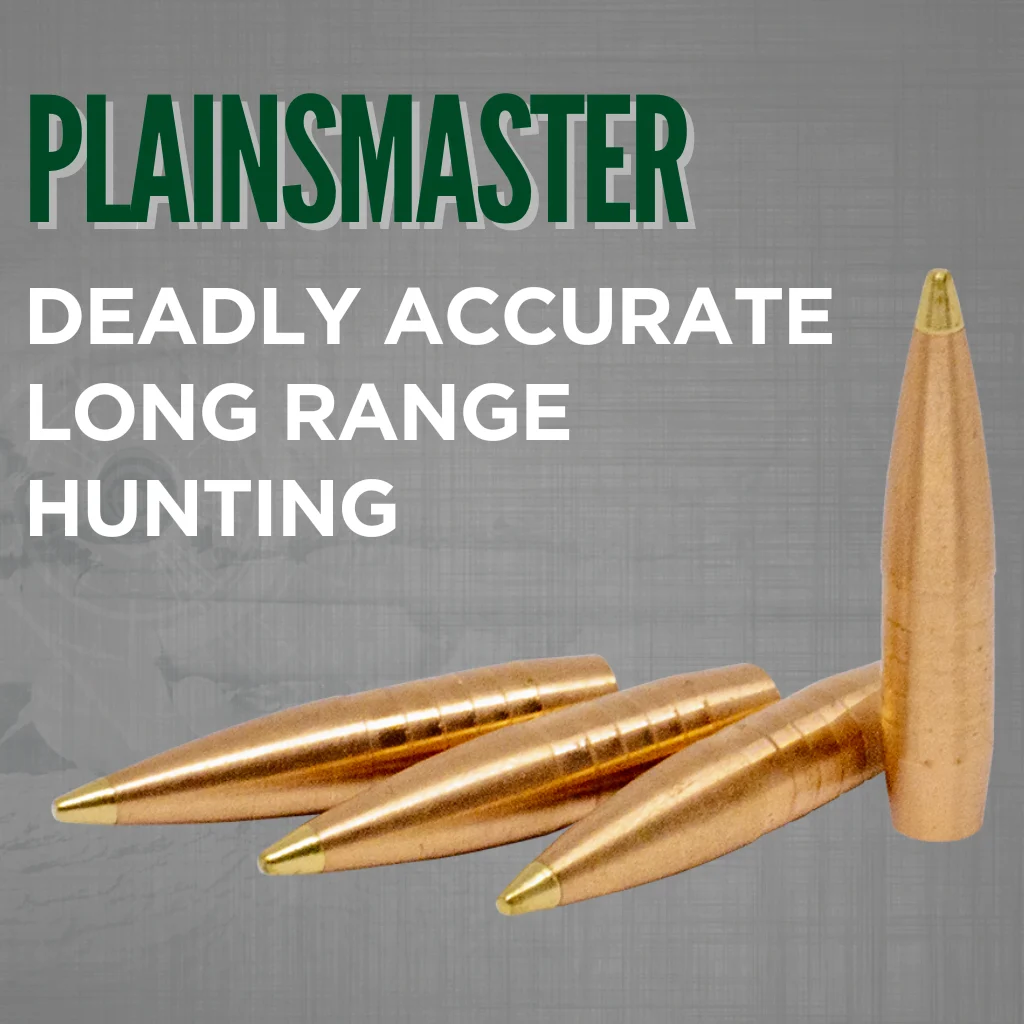
So for example the Peregrine plainsmaster is designed for longer ranges and will expand reliably as down to 1,600 fps


Or ditto for the Fox Classic Hunter


And the Sako Power Blade also claims to deform well at low impact velocities


However whilst may still expand and have sufficient energy to penetrate well into / through the vitals, once the velocities drop you will loose the shockwave and temporary cavity that causes peripheral damage.

So at 100m your bullet will cause a 4 to 6” diameter temporary cavity providing major shock and damage to the surrounding nervous system, blood vessels etc, but at 400m this this temporary cavity may only be a little larger than diameter of the expanded bullet, perhaps 1 or 2”.

If you put the bullet straight through the heart / aorta a 1/2” diameter hole will quickly cause major loss of blood pressure and quick death.

Put the bullet 2” to one side so you don’t connect with those major vessels. At 100m the shock wave will cause major damage to them, causing massive loss of blood pressure, as well as to the nervous system stunning or rendering the animal unconscious. At 500m you will have a hole through the vitals but missing the major arteries and nerves so will be relying on damage to lung tissue and minor blood vessels. It will bleed heavily but may take a few minutes, will remain conscious and deer can run pretty fast and far in that time.

And you will be starting your tracking from a point 500m from your firing point - and the difficulties of actually finding where the deer was standing increase exponentially as the distances get longer.

Missing by a couple of inches?

A good hunting marksman with an accurate rifle will claim to keep all shots inside a 1” circle at 100m, or 1 MOA. At 500m with this level of accuracy your cone of fire will open this up to 5”. Still good enough to be within the vitals of a larger deer.

But is 1 MoA accuracy to be expected in field conditions?

Coming back to actually hitting a 500m target. With modern range finders giving the distance and if you know the trajectory of your bullets, getting the drop is the easy bit.

Much much more difficult is the wind. Most ranges are pretty open flat ground with reasonably consistent wind flow across. And you flags and wind meters to assist.

Out on the mountains wind tumbles and swirls all over the place. Wind deflections are generally quoted at 10mph, and are based on a steady consistent wind at right angles to the shot. 10 mph is a light wind that makes the grass sway and rustles the leaves. If the wind is thermic you can easily a column of fast swirling air between you and the target with little at the firing point, but a 30mph vertical winds at some points between you and impact point. How far will 30mph wind move a bullet??

And you are shooting at a live animal. Most rifle bullets are leaving the muzzle at a but under 1,000 m/s, so will take a bit over 0.5sec to travel 500m. In that time a deer can easily take a good step forward. Deer, particularly if alert to your presence, have very fast reflexes like all prey animals. I am sure that deer respond to the flash or jump of a rifle with am immediate twitch. There are several videos of deer dropping as an arrow from a bow hunter is released, and dropping enough for the arrow to go over the back. With a rifle, such a drop may well cause bullet to hit high.

I have certainly had deer move as the shot breaks.

So the answer as to whether monolithic kills can kill at longer ranges. Many of them are designed to do so, and if the bullet is put in the right place then a quick humane kill will result.

However the real challenge is getting that bullet on target. Then actually recovering the animal.

By all means go and practice shooting at long range. Some have turned it into a sport in its own right.

However if you going to become a competent deer stalker, I would focus your efforts on learning how to stalk, and get in close to deer. This makes the shot certain and follow up easy.

Unfortunately there are no short cuts to learning to stalk. You just have to do it, make mistakes, get busted etc etc. or get know where the deer like to come out and ambush them.
 
This is a competition using simulated targets - steel

Not live animals - I don’t believe anyone here would take shots outside or beyond their acceptable zone for hitting a 4” circle in any position when conducting deer managment

This is a competition and allows the organisers the scope to stretch abilities and develop skill set in a sanitised manner whilst having some fun at the same time

Yesterdays efforts with my friend who has just bought a rifle I made over 14 yrs ago for someone else

We were practicing for the comp and checking dope

605 mtrs / 660 yds - because that’s the distance we put them at

Checking drop on the two blue crosses (and group)

Three shots each on the steel

Off a truck bonnet improvised prone


Before anyone comments on backstop - there is 300 mtrs of rising banked field behind of target when shots taken elevated firing point

Both rifles (and shooters) returned .6 moa at that distance
 
Last edited:
Not all bullets are created equal regardless of how they are constructed.

Key for longer ranges is whether the bullet retains enough energy for it to penetrate through the vitals and cause major trauma. Part of this is whether it expands enough to cause a reasonable wound channel and that is down to its design and impact velocity.

So for example the Peregrine plainsmaster is designed for longer ranges and will expand reliably as down to 1,600 fps


Or ditto for the Fox Classic Hunter


And the Sako Power Blade also claims to deform well at low impact velocities


However whilst may still expand and have sufficient energy to penetrate well into / through the vitals, once the velocities drop you will loose the shockwave and temporary cavity that causes peripheral damage.

So at 100m your bullet will cause a 4 to 6” diameter temporary cavity providing major shock and damage to the surrounding nervous system, blood vessels etc, but at 400m this this temporary cavity may only be a little larger than diameter of the expanded bullet, perhaps 1 or 2”.

If you put the bullet straight through the heart / aorta a 1/2” diameter hole will quickly cause major loss of blood pressure and quick death.

Put the bullet 2” to one side so you don’t connect with those major vessels. At 100m the shock wave will cause major damage to them, causing massive loss of blood pressure, as well as to the nervous system stunning or rendering the animal unconscious. At 500m you will have a hole through the vitals but missing the major arteries and nerves so will be relying on damage to lung tissue and minor blood vessels. It will bleed heavily but may take a few minutes, will remain conscious and deer can run pretty fast and far in that time.

And you will be starting your tracking from a point 500m from your firing point - and the difficulties of actually finding where the deer was standing increase exponentially as the distances get longer.

Missing by a couple of inches?

A good hunting marksman with an accurate rifle will claim to keep all shots inside a 1” circle at 100m, or 1 MOA. At 500m with this level of accuracy your cone of fire will open this up to 5”. Still good enough to be within the vitals of a larger deer.

But is 1 MoA accuracy to be expected in field conditions?

Coming back to actually hitting a 500m target. With modern range finders giving the distance and if you know the trajectory of your bullets, getting the drop is the easy bit.

Much much more difficult is the wind. Most ranges are pretty open flat ground with reasonably consistent wind flow across. And you flags and wind meters to assist.

Out on the mountains wind tumbles and swirls all over the place. Wind deflections are generally quoted at 10mph, and are based on a steady consistent wind at right angles to the shot. 10 mph is a light wind that makes the grass sway and rustles the leaves. If the wind is thermic you can easily a column of fast swirling air between you and the target with little at the firing point, but a 30mph vertical winds at some points between you and impact point. How far will 30mph wind move a bullet??

And you are shooting at a live animal. Most rifle bullets are leaving the muzzle at a but under 1,000 m/s, so will take a bit over 0.5sec to travel 500m. In that time a deer can easily take a good step forward. Deer, particularly if alert to your presence, have very fast reflexes like all prey animals. I am sure that deer respond to the flash or jump of a rifle with am immediate twitch. There are several videos of deer dropping as an arrow from a bow hunter is released, and dropping enough for the arrow to go over the back. With a rifle, such a drop may well cause bullet to hit high.

I have certainly had deer move as the shot breaks.

So the answer as to whether monolithic kills can kill at longer ranges. Many of them are designed to do so, and if the bullet is put in the right place then a quick humane kill will result.

However the real challenge is getting that bullet on target. Then actually recovering the animal.

By all means go and practice shooting at long range. Some have turned it into a sport in its own right.

However if you going to become a competent deer stalker, I would focus your efforts on learning how to stalk, and get in close to deer. This makes the shot certain and follow up easy.

Unfortunately there are no short cuts to learning to stalk. You just have to do it, make mistakes, get busted etc etc. or get know where the deer like to come out and ambush them.
I agree it is a fools errand to say I can shoot an inch at 100m therefore I can shot 5” at 500m even in good condition prone it is not exactly easy in the field very unlikely. Indeed if you look at Eric cortina’s ethical hunter YouTube thing most miss 5” at 460m and that is normally with prs target rifles weighing 25lb or so with special scopes triggers and bipods plus rear bags .
Mind you if you put a 1” circle at 100m and said put 5 consecutive bullets in that prone most shooters would fail it’s actually quite a tall ask. We all think we can do it but usually we mentally ignore the odd round or two which spoils the beautiful centered group and our imagined skills and tack driving rifle!
 
Last edited:
Fascinating discussion chaps and good to hear we have a few on here who has shot matches and get where we are coming from.

The whole discussion around distance is a very interesting one. No-one in their right mind should be looking to engage live quarry at the extreme distances we use for our matches.

But the opportunity to practice for a recovery shot, outside of a hunter’s comfortable working distance, whilst under mild stress and in as real an environment as possible, is a great thing.

Two of our coaches, John O’Brien and Brad Bourner, talk about this skill often, and it’s something even some of the most experienced of hunters don’t practice at all.

Then add in the fact that we have a number of well-heeled members, who travel the world, engaging live quarry in interesting and exotic ways. So for some of the longer shots, this is their bread and butter when shooting in the States or similar.

It’s a discussion point that we hope to talk about in a podcast at some point and we welcome any and all thoughts on the matter.

Our good friend Nick Rout from BDS says it best, it’s not teaching the skill that’s the issue here, it’s how you ingrain the ethics of using such a skill!
 
I had the enjoyment of watching Brad & his companion working well out to 800 and beyond at ORION recently, their wind calls were great to see working, I have had the training courses from Bradley on previous occasions over two years .... & I was able to apply the advantages at ORION, hitting all the plates out to the furthest 1200's.
That one instance when that "Perfect shot" .... "Reload", goes South, & it gets up and halfway to the horizon of your backstop, is when the confidence of the follow up at a bit more than you are usually shooting kicks in.
 
Why do we have the aversion and need for some people to lambast those practicing at longer ranges than they shoot live targets!?
It needs to stop!

You shouldn't have to explain why you shoot gongs or targets at "xxx" metres
I get this is the "Stalking Directory" but I find the bulk of the UK stalking fraternity is massively averse to training and or learning anything new. Or even practicing outside their comfort zone
Your rifle is WAAAAAY more capable than you.

Far too many people who stalk cant shoot "ethical" accuracy at 200m in the field let alone any further out.
Have seen it numerous times on range days.
I have lost track of how many clients have missed or shot over the years
The vast majority have no idea what the drop is at 200, 250, 300m but regularly quote these numbers as their own personal limit!
My next question is "what is your drop at that distance?" if its not met with a MIL/MOA or measurement I am reigning them in to 100-120m tops.

IMO If you want to shoot live targets you should be practicing at double the distance you intend to call your own "ethical limit"
all this "ragged hole" at 100m goes to pot in the field, under time pressure, from field positions, with less than perfect weather... I could go on!

As for solids at range, my own personal experience echos Ronin's.
Solid copper in 6.5-284 and 300NM was very accurate at range but the elevation adjustment beyond 4, 5, 600m was significantly more than should have been given quoted BC
The terminal energy was significantly down (gongs hits muted, plates not moving as much as a lead of equivalent mass and velocity)


To the OP:
Having shot a 20" 308 for years at deer and targets I would go with a 155-168 target bullet and run it as fast as you can accurately get it to go.
The ballistic advantage of stepping up to 175 etc is negated by the drop in velocity unless you have a very long barrel

Sierra SMK, Hornady ELD-M/A-Max, Nosler Custom Competition or similar are all sensibly priced and easily sourced.
The BC advantage of one to the other won't be as significant as your wind calls

Your drop is not the issue
The wind is.
 
just use a match load as long as there is nothing in the rules about type of bullet (i stalk with ELD-M anyway)

then just have at it , people are friendly and will help you

as for the long range stuff , once you are confident at 600m it can do nothing but improve your confidence at closer ranges on live deer , your ethical limit is just that - yours !
 
IMG_5647.webp

2026 Rules Update

In our first year of hosting NRL Hunter in the UK we took a conscious decision to mirror very closely the competition rules in the USA, which is the home of Hunter and now in its 6th season.

Following a very successful first season for NRL Hunter in the UK we took some time to reflect on the rules, listened to our members, and consulted with our technical advisors and range operators. We also reviewed upcoming regulation changes, specifically in regards to the lead ammunition ban.

The feedback we received told us that the 2025 rules were well received and so we have taken the decision to keep the 2026 rules mostly unchanged. What did keep coming up in conversation, however, was how the rules would adapt to the lead ban, especially considering the lighter bullet weights of monolithic ammunition and how this would impact a Hunter’s ability to meet Power Factor. We also kept coming across a very good question: why does Power Factor not align more closely with the various requirements across the UK for deer-legal rifles?

To address the upcoming transition to lead free hunting we knew Power Factor would need to be reduced. The question then became: what will the new minimum be?

The obvious answer was to align our rules to the clearly defined requirements for deer stalking, which would open the competition to many more deer stalkers and, we are pleased to acknowledge, hunters of other species in the UK and abroad.

We see this change to the 2026 rules as another step towards creating a series that encourages the participation of all hunters, providing them with a unique competitive experience that also trains and develops their hunting and marksmanship skills.

Please visit the website to read the 2026 rules in full.

www.nrlhunter.co.uk

There is still time to register for the upcoming matches:
The Clear Fell Classic- Scotland 7 March (CF)
The Small Game Special - England 21/22 March (RF)

We look forward to seeing you at a match soon.

@nrlhunter_uk #everyethicaledge
 
Going forward, if and when the lead ban comes into place, cost of using lead free hunting bullets for competition/ target use will quickly become expensive on a per shot basis.

I know that both Fox and Peregrine both produce “training / target” bullets that mimic the profile and BC of their hunting bullets, but a non expanding and substantially cheaper. Do other brands produce similar. When I say produce - these are listed on the manufacturers websites, but not sure how available they are in the UK.


Under the proposed legislation there is derogation that will continue to allow lead cored target bullets to be used on “approved ranges” where there are measures in place that trap the bullets to allow their recovery and removal and that will prevent lead getting into the wider environment. The approval of the range and facilities from the perspective of lead recovery will be in the hands of the Environment Agency and its equivalents in Scotland and Wales.

At time of writing (end Feb 2026), I understand that the NRA are working with the Environment Agency to provide guidance as to appropriate and reasonable, but as what this guidance actually is any ones guess. As an officer of an Approved Rifle Club that operates its own ranges this is and will be a major consideration.

At the moment it seems that gallery type ranges with bullet catchers will most likely be approved, and thus can continue to use lead target bullets. But quite what additional works to prevent run off into water courses etc will be required by the EA remains to be seen.

Remember that it will be the EA or SEPA or Welsh Environment Agency that will approve the derogation and their inspectors will be looking at it from perspective of runoff from a farmyard / construction site etc, rather than ballistic envelope that military inspectors did in the past.

When it comes to ranges where there are lots of smaller targets dotted across a landscape, will it be sufficient to dump a tonne or two of sand behind the target or will much greater works be required. It will really come down to a matter of cost, and whether cost should be borne by the range operator and recovered through range fees, or if there is viable and cost effective lead free alternative, should they carry on as is, but make a lead free alternative a requirement of use.
 
Last edited:
There isn’t really a great deal of difference bettween using match bullets and non lead

In terms of competitions for NRL Hunter - four comps max at 80 rounds max is only 320 bullets

If your skil set is sufficient , one may get away with 160 bullets
 
Going forward, if and when the lead ban comes into place, cost of using lead free hunting bullets for competition/ target use will quickly become expensive on a per shot basis.

I know that both Fox and Peregrine both produce “training / target” bullets that mimic the profile and BC of their hunting bullets, but a non expanding and substantially cheaper. Do other brands produce similar. When I say produce - these are listed on the manufacturers websites, but not sure how available they are in the UK.


Under the proposed legislation there is derogation that will continue to allow lead cored target bullets to be used on “approved ranges” where there are measures in place that trap the bullets to allow their recovery and removal and that will prevent lead getting into the wider environment. The approval of the range and facilities from the perspective of lead recovery will be in the hands of the Environment Agency and its equivalents in Scotland and Wales.

At time of writing (end Feb 2026), I understand that the NRA are working with the Environment Agency to provide guidance as to appropriate and reasonable, but as what this guidance actually is any ones guess. As an officer of an Approved Rifle Club that operates its own ranges this is and will be a major consideration.

At the moment it seems that gallery type ranges with bullet catchers will most likely be approved, and thus can continue to use lead target bullets. But quite what additional works to prevent run off into water courses etc will be required by the EA remains to be seen.

Remember that it will be the EA or SEPA or Welsh Environment Agency that will approve the derogation and their inspectors will be looking at it from perspective of runoff from a farmyard / construction site etc, rather than ballistic envelope that military inspectors did in the past.

When it comes to ranges where there are lots of smaller targets dotted across a landscape, will it be sufficient to dump a tonne or two of sand behind the target or will much greater works be required. It will really come down to a matter of cost, and whether cost should be borne by the range operator and recovered through range fees, or if there is viable and cost effective lead free alternative, should they carry on as is, but make a lead free alternative a requirement of use.
This has been my point all along when it comes to cost. The cost of a match when using none lead ammo isnt going to increase much, that I agree. The bit thats going to affect me is the 100+ rounds a month training for these matches. I use match kings at the moment. Factory seconds for training cost £29 per hundred, at full cost in the shops you're looking around the £50 mark for the regular stuff. Switch to lead free and that cost increase is massive. I just hope ppu expand their Z grom line with some better BC stuff so I can continue to shoot without needing to remortgage the house
 
This has been my point all along when it comes to cost. The cost of a match when using none lead ammo isnt going to increase much, that I agree. The bit thats going to affect me is the 100+ rounds a month training for these matches. I use match kings at the moment. Factory seconds for training cost £29 per hundred, at full cost in the shops you're looking around the £50 mark for the regular stuff. Switch to lead free and that cost increase is massive. I just hope ppu expand their Z grom line with some better BC stuff so I can continue to shoot without needing to remortgage the house
Where are getting ammo at £29 per 100 rounds, or even £50 per 100???

Rifle shooting has always been expensive. Indeed any sport is expensive. It’s your choice to shoot 100 plus rounds a month and to be ultra competitive.

If you look at the online prices for the monolithic target bullets you will see that they are substantially cheaper than hunting bullets.
 
Last edited:
Let’s not forget the practice you undertake every time you go stalking

That 1£ bullet earning the price of a pack of bullets every time.
 
Back
Top