Not all bullets are created equal regardless of how they are constructed.
Key for longer ranges is whether the bullet retains enough energy for it to penetrate through the vitals and cause major trauma. Part of this is whether it expands enough to cause a reasonable wound channel and that is down to its design and impact velocity.
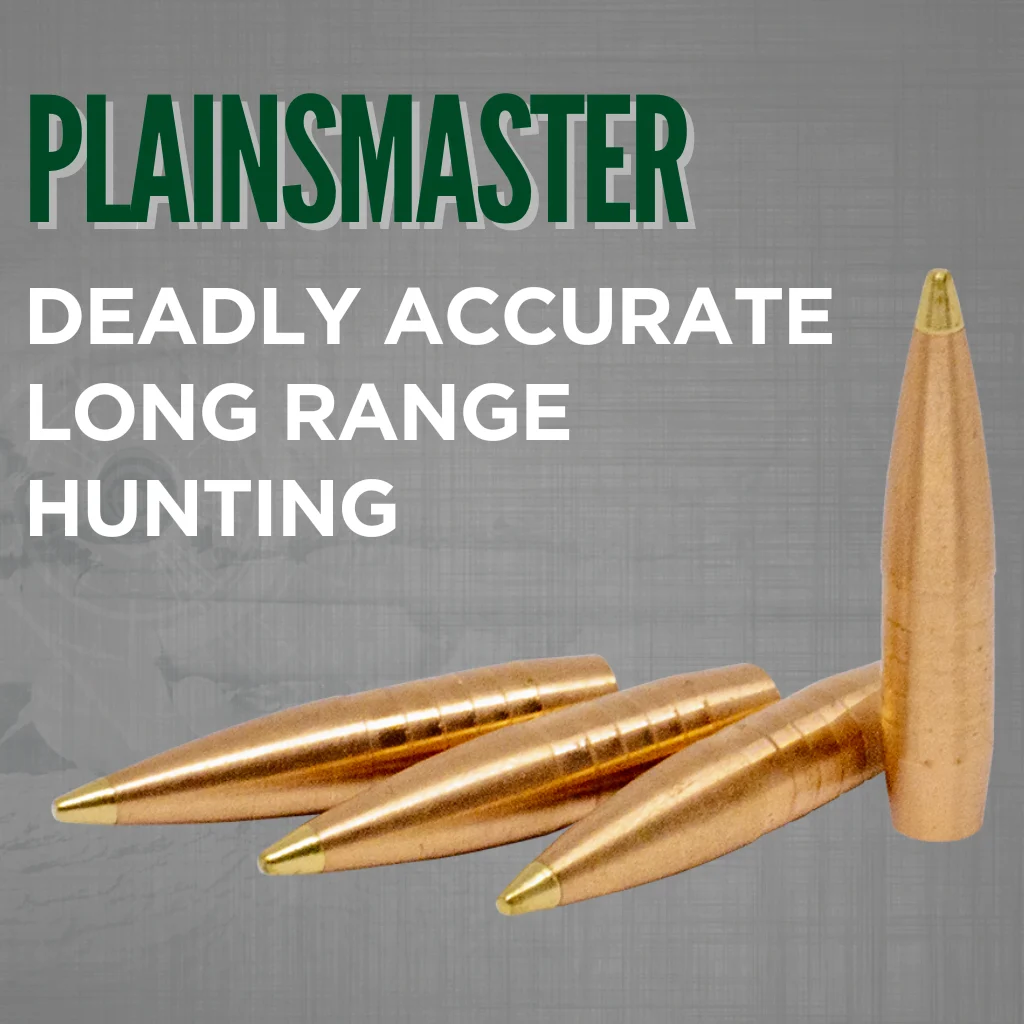
So for example the Peregrine plainsmaster is designed for longer ranges and will expand reliably as down to 1,600 fps
Also known as VLR4, is a versatile all-around bullet suitable for various hunting terrains, known for its accuracy and best-in-class ballistic coefficient. With unmatched progressive controlled expansion, even at low impact velocities of 1600fps, it's purposefully designed for medium to...

peregrinebullets.com
Or ditto for the Fox Classic Hunter
The Fox Classic hunter are lead-free bullets designed for all hunting situations that an European hunter can experience, from a close distance shot on a ...

www.foxbullets.eu
And the Sako Power Blade also claims to deform well at low impact velocities
Lead-free bullets with high penetration capabilities and good durability. Maximal weight retention. Mainly used for big game hunting.

www.sako.global
However whilst may still expand and have sufficient energy to penetrate well into / through the vitals, once the velocities drop you will loose the shockwave and temporary cavity that causes peripheral damage.
So at 100m your bullet will cause a 4 to 6” diameter temporary cavity providing major shock and damage to the surrounding nervous system, blood vessels etc, but at 400m this this temporary cavity may only be a little larger than diameter of the expanded bullet, perhaps 1 or 2”.
If you put the bullet straight through the heart / aorta a 1/2” diameter hole will quickly cause major loss of blood pressure and quick death.
Put the bullet 2” to one side so you don’t connect with those major vessels. At 100m the shock wave will cause major damage to them, causing massive loss of blood pressure, as well as to the nervous system stunning or rendering the animal unconscious. At 500m you will have a hole through the vitals but missing the major arteries and nerves so will be relying on damage to lung tissue and minor blood vessels. It will bleed heavily but may take a few minutes, will remain conscious and deer can run pretty fast and far in that time.
And you will be starting your tracking from a point 500m from your firing point - and the difficulties of actually finding where the deer was standing increase exponentially as the distances get longer.
Missing by a couple of inches?
A good hunting marksman with an accurate rifle will claim to keep all shots inside a 1” circle at 100m, or 1 MOA. At 500m with this level of accuracy your cone of fire will open this up to 5”. Still good enough to be within the vitals of a larger deer.
But is 1 MoA accuracy to be expected in field conditions?
Coming back to actually hitting a 500m target. With modern range finders giving the distance and if you know the trajectory of your bullets, getting the drop is the easy bit.
Much much more difficult is the wind. Most ranges are pretty open flat ground with reasonably consistent wind flow across. And you flags and wind meters to assist.
Out on the mountains wind tumbles and swirls all over the place. Wind deflections are generally quoted at 10mph, and are based on a steady consistent wind at right angles to the shot. 10 mph is a light wind that makes the grass sway and rustles the leaves. If the wind is thermic you can easily a column of fast swirling air between you and the target with little at the firing point, but a 30mph vertical winds at some points between you and impact point. How far will 30mph wind move a bullet??
And you are shooting at a live animal. Most rifle bullets are leaving the muzzle at a but under 1,000 m/s, so will take a bit over 0.5sec to travel 500m. In that time a deer can easily take a good step forward. Deer, particularly if alert to your presence, have very fast reflexes like all prey animals. I am sure that deer respond to the flash or jump of a rifle with am immediate twitch. There are several videos of deer dropping as an arrow from a bow hunter is released, and dropping enough for the arrow to go over the back. With a rifle, such a drop may well cause bullet to hit high.
I have certainly had deer move as the shot breaks.
So the answer as to whether monolithic kills can kill at longer ranges. Many of them are designed to do so, and if the bullet is put in the right place then a quick humane kill will result.
However the real challenge is getting that bullet on target. Then actually recovering the animal.
By all means go and practice shooting at long range. Some have turned it into a sport in its own right.
However if you going to become a competent deer stalker, I would focus your efforts on learning how to stalk, and get in close to deer. This makes the shot certain and follow up easy.
Unfortunately there are no short cuts to learning to stalk. You just have to do it, make mistakes, get busted etc etc. or get know where the deer like to come out and ambush them.