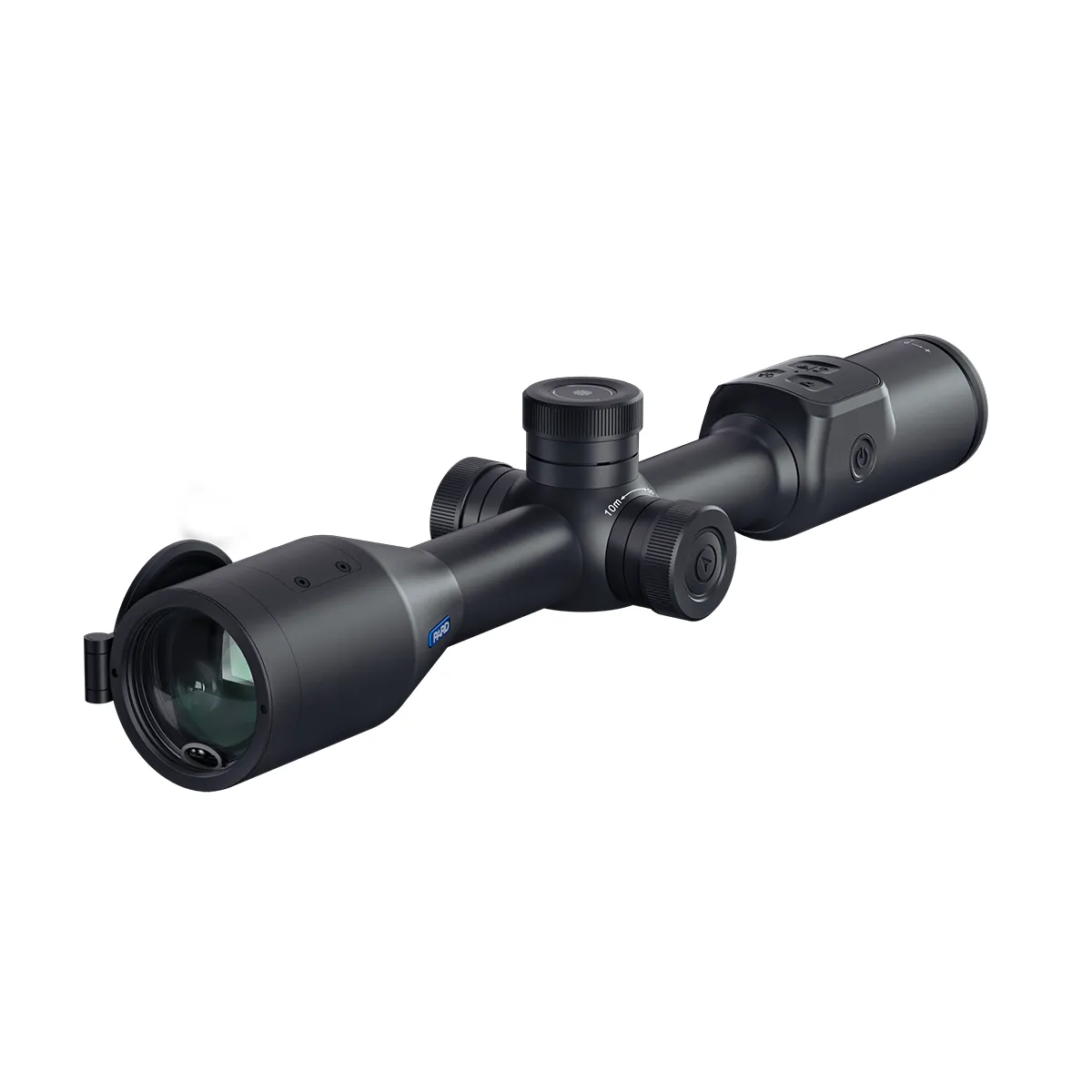
Best digital day/night scope at present?

I have the hicmicro 4k LRF. I gave it a check zero last week having not shot it for about 3 months. It is on QD mounts. Put it on my rifle and shot, bulls eye at 100y. Put a metal fox head target out to 250 and bang! I think they are great can't fault it. However only as good as the IR torch on it. I have a wicked lights IR.
 
Just setup an Alpex pro A50PL, I intended on using it for 80% night-time use and 20% day time. Wow, thoroughly disappointed, it's going back tomorrow. Image quality is good in the daytime, but when switching to IR mode it's sh*te. Anything beyond 180m is just mush. Using quality VCSEL torches, with variable power. The PARD DS35 gen2 is better.
Is it not in night mode? Apologies if I’m teaching my grandma to suck eggs, it is just the first look down one a week or two ago and that was the exact situation and then instant fix once realised.
 
I've been watching a lot of new digital scopes releases closely...

The original tube style night vision scope, the Pulsar Digex, as expected provided true digital "night vision" performance. Pulsar always used big super fast glass, which allowed a ton of IR transmission through to the sensor, just check out the Sightline and C50 lenses, big beasts, combine this with HD CMOS sensors which are much more sensitive than Full HD CMOS sensors and then Full HD CMOS sensors are also x4 times more sensitive than a UHD 4K sensor..

A 4K sensor does not need a fast lense for daylight, no scope does, so they look great in daylight regardless of aperture.. HD can get by with a smaller lens (although Pulsar provided a beast with it still), 1080P HD like the Zulus V2 and original Alpex A50T (bad ass lens), can get by with a smaller lenses, but 4K needs a fast lens due to being less sensitive at night...

Looking at the market now, everyones got a hard on over 4K, daytime performance excellent, but it's not the sweet spot for night vision performance, 1080P HD is the ideal resolution/sensitivity point, to get the best out of 4K you need the transmission, ideally F1.2, aka the Alpex 4K A50EL , software does not out perform aperture with humidity and vapour in the air at night, this drastically cuts down IR transmission , fast glass works so much better and increases viewing distance substantially..bombing with VCSEL with vapour in the air, can turn it into soup...

Just seems to me things are going a little weird with digital night vision, chasing the 4K buzz word, which is all fine and dandy if you give them the right tools to do there job...

The two scopes below currently have the largest apertures at the minute with a 4K sensor combo.. the Alpex A50EL is 100% the daddy in terms of FOV, long distance performance and night time performance from any 4K scope out there , the slight negative is it's a heavy beast.. I checked daytime performance against everything, at full magnification it retained excellent sharpness for a scope with such a low base magnification and wide FOV, even in past night time tests it doubled the distance at night against Zulus V1 models with VCSEL when humidity was present in the air , just showing how much a bad ass lense makes a difference..


I've been watching a lot of new digital scopes releases closely...

The original tube style night vision scope, the Pulsar Digex, as expected provided true digital "night vision" performance. Pulsar always used big super fast glass, which allowed a ton of IR transmission through to the sensor, just check out the Sightline and C50 lenses, big beasts, combine this with HD CMOS sensors which are much more sensitive than Full HD CMOS sensors and then Full HD CMOS sensors are also x4 times more sensitive than a UHD 4K sensor..

A 4K sensor does not need a fast lense for daylight, no scope does, so they look great in daylight regardless of aperture.. HD can get by with a smaller lens (although Pulsar provided a beast with it still), 1080P HD like the Zulus V2 and original Alpex A50T (bad ass lens), can get by with a smaller lenses, but 4K needs a fast lens due to being less sensitive at night...

Looking at the market now, everyones got a hard on over 4K, daytime performance excellent, but it's not the sweet spot for night vision performance, 1080P HD is the ideal resolution/sensitivity point, to get the best out of 4K you need the transmission, ideally F1.2, aka the Alpex 4K A50EL , software does not out perform aperture with humidity and vapour in the air at night, this drastically cuts down IR transmission , fast glass works so much better and increases viewing distance substantially..bombing with VCSEL with vapour in the air, can turn it into soup...

Just seems to me things are going a little weird with digital night vision, chasing the 4K buzz word, which is all fine and dandy if you give them the right tools to do there job...

The two scopes below currently have the largest apertures at the minute with a 4K sensor combo.. the Alpex A50EL is 100% the daddy in terms of FOV, long distance performance and night time performance from any 4K scope out there , the slight negative is it's a heavy beast.. I checked daytime performance against everything, at full magnification it retained excellent sharpness for a scope with such a low base magnification and wide FOV, even in past night time tests it doubled the distance at night against Zulus V1 models with VCSEL when humidity was present in the air , just showing how much a bad ass lense makes a difference..


Thanks for this, very well explained and made me think, I am happy with the Zulus, I have 3 various versions and mag ranges all fitted to rifles for various jobs but been thinking about the Alpex for a new setup for greater distances
 
I think the Pard night stalker EX LRF is the best out there but get one from Royston at Optic world he sale built in IR
I emailed them, message cane back with Chinese writing rather than English text, is this company actually in the UK?!
 
Is it not in night mode? Apologies if I’m teaching my grandma to suck eggs, it is just the first look down one a week or two ago and that was the exact situation and then instant fix once realised.
Yes was in night mode, image was good at 100m, poor beyond that and non existent (a mushy blur) at longer distances.
 
Back
Top