Do you grip/ hold down your forestock?

SD198

Well-Known Member
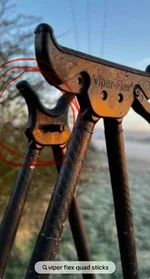
Hi all - I am guessing this will either be seen as an obvious question or one that there are opposing views on. I have recently started using high seats whereas previously I always shot off quad sticks. This obviously means that I am able to rest my rifle forestock on the front arm rest of the seat. My query is, when shooting from a position like that is it best to hold/grip the forestock or not touch it at all? My rifle has a floating barrel which I presume means there will be no impact in terms of harmonics, but is the difference in terms of recoil likely to make a difference to accuracy? Thinking about it, I suppose the same factors/question would presumably apply equally when shooting off quad sticks (when I have always held the forestock).

Many thanks
 
I find that if I shoot off any hard surface, whether resting the stock directly or off a bipod, it bounces - a lot. With high seat rails and fence posts etc, I try to sandwich something soft (like gloves) between the stock and supporting surface. And grip the fore stock.
 
Hi all - I am guessing this will either be seen as an obvious question or one that there are opposing views on. I have recently started using high seats whereas previously I always shot off quad sticks. This obviously means that I am able to rest my rifle forestock on the front arm rest of the seat. My query is, when shooting from a position like that is it best to hold/grip the forestock or not touch it at all? My rifle has a floating barrel which I presume means there will be no impact in terms of harmonics, but is the difference in terms of recoil likely to make a difference to accuracy? Thinking about it, I suppose the same factors/question would presumably apply equally when shooting off quad sticks (when I have always held the forestock).

Many thanks

l invariably shoot off Blaser carbon fibre quad sticks. l do not hold down the forend, but hold the “pistol grip” on the Blasers.

I zero my rifle over a Caldwell rifle rest and back bag at the range; I‘ve never remarked on any noticeable zero shift out in the field, though l have a self-imposed absolute maximum range of 200 yards.

maximus otter
 
Hi all - I am guessing this will either be seen as an obvious question or one that there are opposing views on. I have recently started using high seats whereas previously I always shot off quad sticks. This obviously means that I am able to rest my rifle forestock on the front arm rest of the seat. My query is, when shooting from a position like that is it best to hold/grip the forestock or not touch it at all? My rifle has a floating barrel which I presume means there will be no impact in terms of harmonics, but is the difference in terms of recoil likely to make a difference to accuracy? Thinking about it, I suppose the same factors/question would presumably apply equally when shooting off quad sticks (when I have always held the forestock).

Many thanks
Off a high seat rail or sticks i hold the fore stock but only to stop it slipping or to track a target. My rifles are free floated and properly bedded so when using a bag or bipod I control the rifle from the butt. It makes no difference to the POI.
 
Hi all - I am guessing this will either be seen as an obvious question or one that there are opposing views on. I have recently started using high seats whereas previously I always shot off quad sticks. This obviously means that I am able to rest my rifle forestock on the front arm rest of the seat. My query is, when shooting from a position like that is it best to hold/grip the forestock or not touch it at all? My rifle has a floating barrel which I presume means there will be no impact in terms of harmonics, but is the difference in terms of recoil likely to make a difference to accuracy? Thinking about it, I suppose the same factors/question would presumably apply equally when shooting off quad sticks (when I have always held the forestock).

Many thanks
I was ALWAYS taught that you must have your hand between a hard rest such as a fence rail, a wall, a tree limb, a wing or roof of a car or even the metal frame of a piece of farm machinery. Or a sandbag. That way the harmonics will always be the same regardless of what is underneath your hand. This lesson has never failed me. Even in what is called the Hawkin's type hold where the front hand is grounded it is still the hand that the forestock of the rifle rests on.

 
I do
I was ALWAYS taught that you must have your hand between a hard rest such as a fence rail, a wall, a tree limb, a wing or roof of a car or even the metal frame of a piece of farm machinery. Or a sandbag. That way the harmonics will always be the same regardless of what is underneath your hand.
That's what I've always instinctively done without even knowing why
 
I shoot either from a bipod or from quad sticks and never touch the forend at all. I use a board in a high seat, so still shoot from a bipod.
I will add that it's a heavy rifle with the scope and moderator it comes in at 15lbs. I'm having a lighter rifle built but still have no intention of touching anything other than the butt pad, cheek rest and trigger
 
I do

That's what I've always instinctively done without even knowing why
Did you start with springer air rifles?
I was taught at a very early age to do the same thing all the time.
It was right advice.
They jump around.
But can be consistent jumps.
It follows with cf rifles,l sit my sling in the yoke,or under the foregrip on a high seat.
Then drop my left hand in to support it.
Deer fall over.
 
Indeed I did. It was an old Webley that we village lads used to lend around. No idea which one of us actually owned it though. In hindsight, I suspect that may have been a deliberate 'plausible deniability' approach 🤔😆
Like the "village Meteor"
It came,it went,it came back...

Bloody kids.
 
I was ALWAYS taught that you must have your hand between a hard rest such as a fence rail, a wall, a tree limb, a wing or roof of a car or even the metal frame of a piece of farm machinery. Or a sandbag. That way the harmonics will always be the same regardless of what is underneath your hand. This lesson has never failed me. Even in what is called the Hawkin's type hold where the front hand is grounded it is still the hand that the forestock of the rifle rests on.

Do not GRIP the forend as it will change the recoil characteristics of the rifle due to inconsistency & also produce worse groups as it’ll make your muscles tighten & in doing so make the rifle ‘wobble’ which you’ll then try to correct but will do so by trying to grip the forend even harder…

Gently HOLDING the forend in order to SUPPORT it is the correct method to adopt.

As above, putting your hand between forend & any hard rest helps support it & allows you the ability to make adjustments using that hand rather than move your body.

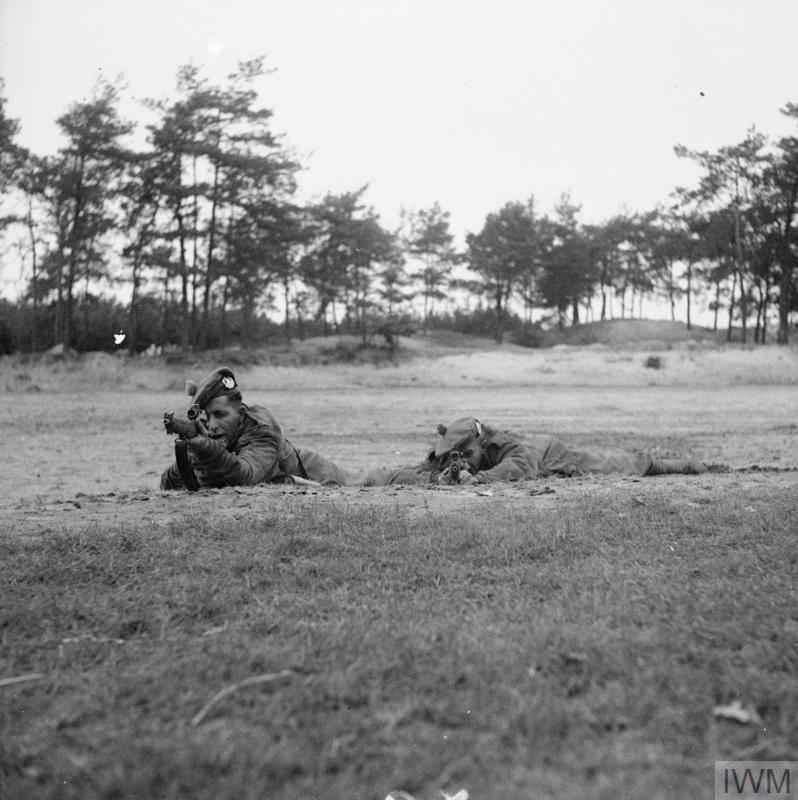
This is the same principle used in the Hawkins position which, additionally, uses the forward hand to grip the sling & take the recoil from the rifle. Hawkins is a very effective position which delivers stability by putting the rifle down as low as it’ll go with physical contact from the toe of the stock & with the shooter having pretty much full body contact with the ground. I won a nice silver trophy in the Imperial Meeting a number of years back using this position in an ‘open’ class - in true British style, someone who was peeved at being beaten by someone with less gucci kit than them complained it wasn’t fair so the class was changed to an ‘issued’ one the next year 🙄
 
I find that if I shoot off any hard surface, whether resting the stock directly or off a bipod, it bounces - a lot. With high seat rails and fence posts etc, I try to sandwich something soft (like gloves) between the stock and supporting surface. And grip the fore stock.
+1
 
Depends on the rifle and surface.

As above if it’s hard I may hold it but would prefer to put something soft under it

If possible I don’t want to hold it. To minimise zero shift between positions i try to hold the rifle the same way. So I tend to zero off a bag, shoot prone off a bag in the field and shoot off sticks (with something soft on the front stick rest). Maybe a bit anal bit I don’t like inaccurate shots.

If it’s going to bounce about though then I will hold. Not a death grip though
 
Airgun practice with a ACCURATE airgun that has a GOOD trigger is never wasted. Even at a mere six yards or as I used to when my mother was alive in her garage at a mere five yards. Indeed as long as the velocity from shot to shot is consistent an accurate air rifle with low velocity is even better practice. The longer dwell time between pulling the trigger and the pellet leaving the barrel teaches good follow through in addition to consistency of hold. Be that standing or kneeling or (with hand between) resting in the back of a wooden chair or a stick.

I used to use an old BSA .177 Standard Pattern that had, at one time, been fitted with a rearsight. Came from the dispersal sale of the air rifles from the Francis Arms in Leicestershire. Where they were hung from the ceiling. My that rifle stank of years of tobacco and was covered with a thin film of nicotine too that had to be cleaned off. But accurate? You bet!

If buying these vintage such rifles the ones with the buggered up top rear of the butt (where a rearsight was fitted and later removed) are the best as that they had a rearsight tells you they were the accurate ones! The guys in the Midlands that shot "bell target" shot for money and a mutton supper rarely for fun. It was taken very seriously. It's a bargaining point to get it cheaper but in fact you're getting the most accurate one on the dealer's table!

I've now a .177 Mk1 "Airsporter" that was sold back then by BSA as the ".177 Club Target", or such, the faded embossing on the cylinder says. It manages about 8 ft/lbs now. The wrist is cracked and then screwed through as a repair. But that again a repair can sometimes indicate an accurate rifle that was valued enough to be repaired rather than scrapped. Not always though.
 
Last edited:
Back
Top