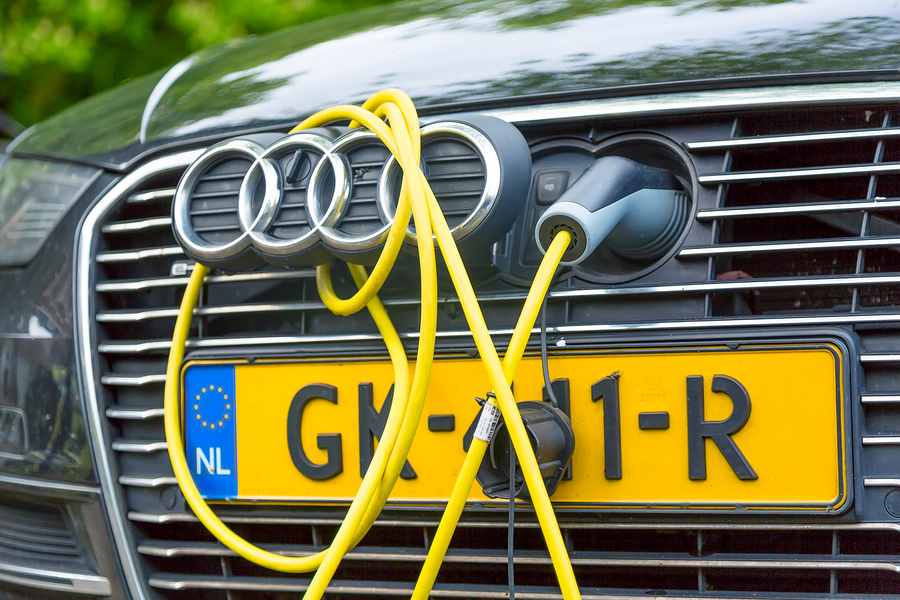
electric cars,,,,

There was a novel once, by a fairly famous writer, set in the near future where yes road transport was either on foot or by horse and cart for the masses or huge eight cylinder limousines. As like ARUN says it was all about money and in this future world petrol was effectively rationed by price.
 
That was an inevitability to be honest.

Fuel companies make money flogging liquid dinosaurs today. They're not going to just go "oh well, everyone went electric, best we find something else to do". No, they're going to come up with other revenue streams that mean that recharging your car will make them about the same as a tank of fuel does today.

Furthermore HMRC collects about £30bn a year from fuel duties and VAT and if we all went electric they would lose that revenue. Thats a pretty big hole to plug so it is certain that they will come up with some sort of fairly expensive road pricing or "recharging tax" to make the money back another way.

Going electric certainly isnt going to save anyone any money in the long term. If you're a first adopter like those who are buying Tesla's now then sure, you'll save on fuel but because the recharging infrastructure isnt there you're going to be limited to close-to-home journeys or risking it on a longer run and keeping 100ft of extension lead in the boot so you can recharge when you arrive at your destination.

A mate at work got a Tesla recently and loves it - I said to him "how the hell is that going to work for me with a 7 hour drive up to Scotland to go shooting and staying in a caravan with no recharging point?"

Its great if you're doing short about town journeys in a largely urban setting but naff all use if you're rural or lead a more off grid/outdoor lifestyle.

JMHO and all that.
 
Ha, I travelled back from Dortmund to home 500 kms yesterday and had to pull into a rest area for a short nap only found one parking space as all the rest was clogged with tachograph driven truck parkers with one straddling all the electric charging points equals no car could get a charge without waking some east european truck driver. There is the future the system not yet error proofed.
BTW I did a 3 month stint at Tesla Calif in 2014 so I do watch how it all is panning out with great interest.
 
I seem to recall those heralding in the "new electronic age" claiming it was going to revolutionise the world, no more sitting in stuffy trains,planes and taxis etc, no more missed meetings because of delays, it was all going to be so idyllic and streamlined and the air would be a lot cleaner for the reduced rush hour traffic snarl-ups and the roads would not need repairing so often and it was like fecking utopia was literally just around the next corner and everyone would benefit..blah,, blah,, blah.. all just words, empty, sales pitch words.
in reality what did we really get. a generation of bloody internet knowitalls and a phone/ipad zombie like youth so out of touch with reality they would starve to death when the chemical laden diet coke and processed fast food pellets run out. and unable to hold a real conversation.
jeez,, John Lydon was right when he blurted out

,,"and There's no future
And England's dreaming"
 
It's a bit of a joke having had a client recently who is well up in a well known vehicle company and is also in the area of battery technology.
Not enough charging points ever. All different so no generic plug . Not enough minerals on the earth to make the batteries. The highest concentration being on the Congo.
Only one registered company for battery disposal which is in Belgium.
If we all had electric cars today he reckoned we would need at least another 5 nuclear power stations to cope with the demand.
 
We have had a Hybrid Prius for over ten years...no problems with either journey range or charging times...just 50-60mpg from a 2.5litre sized/performance saloon and less pollution in urban areas where the electric kicks in below 30mph...

I don't get the thrust towards plug-in electric only...seems impractical.

Alan
 
It's a bit of a joke having had a client recently who is well up in a well known vehicle company and is also in the area of battery technology.
Not enough charging points ever. All different so no generic plug . Not enough minerals on the earth to make the batteries. The highest concentration being on the Congo.
Only one registered company for battery disposal which is in Belgium.
If we all had electric cars today he reckoned we would need at least another 5 nuclear power stations to cope with the demand.
Other than a shortage of public charging points, I have to disagree with most of what you said.
All electric cars sold in Europe come with a standard connector that allows them to be used with a home charger up to 7KW. and at all public charging points at up to 7KW
There are difference in connectors when rapid charging. Tesla use their own connector for their supercharger network, which is only accessible to Tesla owners.
All other electric vehicle use either a Chademo connector (really only Nissan) or the much more common and now European standard CCS connector.
All public rapid charging stations are equipped with both Chademo and CCS conectors
There are no shortages of minerals to make the batteries. Lithium is the most common metal on earth. Not all cobalt comes from the Congo and the amount used in the batteries is reducing every year. The current battery shortage is not being caused by the lack of raw materials, but by the shortage of factories to make batteries and form them into the packs needed by the car manufacturers.
When the lithium battery in a car reaches the end of its life - which is typically when it's storage capacity has dropped to around 70% of it's original value, the pack can be removed and used as energy storage at a renewable energy source such as a wind turbine, so that power can continue to be supplied when there is no wind (and be charged up when there is wind)
By the time large numbers of lithium ion batteries from vehicles eventually need to be recycled, there will no doubt be many more facilities to do that.
The mere fact that they can be recycled is a positive - you can't recycle burned petrol or diesel!!!
As to the power demand on the grid from electric vehicles being charged - that's another myth. The vast majority of electric vehicles are charged overnight, at a slow rate and at a time when there is plenty spare generating capacity.


Cheers

Bruce
 
Other than a shortage of public charging points, I have to disagree with most of what you said.
All electric cars sold in Europe come with a standard connector that allows them to be used with a home charger up to 7KW. and at all public charging points at up to 7KW
There are difference in connectors when rapid charging. Tesla use their own connector for their supercharger network, which is only accessible to Tesla owners.
All other electric vehicle use either a Chademo connector (really only Nissan) or the much more common and now European standard CCS connector.
All public rapid charging stations are equipped with both Chademo and CCS conectors
There are no shortages of minerals to make the batteries. Lithium is the most common metal on earth. Not all cobalt comes from the Congo and the amount used in the batteries is reducing every year. The current battery shortage is not being caused by the lack of raw materials, but by the shortage of factories to make batteries and form them into the packs needed by the car manufacturers.
When the lithium battery in a car reaches the end of its life - which is typically when it's storage capacity has dropped to around 70% of it's original value, the pack can be removed and used as energy storage at a renewable energy source such as a wind turbine, so that power can continue to be supplied when there is no wind (and be charged up when there is wind)
By the time large numbers of lithium ion batteries from vehicles eventually need to be recycled, there will no doubt be many more facilities to do that.
The mere fact that they can be recycled is a positive - you can't recycle burned petrol or diesel!!!
As to the power demand on the grid from electric vehicles being charged - that's another myth. The vast majority of electric vehicles are charged overnight, at a slow rate and at a time when there is plenty spare generating capacity.


Cheers

Bruce

Agreed - the misinformation about electric vehicles is astonishing; myths about water required for lithium extraction, weight of lithium in batteries, unethically sourced cobalt, fossil fuel generation of power for electric vehicles, hydrogen will be the answer etc...

I'm ashamed to say I was gullible and simply regurgitated these myths, until I did some factchecking. I then realised I simply wanted to believe the anti-electric BS. Not sure why.

The grid as it stands often has a surplus at night. If you use Octopus Agile tariff, they will pay you to charge your car at those times (not every night, it is linked to wholesale prices and price updates on a half-hourly basis, so not for everyone!)

VTG (Vehicle to grid) is an imminent prospect, allowing the population of EV cars (charged at low cost overnight) to provide energy to the grid at peak time. The owners receive a payment or cheaper charging/credit in return.

Smart systems can integrate your EV battery into your home so that you still have power during power cuts, or your solar charges your power wall by day, which in turn charges your car when you get home in the dark.

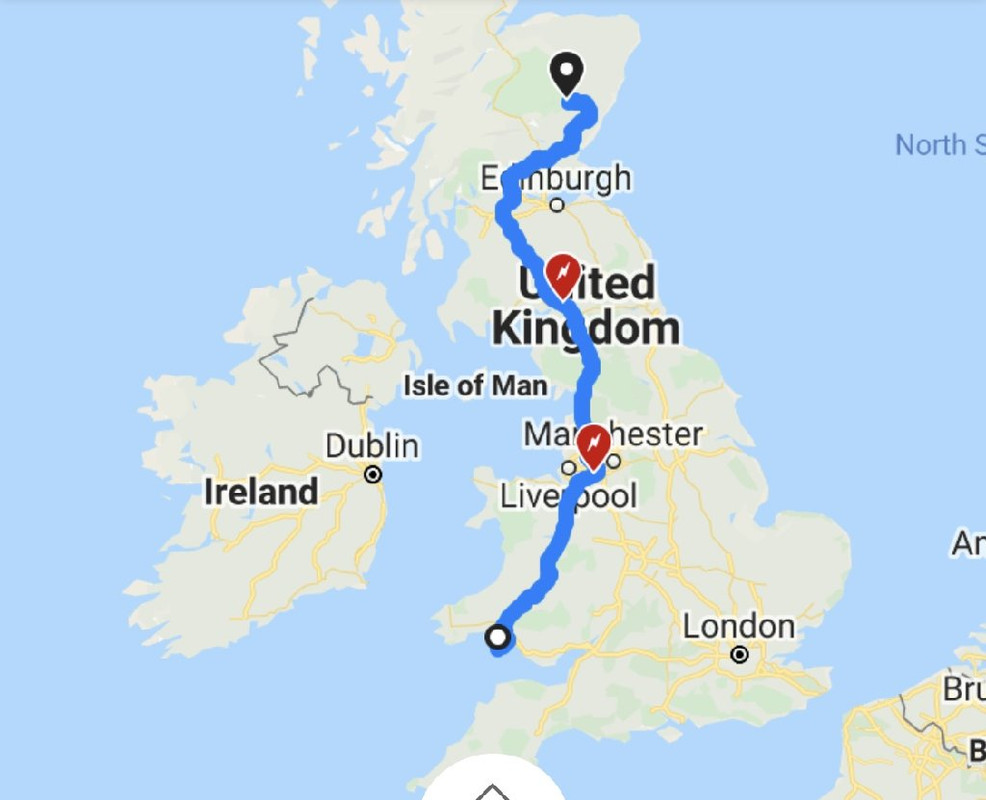
The current (pun-intended) non-Tesla charging network is poor, but improving. I have been playing with ZapMap and ABRP apps to see how my car journeys would/wouldn't work with electric (including West Wales to Valhalla shooting range in Scotland.) It highlights the potential problems, particularly for non-Tesla as the charge points seem few at each site and often non-functioning.

Here is a (real life) route for me to go shooting in Scotland, if I had a Tesla, one 20min charge at Warrington, one 40min at Gretna Green. Not too bad, really.


I live in a rural location (though not that remote) and I've noticed 3 Tesla destination chargers down at the local beach and several elsewhere in the area.

Ionity were practically giving away juice and their price restructure was inevitable. No doubt it is a tie-in with their future model for cheap charge for parent-company cars (Merc, Audi, VW and, recently, Kia) while discouraging others through high pricing.

Regarding long journeys, if you are driving for 7 hours, you should be stopping for a couple of breaks. Even at present charging speeds (150Kw) a Tesla is not going to add much to such a journey and charging speeds of 350Kw are not far off. The Chinese Car company, Neo, already has an automated system that swaps the flat battery for a charged one: no wait for charging at all.

The EV technology and infrastructure is in its infancy yet the rate of progress is impressive and accelerating fast (much like the cars).

I do not own an EV but I'm sure I will. I have gone from nay-sayer to fascinated, open-minded observer.

Incidentally, Hydrogen might seem superficially appealing but has major drawbacks (and is currently predominantly derived from fossil fuels.)
 
Last edited:
Next time you walk through a town or city, count how many houses don't have the facilities where they could charge a EV overnight , also have a look at some of the new build estates that are popping up everywhere, where car parking is basically an allocated bay well away from your house, these houses wont be worth a penny in a few years time, and will probably be used to house Extinction rebellion advocates who wont use electricity in any form in case it harms the planet.
The only way forward with EV's is Hybrids, because the cost of charging full Electric vehicles will be prohibitive..
 
Other than a shortage of public charging points, I have to disagree with most of what you said.
All electric cars sold in Europe come with a standard connector that allows them to be used with a home charger up to 7KW. and at all public charging points at up to 7KW
There are difference in connectors when rapid charging. Tesla use their own connector for their supercharger network, which is only accessible to Tesla owners.
All other electric vehicle use either a Chademo connector (really only Nissan) or the much more common and now European standard CCS connector.
All public rapid charging stations are equipped with both Chademo and CCS conectors
There are no shortages of minerals to make the batteries. Lithium is the most common metal on earth. Not all cobalt comes from the Congo and the amount used in the batteries is reducing every year. The current battery shortage is not being caused by the lack of raw materials, but by the shortage of factories to make batteries and form them into the packs needed by the car manufacturers.
When the lithium battery in a car reaches the end of its life - which is typically when it's storage capacity has dropped to around 70% of it's original value, the pack can be removed and used as energy storage at a renewable energy source such as a wind turbine, so that power can continue to be supplied when there is no wind (and be charged up when there is wind)
By the time large numbers of lithium ion batteries from vehicles eventually need to be recycled, there will no doubt be many more facilities to do that.
The mere fact that they can be recycled is a positive - you can't recycle burned petrol or diesel!!!
As to the power demand on the grid from electric vehicles being charged - that's another myth. The vast majority of electric vehicles are charged overnight, at a slow rate and at a time when there is plenty spare generating capacity.


Cheers

Bruce

Well th
Other than a shortage of public charging points, I have to disagree with most of what you said.
All electric cars sold in Europe come with a standard connector that allows them to be used with a home charger up to 7KW. and at all public charging points at up to 7KW
There are difference in connectors when rapid charging. Tesla use their own connector for their supercharger network, which is only accessible to Tesla owners.
All other electric vehicle use either a Chademo connector (really only Nissan) or the much more common and now European standard CCS connector.
All public rapid charging stations are equipped with both Chademo and CCS conectors
There are no shortages of minerals to make the batteries. Lithium is the most common metal on earth. Not all cobalt comes from the Congo and the amount used in the batteries is reducing every year. The current battery shortage is not being caused by the lack of raw materials, but by the shortage of factories to make batteries and form them into the packs needed by the car manufacturers.
When the lithium battery in a car reaches the end of its life - which is typically when it's storage capacity has dropped to around 70% of it's original value, the pack can be removed and used as energy storage at a renewable energy source such as a wind turbine, so that power can continue to be supplied when there is no wind (and be charged up when there is wind)
By the time large numbers of lithium ion batteries from vehicles eventually need to be recycled, there will no doubt be many more facilities to do that.
The mere fact that they can be recycled is a positive - you can't recycle burned petrol or diesel!!!
As to the power demand on the grid from electric vehicles being charged - that's another myth. The vast majority of electric vehicles are charged overnight, at a slow rate and at a time when there is plenty spare generating capacity.


Cheers

Bruce

Well this client runs the battery technology dept for a very very large car company. So I guess he knows more about it than anyone on here I would assume. They have a concept truck they are working on at present. But having seen a photo of it, its an ugly looking vehicle.
 
If this almost evangelical drive (no pun intended) towards electric vehicles is a success, just where is all that energy going to come from to charge-up them ? Well, we shall have to burn either gas or coal ! The 'Greta's' of this world will not like that ! Or, we construct a few more nuclear power stations. All this energy has to come from somewhere, you do not get anything for nothing ! Wind, solar, tidal, hydro....whatever, is not going to keep the wheels of the economy turning, let alone the wheels of pious 'I'm saving the planet' electric car owners, who incidentally no doubt 'fire-up' the tumble drier at every opportunity !

'Camodog'.
 
I think infrastructure will be a huge problem. Simply don't have enough charge ports to cater for the population owning EVs. To think of the disruptions there would be if they started laying extra cable and digging up roads/footpaths to install them. Not to mention the cost to the tax payer
 
Electric cars will never works for the majority, not ever going to happen in our lifetimes.
Millions of people have no off road parking, so won't be able to charge at home, not spotted one local charging point.

Just in my road there are 7 blocks of flats, average about twenty flats to the block, nobody has a designated parking space, there are
many other roads on the estate, all much the same, how will we ever charge a car at home ?

Neil.
 
Change is hard. The energy transition is well under way. But I do have reservations.

What does the life cycle analysis on the electric vehicle look like versus petrol/ diesel?

Where the hell is all the copper going to come from? I've work involvement in copper mining plays in Chile, they are not going to wire the world.

And the power? No more fecking windfarms on our beautiful island please.

And try getting a flippin sparkie when you want one now, never mind when this all comes to pass. :doh:
 
Kiss DIY fixes goodbye or anybody who likes working on cars. It'll all be registered specialists charging ludicrous amounts of money to work on these things I reckon. Also don't batteries lose their maximum energy capacity if they are repeatedly recharged after being only partially discharged. How will this work for people charging every night?
 
Agreed - the misinformation about electric vehicles is astonishing; myths about water required for lithium extraction, weight of lithium in batteries, unethically sourced cobalt, fossil fuel generation of power for electric vehicles, hydrogen will be the answer etc...

I'm ashamed to say I was gullible and simply regurgitated these myths, until I did some factchecking. I then realised I simply wanted to believe the anti-electric BS. Not sure why.

The grid as it stands often has a surplus at night. If you use Octopus Agile tariff, they will pay you to charge your car at those times (not every night, it is linked to wholesale prices and price updates on a half-hourly basis, so not for everyone!)

VTG (Vehicle to grid) is an imminent prospect, allowing the population of EV cars (charged at low cost overnight) to provide energy to the grid at peak time. The owners receive a payment or cheaper charging/credit in return.

Smart systems can integrate your EV battery into your home so that you still have power during power cuts, or your solar charges your power wall by day, which in turn charges your car when you get home in the dark.

The current (pun-intended) non-Tesla charging network is poor, but improving. I have been playing with ZapMap and ABRP apps to see how my car journeys would/wouldn't work with electric (including West Wales to Valhalla shooting range in Scotland.) It highlights the potential problems, particularly for non-Tesla as the charge points seem few at each site and often non-functioning.

Here is a (real life) route for me to go shooting in Scotland, if I had a Tesla, one 20min charge at Warrington, one 40min at Gretna Green. Not too bad, really.


I live in a rural location (though not that remote) and I've noticed 3 Tesla destination chargers down at the local beach and several elsewhere in the area.

Ionity were practically giving away juice and their price restructure was inevitable. No doubt it is a tie-in with their future model for cheap charge for parent-company cars (Merc, Audi, VW and, recently, Kia) while discouraging others through high pricing.

Regarding long journeys, if you are driving for 7 hours, you should be stopping for a couple of breaks. Even at present charging speeds (150Kw) a Tesla is not going to add much to such a journey and charging speeds of 350Kw are not far off. The Chinese Car company, Neo, already has an automated system that swaps the flat battery for a charged one: no wait for charging at all.

The EV technology and infrastructure is in its infancy yet the rate of progress is impressive and accelerating fast (much like the cars).

I do not own an EV but I'm sure I will. I have gone from nay-sayer to fascinated, open-minded observer.

Incidentally, Hydrogen might seem superficially appealing but has major drawbacks (and is currently predominantly derived from fossil fuels.)
Make sure you charge the car in daylight in Warrington.I wouldn’t risk it in the dark.Then again in our modern society it would be a risk to stop in any suburban areas.
 
Last edited:
Back
Top