
You are using an out of date browser. It may not display this or other websites correctly.
You should upgrade or use an alternative browser.
You should upgrade or use an alternative browser.
Goretex, Emperor's new clothes?
- Thread starter Suilven
- Start date


timbrayford
Well-Known Member
Definitely works better with a DWR outer shell

MAH
Well-Known Member
There are two different things to consider.:
Waterproof?
Gortext is waterproof. Water molecules can't pass through the membrane. The microscopic holes are too small.
Breathable?
Gortext is breathable. Water vapour (much smaller molecules) can pass through the membrane.
However, if the outer fabric of the garment becomes wetting out, water logged, then that layer of wet fabric will reduce breathability of the garment. The Gortex layer is still waterproof.
But if you're exercising, your perspiration will try to pass through the membrane, but will be stopped by the wet outer fabric.
Many people confuse being wet from perspiration with the waterproof membrane failing.
The DWR coating does not change the waterproof property, its stops the outer fabric wetting out. Thus helps maintain the breathable property, of the garment, so stops perspiration wetting the person wearing it.
PS: early in my career, (1986) I was an electrical design engineer, designing a reactor to make TFE, (Tetrafluoroetheylene). TFE is a precursor to PTFE, the material used to make Teflon, and Gortex.
PPS: modern DWR is not as infective since C8, has been banned.
Waterproof?
Gortext is waterproof. Water molecules can't pass through the membrane. The microscopic holes are too small.
Breathable?
Gortext is breathable. Water vapour (much smaller molecules) can pass through the membrane.
However, if the outer fabric of the garment becomes wetting out, water logged, then that layer of wet fabric will reduce breathability of the garment. The Gortex layer is still waterproof.
But if you're exercising, your perspiration will try to pass through the membrane, but will be stopped by the wet outer fabric.
Many people confuse being wet from perspiration with the waterproof membrane failing.
The DWR coating does not change the waterproof property, its stops the outer fabric wetting out. Thus helps maintain the breathable property, of the garment, so stops perspiration wetting the person wearing it.
PS: early in my career, (1986) I was an electrical design engineer, designing a reactor to make TFE, (Tetrafluoroetheylene). TFE is a precursor to PTFE, the material used to make Teflon, and Gortex.
PPS: modern DWR is not as infective since C8, has been banned.
Last edited:

Rake Aboot
Well-Known Member
It can be whatever they say it is but it still works better than anything else out there.
And no matter what is said , waterproof and breathable are a ballancing act, you can’t have 100% both
And no matter what is said , waterproof and breathable are a ballancing act, you can’t have 100% both

For the past 35 years I have made waterproof gear to keep sailors dry when ocean racing. Ocean racing is as extreme as it gets - we're not talking rain for 8 hours when on the hill, we are talking buckets of water being thrown at you on legs that take 4 weeks with no opportunity to get dry and warm if you get wet - I've done both - trust me on that one. And we are talking water, not snow or ice, which are relatively easy to deal with.
Over the years I have tested every membrane out there worth testing. Tests taking place back to back on 10's of people on the ocean, not one or two people and not only in a lab. The results prove that Gore Tex is the most durably waterproof, breathable membrane out there at the moment. That's not me saying that, it's the testers and the customers voting for it - usually unanimously. That's also backed up by about 20,000 garments a year sold and a returns rate of less than 0.3%.
Break the statement down a bit. There is nothing MORE waterproof than Gore Tex. There are a few membranes AS waterproof as Gore Tex but none MORE waterproof. There are membranes that are more breathable than Gore Tex, but of the ones that are more breathable none of them are as waterproof or as durable. Finally, there is nothing out there that is more durably waterproof than Gore Tex - IF the laminate is chosen correctly for the application and IF the garments is constructed properly - those last two IF's are nothing to do with the membrane, they are all about how the brand making the final product choose to use the Gore Tex membrane which is out of Gore Tex control to a large extent.
I will not use Gore Tex drop lined garments on the hill as they are not durable enough - the membrane is laminated to a very thin backer which then hangs loose between an outer fabric and a lining - as used by Harkila, Schoefel etc. I will only use a 3 layer laminated garment where the membrane is laminated on both sides with a strong outer fabric and the backer. This gives the membrane the protection it needs from the rough stuff we push and crawl through. This construction method is as important as the membrane itself. I will use drop lined garments standing on the peg as you're not asking for great durability in that scenario, you're asking for comfort and the ability to keep you dry and deal with a bit of sweat as you walk to your peg. Take a drop lined jacket beating however and it will not be waterproof for long.
I use Sitka Gear on the hill (which is 3 layer laminated Gore Tex), and lately I have been trying Kuiu which is not Gore Tex, it's Dermizaz (a membrane made by Toray in Japan, but again using the same 3 layer laminated construction). The Kuiu is super comfortable and really nice to wear - more so than the Sitka. It is definitely as breathable as my Sitka Gear but it's not as durable, already suffering a bit more damage in the field after 18 months. I will probably buy Kuiu again because it's a bit quieter than Sitka and more comfortable - having a stretch outer shell, but it still can't beat Gore Tex on the durability front.
As for Gore Tex being a marketing gimmick - the bloke is talking bollox.
The issue with what he's saying is that all breathable membranes work on vapour pressure differential. VP is made up from a combination of heat and humidity (heat being the bigger driver), not pressure and humidity as he explains in the video. Providing your body heat at 37 degrees is hotter than the outside it will always breathe out (and if it's hotter than 37 on the outside you're not going to be wearing a jacket). Humid air gets pushed through the membrane and if there is water on the outer face of the jacket it just joins it - condensing with it, not getting blocked by it. It's how all breathable membranes work, whether microporus or hydrophyllic. If what he's saying is correct then there would be no such thing as a breathable garment that works in the rain made from any fabric. We know that's not true.
The Gore Tex patent ran out in 1997 so the change to a PE membrane has nothing to do with that as he suggests. The reason they are changing technologies is that the Flouro component of Polytetraflouroethelene has been banned in California and is likely to be banned in the rest of the US and Europe in around 2028 - dates not yet confirmed. The new membrane is still being tested. It was released to the fashion market this autumn but they are still not making Gore Tex Pro for the active outdoor market in the new membrane yet as it's still being tested - by me amongst others. Tests so far suggest that the new membrane is as waterproof and is as durable, but will be very slightly less breathable. From what I've seen so far it will still be the most durably waterproof, breathable membrane available and we will continue to use it in our gear - that's after 18 months of testing and one lap of the planet so far - we like to get 30,000 miles on 10 or more sets before we sign anything off. We are not wedded to Gore Tex and can use any membrane we choose to - this would be a perfect opportunity to change if we felt it was right to do so but we are not going to - that should tell you something.
Hope that helps.
Over the years I have tested every membrane out there worth testing. Tests taking place back to back on 10's of people on the ocean, not one or two people and not only in a lab. The results prove that Gore Tex is the most durably waterproof, breathable membrane out there at the moment. That's not me saying that, it's the testers and the customers voting for it - usually unanimously. That's also backed up by about 20,000 garments a year sold and a returns rate of less than 0.3%.
Break the statement down a bit. There is nothing MORE waterproof than Gore Tex. There are a few membranes AS waterproof as Gore Tex but none MORE waterproof. There are membranes that are more breathable than Gore Tex, but of the ones that are more breathable none of them are as waterproof or as durable. Finally, there is nothing out there that is more durably waterproof than Gore Tex - IF the laminate is chosen correctly for the application and IF the garments is constructed properly - those last two IF's are nothing to do with the membrane, they are all about how the brand making the final product choose to use the Gore Tex membrane which is out of Gore Tex control to a large extent.
I will not use Gore Tex drop lined garments on the hill as they are not durable enough - the membrane is laminated to a very thin backer which then hangs loose between an outer fabric and a lining - as used by Harkila, Schoefel etc. I will only use a 3 layer laminated garment where the membrane is laminated on both sides with a strong outer fabric and the backer. This gives the membrane the protection it needs from the rough stuff we push and crawl through. This construction method is as important as the membrane itself. I will use drop lined garments standing on the peg as you're not asking for great durability in that scenario, you're asking for comfort and the ability to keep you dry and deal with a bit of sweat as you walk to your peg. Take a drop lined jacket beating however and it will not be waterproof for long.
I use Sitka Gear on the hill (which is 3 layer laminated Gore Tex), and lately I have been trying Kuiu which is not Gore Tex, it's Dermizaz (a membrane made by Toray in Japan, but again using the same 3 layer laminated construction). The Kuiu is super comfortable and really nice to wear - more so than the Sitka. It is definitely as breathable as my Sitka Gear but it's not as durable, already suffering a bit more damage in the field after 18 months. I will probably buy Kuiu again because it's a bit quieter than Sitka and more comfortable - having a stretch outer shell, but it still can't beat Gore Tex on the durability front.
As for Gore Tex being a marketing gimmick - the bloke is talking bollox.
The issue with what he's saying is that all breathable membranes work on vapour pressure differential. VP is made up from a combination of heat and humidity (heat being the bigger driver), not pressure and humidity as he explains in the video. Providing your body heat at 37 degrees is hotter than the outside it will always breathe out (and if it's hotter than 37 on the outside you're not going to be wearing a jacket). Humid air gets pushed through the membrane and if there is water on the outer face of the jacket it just joins it - condensing with it, not getting blocked by it. It's how all breathable membranes work, whether microporus or hydrophyllic. If what he's saying is correct then there would be no such thing as a breathable garment that works in the rain made from any fabric. We know that's not true.
The Gore Tex patent ran out in 1997 so the change to a PE membrane has nothing to do with that as he suggests. The reason they are changing technologies is that the Flouro component of Polytetraflouroethelene has been banned in California and is likely to be banned in the rest of the US and Europe in around 2028 - dates not yet confirmed. The new membrane is still being tested. It was released to the fashion market this autumn but they are still not making Gore Tex Pro for the active outdoor market in the new membrane yet as it's still being tested - by me amongst others. Tests so far suggest that the new membrane is as waterproof and is as durable, but will be very slightly less breathable. From what I've seen so far it will still be the most durably waterproof, breathable membrane available and we will continue to use it in our gear - that's after 18 months of testing and one lap of the planet so far - we like to get 30,000 miles on 10 or more sets before we sign anything off. We are not wedded to Gore Tex and can use any membrane we choose to - this would be a perfect opportunity to change if we felt it was right to do so but we are not going to - that should tell you something.
Hope that helps.
There are not many things I know a lot about, but that is one of the fewWhat an input to a thread, thanks @NigelM very interesting.
I think it's fair to say you know what you're talking about.


Have a ventile material jacket and is the dogs dangles and just still fits but for general abuse and use Goretex for me all the way.
Best jacket for extreme shore cod fishing musto hpx, might add did not buy mine and at that price for fishing would not.
Edit. IMO
Best jacket for extreme shore cod fishing musto hpx, might add did not buy mine and at that price for fishing would not.
Edit. IMO
Last edited:
Marrajack1
Well-Known Member
I put a link on here a while back. It was a Journal of Mountain hunting podcast talking to a guy from Canis This was really informative about layers membranes and ultimately helps with choice - depending on your needs.
It ended up like I was trying to flog the stuff. I am not I don’t own any or intend too
I have a Arteryx gortex shell for fell walking and it’s excellent. As are Paramo systems
I use Kuiu and Fjallraven for hunting unless torrential as neither are waterproof but that’s suits me
It ended up like I was trying to flog the stuff. I am not I don’t own any or intend too
I have a Arteryx gortex shell for fell walking and it’s excellent. As are Paramo systems
I use Kuiu and Fjallraven for hunting unless torrential as neither are waterproof but that’s suits me

Good jackets once upon a star, still like my hoodie smock with large front pocket for mincing around and been silent and in blueWhat’s wrong wit the titan smock


I don't know about the science. But any clothing with a gore-tex lining I've had has been waterproof and breathable enough that, with the exercise of for example, beating for a day, is breathable to the extent that moisture doesn't become an issue inside of it. I've also had other waterproof and breathable clobber that mostly tends to keep the rain out and is breathable to a degree, but not hardly as much as gore-tex. So, for me, it works. Which is why items of clothing (and footwear) remain that bit more expensive than other waterproof breathable stuff. For me (when I've got the money) it's worth that premium.
I do get it's not infallible. But who or what is?
I do get it's not infallible. But who or what is?
Nice example of a cod fash, tides pretty rubbish at minute had four trips upt north when sea away nothing of note but if xc weather does not change next Wednesday night will be somewhere up there. Norway would be better

Rake Aboot
Well-Known Member
This is the thread you’ve been waiting on for years isn’t itThere are not many things I know a lot about, but that is one of the few
Super informative, thanks very much for that bud,
Great info, thanks for postingFor the past 35 years I have made waterproof gear to keep sailors dry when ocean racing. Ocean racing is as extreme as it gets - we're not talking rain for 8 hours when on the hill, we are talking buckets of water being thrown at you on legs that take 4 weeks with no opportunity to get dry and warm if you get wet - I've done both - trust me on that one. And we are talking water, not snow or ice, which are relatively easy to deal with.
Over the years I have tested every membrane out there worth testing. Tests taking place back to back on 10's of people on the ocean, not one or two people and not only in a lab. The results prove that Gore Tex is the most durably waterproof, breathable membrane out there at the moment. That's not me saying that, it's the testers and the customers voting for it - usually unanimously. That's also backed up by about 20,000 garments a year sold and a returns rate of less than 0.3%.
Break the statement down a bit. There is nothing MORE waterproof than Gore Tex. There are a few membranes AS waterproof as Gore Tex but none MORE waterproof. There are membranes that are more breathable than Gore Tex, but of the ones that are more breathable none of them are as waterproof or as durable. Finally, there is nothing out there that is more durably waterproof than Gore Tex - IF the laminate is chosen correctly for the application and IF the garments is constructed properly - those last two IF's are nothing to do with the membrane, they are all about how the brand making the final product choose to use the Gore Tex membrane which is out of Gore Tex control to a large extent.
I will not use Gore Tex drop lined garments on the hill as they are not durable enough - the membrane is laminated to a very thin backer which then hangs loose between an outer fabric and a lining - as used by Harkila, Schoefel etc. I will only use a 3 layer laminated garment where the membrane is laminated on both sides with a strong outer fabric and the backer. This gives the membrane the protection it needs from the rough stuff we push and crawl through. This construction method is as important as the membrane itself. I will use drop lined garments standing on the peg as you're not asking for great durability in that scenario, you're asking for comfort and the ability to keep you dry and deal with a bit of sweat as you walk to your peg. Take a drop lined jacket beating however and it will not be waterproof for long.
I use Sitka Gear on the hill (which is 3 layer laminated Gore Tex), and lately I have been trying Kuiu which is not Gore Tex, it's Dermizaz (a membrane made by Toray in Japan, but again using the same 3 layer laminated construction). The Kuiu is super comfortable and really nice to wear - more so than the Sitka. It is definitely as breathable as my Sitka Gear but it's not as durable, already suffering a bit more damage in the field after 18 months. I will probably buy Kuiu again because it's a bit quieter than Sitka and more comfortable - having a stretch outer shell, but it still can't beat Gore Tex on the durability front.
As for Gore Tex being a marketing gimmick - the bloke is talking bollox.
The issue with what he's saying is that all breathable membranes work on vapour pressure differential. VP is made up from a combination of heat and humidity (heat being the bigger driver), not pressure and humidity as he explains in the video. Providing your body heat at 37 degrees is hotter than the outside it will always breathe out (and if it's hotter than 37 on the outside you're not going to be wearing a jacket). Humid air gets pushed through the membrane and if there is water on the outer face of the jacket it just joins it - condensing with it, not getting blocked by it. It's how all breathable membranes work, whether microporus or hydrophyllic. If what he's saying is correct then there would be no such thing as a breathable garment that works in the rain made from any fabric. We know that's not true.
The Gore Tex patent ran out in 1997 so the change to a PE membrane has nothing to do with that as he suggests. The reason they are changing technologies is that the Flouro component of Polytetraflouroethelene has been banned in California and is likely to be banned in the rest of the US and Europe in around 2028 - dates not yet confirmed. The new membrane is still being tested. It was released to the fashion market this autumn but they are still not making Gore Tex Pro for the active outdoor market in the new membrane yet as it's still being tested - by me amongst others. Tests so far suggest that the new membrane is as waterproof and is as durable, but will be very slightly less breathable. From what I've seen so far it will still be the most durably waterproof, breathable membrane available and we will continue to use it in our gear - that's after 18 months of testing and one lap of the planet so far - we like to get 30,000 miles on 10 or more sets before we sign anything off. We are not wedded to Gore Tex and can use any membrane we choose to - this would be a perfect opportunity to change if we felt it was right to do so but we are not going to - that should tell you something.
Hope that helps.

In Britain, there seems to be an obsession with staying 'dry'.
If you have ever worked in the tropics (equator) where humidity often exceeds 100%, then you know it to be a fools errand.
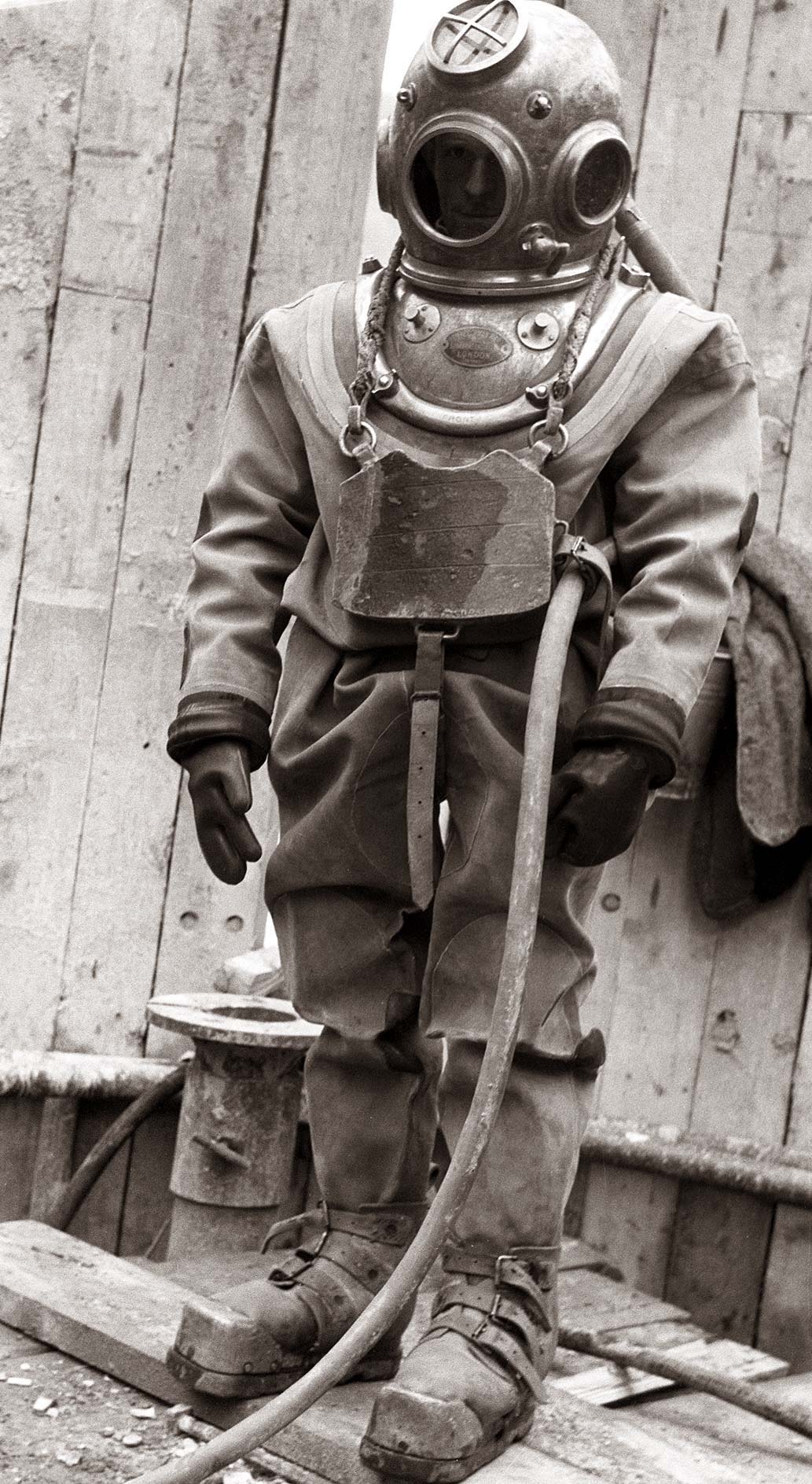
100% dry from the outside equals boil in the bag for the wearer.
Also, I have yet to see a practical garment that seals the holes for the users arms/legs/head(s?)...



The only system that is practical for the UK is layering with a water repellent (not 'proof') shell, followed by a wool/cotton blend of garments (my choice would be pullover with neck zip, followed by shirt and baselayer).
Merino wool is the answer, socks and baselayers are a must as they wick away sweat and are naturally heat retaining when wet, also antimicrobial.
Maybe some of you do not have this problem. Related to this man perhaps?

If you have ever worked in the tropics (equator) where humidity often exceeds 100%, then you know it to be a fools errand.
100% dry from the outside equals boil in the bag for the wearer.
Also, I have yet to see a practical garment that seals the holes for the users arms/legs/head(s?)...
The only system that is practical for the UK is layering with a water repellent (not 'proof') shell, followed by a wool/cotton blend of garments (my choice would be pullover with neck zip, followed by shirt and baselayer).
Merino wool is the answer, socks and baselayers are a must as they wick away sweat and are naturally heat retaining when wet, also antimicrobial.
Maybe some of you do not have this problem. Related to this man perhaps?
Similar threads
- Replies
- 31
- Views
- 1K


- Replies
- 14
- Views
- 764
