

tim@tcs
Well-Known Member
That should be all that’s needed in my opinion and no I don’t believe the science I think it was a conclusion that evidence was made to fitLead in food chain - yes market forces are impacting on that.

That should be all that’s needed in my opinion and no I don’t believe the science I think it was a conclusion that evidence was made to fitLead in food chain - yes market forces are impacting on that.

Conor,I appreciate you do not seem to have much regard for BASC.
I would be grateful if we could clarify that BASC did not advocate or impose a lead ban for wildfowlers.
The UK government signed up to the Agreement on the Conservation of African-Eurasian Migratory Waterbirds (AEWA) committing UK to a ban and the first lead shot ban came into force in 1999 in England, followed by Wales, Scotland and NI. Lead shot bans were also taking place under AEWA across the flyway involving many countries. Should we blame BASC for the decision of all those governments also?

I hope you will agree, with that in mind, that BASC did not advocate or impose a lead ban for wildfowlers.
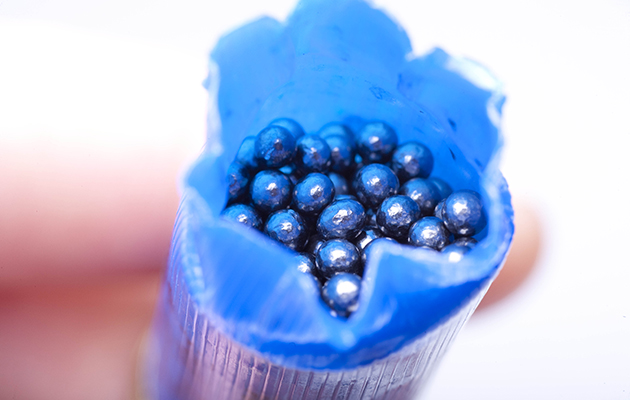
 www.thefield.co.uk

 www.theguardian.com

 environment.ec.europa.eu
Lead in food chain - yes market forces are impacting on that.
Thanks, so I think we are agreed that BASC did not advocate or impose a lead ban for wildfowlers as asserted earlier.Conor,
We can agree that BASC did not protect the interest of Wildfowlers in the same vein that it has fought for the interests of Driven shooting over the last few decades. Trying to indicate that it was solely the decision of the Government at the time is a stretch, given how we know John Swift (Hon BASC Life Member) was involved as part of the Lead Advisory Group.
I thought you might like these links;
Ban on lead ammunition ruled out - The Field
A ban on lead ammunition has been rejected by Secretary of State for the Environment, Liz Truss, and there will be no further restrictions on its use
2016, John Swift writes concerning Lead Shot
Waitrose stops sale of birds shot with lead as experts call for UK ban
Studies highlight risk to health of humans and wildlife from toxic particles in meat
John Swift responds to Waitrose decision supporting a Lead Ban
John Swift writes on Mark Avery's (Wild Justice) website
New rules banning hunting birds with lead shot in wetlands take full effect
From today, using lead gunshot in wetlands is banned in the EU thanks to new rules that take full effect.
The EU bans Lead shot on its wetlands in 2023.
As for regard of BASC;
Any judgement is based upon the actions as an organisation (or lack of), and how it engages / communicates with its Membership.
BASC did not protect the interest of Wildfowlers in the same vein that it has fought for the interests of Driven shooting over the last few decades. Trying to indicate that it was solely the decision of the Government at the time is a stretch, given how we know John Swift (Hon BASC Life Member) was involved as part of the Lead Advisory Group.
The derogations being considered currently are longer transition periods for some calibres of shotgun and rifle. That would include .22" RF and 9mm RF shotgun cartridges.And still no input from BASC asking that the .22" RF and 9mm RF shotgun cartridges be exempted from any ban.
On a slightly larger scale: https://wildlife.onlinelibrary.wiley.com/doi/full/10.1002/wsb.504 (Table 6 summarises comparative results)In reference to ongoing research, Livens guns are currently running a little Lead vs Steel experiment. Sadly, Steel is NOT doing well.

I hope then there can still be pressure regarding these two rimfire cartridges?At the risk of repetition there is no ban - there are HSE proposals that have yet to be submitted to Defra for consideration.
No consideration for .410 then?The derogations being considered currently are longer transition periods for some calibres of shotgun and rifle. That would include .22" RF and 9mm RF shotgun cartridges.
In the current issue of Gun Trade News the Gun Trade Association explains that the transition for any lead shot restrictions should be five years from enactment to deal with industrial realities or re-machining and supply chain issues. The GTA explains that ammunition manufacturers have asked for a ten-year delay to EU lead ammunition restrictions to allow for the prioritisation of military production.
At the risk of repetition there is no ban - there are HSE proposals that have yet to be submitted to Defra for consideration.
At the lead if not the Behest of BASC etc!I have 4 .410s in the cabinet, mostly used for rats and ferals. Will there be any compensation when then become valueless?
Well aware of that if you search my post history around the time of the initial voluntary ban announcement!At the lead if not the Behest of BASC etc!
I hope then there can still be pressure regarding these two rimfire cartridges?
No consideration for .410 then?
Surely this could be pushed for, there are no realistic alternatives and many (most?) guns are tightly choked so steel is out.
I have 4 .410s in the cabinet, mostly used for rats and ferals. Will there be any compensation when then become valueless?
So my 5 .410s and 9 mm garden gun (I forgot the webley bolt action I bought to give my some when he turns 14 and we get his tickets) are all going for scrap then.In its response to last year's HSE consultation BASC pushed for extended transition periods for small gauge shotgun calibres of 28 bore and smaller. Also for a buy-back scheme to: a. Fairly compensate material loss resulting from restrictions; b. Incentivise the transition to lead free alternatives; c. Ensure that the restrictions do not create a ‘false’ or ‘early’ cliff- edge for sales of lead products that undermines manufacturers’ ability to invest in development and production of lead-free alternatives. We can keep pushing on that, taking into account that in its latest proposals HSE has moved from 18 months to up to 5 years for transition periods, but nothing on buy-back schemes. Click link below to read the HSE draft proposals.
I wonder what the pot hunter wildfowl shooters of 100 years ago would make of the foreshore scene today.I wonder what game shooters from 100 years ago would make of the shooting scene today -
I, like many others, feel that the main purpose of the BASC still prioritises big bag driven days over all other types of shooting, when it is the least easy to defend.
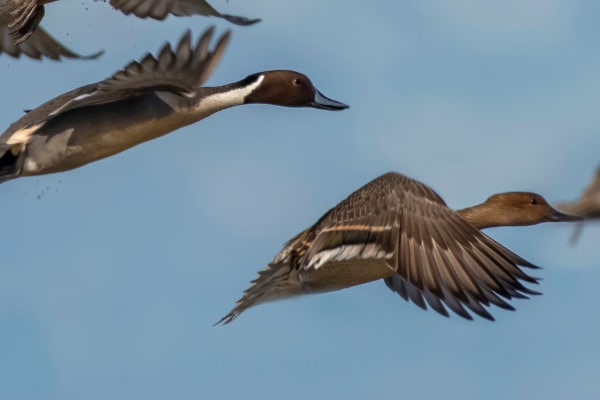
 basc.org.uk
But there are a lot of other branches of shooting than driven game, if the BASC wants to sell itself as the voice of shooting the focus needs to shift.I appreciate that this might be your perception but that is not something that I recognise - and that is from someone dealing with the day to day policy work for many years. BASC is about sustainable shooting - that is for game shoots small and large - and for the other quarry species. Here is a recent article on the latter but perhaps timely to have something on the former.
Shooting birds sustainably
BASC will challenge proposals to remove or amend the right to take a sustainable harvest of wild bird species.
BASC's focus is not 'driven game'.But there are a lot of other branches of shooting than driven game, if the BASC wants to sell itself as the voice of shooting the focus needs to shift.
Game shooting then, which is generally driven!BASC's focus is not 'driven game'.
A key issue right now is the latest proposals on lead ammunition restriction proposals - with lead airgun pellets ban dropped - hence the thread topic. BASC gave evidence on airgun pellets. BASC is reviewing all the proposals - target and live quarry (including game).Game shooting then, which is generally driven!


