Learning about action screw torque settings.

PEM406

Well-Known Member
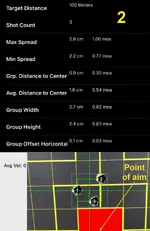
Didn't appreciate it until last week when I fitted my new GRS Bifrost onto my Tikka T3X SV in 243. Fitted it easily but didn't really pay attention to the screw torque until I took it out to check the zero and was really shocked at the result. Photo #1 is of two groups of three, not rushing and shooting off bags @ 100m. Wind was gusting a little but not strong. I even videoed (scope is a c50) because I thought I was doing something wrong.

Went away and found a video of two guys showing what happens when you adjust the torque on a .22 at 50m. They showed a sequence of targets at regular changes in torque and it was very helpful.

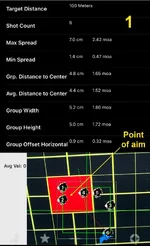
Photo #2 is 5Nm on the front screw and rear screw as tight as possible without catching on the bolt (wouldn't tighten to 5Nm without blocking the bolt)
Photo #3 is 4 shots at 4Nm on the front and loosened slightly on the rear
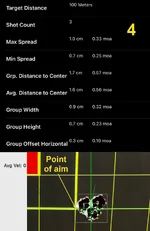
Photo #4 is after adjusting vertical, leaving the front at 4Nm and tightened slightly back up on the rear (screw was flush to the channel the bolt slides along). Haven't uploaded the next one where I adjusted the horizontal.

Lesson learned and it cost me some ammunition to do it but I'd much rather learn on a target!
 

Attachments

  • IMG_2108.webp
    IMG_2108.webp
    102.3 KB · Views: 89
  • IMG_2109.webp
    IMG_2109.webp
    81.7 KB · Views: 83
  • IMG_2110.webp
    IMG_2110.webp
    87.6 KB · Views: 82
  • IMG_2111.webp
    IMG_2111.webp
    87.2 KB · Views: 85
Didn't appreciate it until last week when I fitted my new GRS Bifrost onto my Tikka T3X SV in 243. Fitted it easily but didn't really pay attention to the screw torque until I took it out to check the zero and was really shocked at the result. Photo #1 is of two groups of three, not rushing and shooting off bags @ 100m. Wind was gusting a little but not strong. I even videoed (scope is a c50) because I thought I was doing something wrong.

Went away and found a video of two guys showing what happens when you adjust the torque on a .22 at 50m. They showed a sequence of targets at regular changes in torque and it was very helpful.

Photo #2 is 5Nm on the front screw and rear screw as tight as possible without catching on the bolt (wouldn't tighten to 5Nm without blocking the bolt)
Photo #3 is 4 shots at 4Nm on the front and loosened slightly on the rear
Photo #4 is after adjusting vertical, leaving the front at 4Nm and tightened slightly back up on the rear (screw was flush to the channel the bolt slides along). Haven't uploaded the next one where I adjusted the horizontal.

Lesson learned and it cost me some ammunition to do it but I'd much rather learn on a target!
You don't mention the torque setting for the rear screw? Did you check the torque on group No2 so you can repeat that good group in the future. Also it is worth index marking the screws so you can do a quick eyeball check before each outing. If it were mine I would either get a shorter screw, shorten the screw or put a washer on it.
Good luck
 
This is why it's preferable to have a properly pillar bedded stock.
Easy enough to grind a thread or two off your long screw.
I may have this slightly wrong, but I had a figure of 5.5nm in my head. It's what I use, but that's in PSE stocks with integral pillars and skim bedded. Even then, I did have to grind a thread off an aftermarket stainless rear screw.
 
Last edited:
You don't mention the torque setting for the rear screw? Did you check the torque on group No2 so you can repeat that good group in the future. Also it is worth index marking the screws so you can do a quick eyeball check before each outing. If it were mine I would either get a shorter screw, shorten the screw or put a washer on it.
Good luck
Sorry, the photos posted in the wrong order. The one at around 1/3 MoA was 4Nm on the front screw and that's where I've left it. The rear I couldn't measure the torque because I had to work to the bolt clearance instead but I like the idea of finding a way round that so I know what the setting is..

As it happens I just got some new stainless steel action screws from MM Sporting because when I was adjusting the current ones, I could see the heads starting to wear. Definitely worth trying a washer and also nice idea to mark them so you can see if they've shifted. Thank you!
 
This is why it's preferable to have a properly pillar bedded stock.
Easy enough to grind a thread or two off your long screw.
I may have this slightly wrong, but I had a figure of 5.5nm in my head. It's what I use, but that's in PSE stocks with integral pillars and skim bedded. Even then, I did have to grind a thread off an aftermarket stainless rear screw.
Sorry for the dumb question but I've never thought about this so much until now: what difference does pillar bedding make? I did search the threads on here and googled it before replying, so I think the general idea is that it gives a more secure structure around the action screws. Does that improve accuracy by helping get the right torque, or is it more about keeping the torque once set?

Until now, I've never really thought about that side of things. I was always pretty confident in the rifle itself and thought that any inaccuracy was more likely down to me than the rifle, so I've mainly been working on what I'm doing when taking the shot. Not a bad thing but now I'm going to be going to check the HMR as well!

I've got the plastic bottom metal on the Tikka and they recommend a maximum of 5Nm for those (7Nm on the metal ones). However, it felt like it improved as I increased up to 4Nm and then dropped off again when I went higher.
 
Sorry for the dumb question but I've never thought about this so much until now: what difference does pillar bedding make? I did search the threads on here and googled it before replying, so I think the general idea is that it gives a more secure structure around the action screws. Does that improve accuracy by helping get the right torque, or is it more about keeping the torque once set?

Until now, I've never really thought about that side of things. I was always pretty confident in the rifle itself and thought that any inaccuracy was more likely down to me than the rifle, so I've mainly been working on what I'm doing when taking the shot. Not a bad thing but now I'm going to be going to check the HMR as well!

I've got the plastic bottom metal on the Tikka and they recommend a maximum of 5Nm for those (7Nm on the metal ones). However, it felt like it improved as I increased up to 4Nm and then dropped off again when I went higher.
plastic bottom metal?? Is it made of plastic. My reason is when I was with VW screwing their plastic bits down onto metal as is usual in the auto industry they found that the plastic was torqued down at say 5Nm then when checked again a specified time later the Nm had gone down to say 3.5Nms. The plastic reacts to a constant pressure by compressing.
 
Yes, on the Tikka there are apparently two versions, one is metal and the other plastic with metal inserts around the holes.
Which will then crush down onto the plastic by passing the pressure on from the screws.
To me a regular torqueing down will be needed.
 
Which will then crush down onto the plastic by passing the pressure on from the screws.
To me a regular torqueing down will be needed.
Nope, nothing wrong with Tikka plastic trigger housings - time has moved on... They're made of Glass Filled PE I think and are more than up to the job.
 
Back
Top