Quality versus quantity

A good comparison - thanks.

It would be interesting to add in a good 6x42 and 8x56 - i would nt be surprised if they were better than the rest!

Where i think the “better” scopes win is the quality of build and in particular the turrets. S&B in particular feel very strong and smooth. Cheaper scopes just feel - well cheap. But once zero is set - just leave it alone.

I was out the other night with my S&B 8x56 and Vortex 8x42 HD. Vortex are great (especially for the money) but the bigger objective lens on the scope makes a big difference to the image brightness as the light started to fade
 
Excellent post.
Makes me pleased to have stuck with Hawke!! Having never been able to justify the additional expense for my limited use.
 
Reviews like this are interesting and important because your "impression" of how the glass performs is what is important - I can list all the numbers I want but if you think that two things are as close as makes no difference then that is all that matters.

I honestly believe that the optics market is, and has been for some years, almost completely driven by marketing and brand image and you can see that in a lot of the advertising which focuses (if you'll excuse the pun) less on glass quality and more on image, gadgets, lifestyle, and similar values. One particular brand is said not to allow their scopes to be measured or tested against those made by other brands - again this is to bolster brand image as they don't sell on glass quality and so make little or no mention of it but being known as having the (say) 5th best glass would destroy the brand image that you are buying a perfect lifestyle and wonderful quality glass, having 5th best simply doesn't appeal to the sort of people who make purchasing decisions based on magazine adverts and brand image. No magazine will ever publish "We use science to prove that the optical differences between a big name scope and a brand that costs £2000 less are imperceptible to the human eye."

My view is that all the top end glass is adequate for our purposes, yes Zeiss almost certainly make the best glass in the sporting riflescope market but if this gives you no practical advantage it is no longer a big selling point. It is also the case that they've probably been doing this for many years now and so what you might call "2nd tier" manufacturers have caught up in the sense that they also make glass that is adequate for our use as this is now old technology. All this has to be good as it opens up a lot more choice - I've been using Minox binos for years and I've compared them side by side to one of the big names and the Minox allowed us to see antlers at last light that we couldn't see with the big name plus I didn't have to pay for as many magazine adverts thus saving me cash. There's no down side to that for the end user.
 
Hi

As I have said before re requests for advice on optics - all can (do?) get 'overlaoded' with the stats/marketing/reviews/others opinions forgetting the most important factor of all - how our own eyes find the image.

L
 
  • Like
Reactions: CSW
There is not huge difference in the quality of glass these days but seems to be a big difference in build
quality.
its no good having decent glass if the scope or binoculars are going to fall apart
 
There is not huge difference in the quality of glass these days but seems to be a big difference in build
quality.
its no good having decent glass if the scope or binoculars are going to fall apart
In many cases mid level is well made and has a good warranty. Nikon, hawke, etc etc.

With all these things there is a value price point and then a luxury price point with rapidly diminishing returns.
 
To the op, no offense but your 60 year old eyes are not going to be able to make full use of a 7mm exit pupil in any event so there comes a point when the optics make no difference for you but might do for a younger eye
 
I am not a serious user of 'scopes, but I find that my 1952 Bausch & Lomb Balvar 2.5 - 4 variable (with no turrets) and my 1960s Peccar 4 x 30 scopes are very sharp and clear for use on the range. But out on the hill after sunset might be another matter...

HB
 
Great write up.

I have been banging on about Vortex stuff for years - usually falling on the deaf ears of the "brand snobs" (don't mean to be so disparaging but no belter term comes to mind!).

I used Viper HD's for a number of years before upgrading to Fury range Finders (same glass).
 
He's using the same pupils to test all the gear so the comparisons are valid.

The other thing is that he probably sits quite nicely in the average stalking demographic making the comparisons all the more valid for the vast majority of the potential market.
 
Postscript: I found myself with a bit of time after sunset tonight and took both my Swaro SLC 8x42 and my Vortex 10x40 up to our spare room which overlooks a good view of fields and hedgerows extending across a valley to some 600 yds. There was a small group of fallow at 5-600 yds and two well grown fox cubs mousing and blackberry-ing at about 75 yds.
I started to watch them all through the two binos from about sunset plus 20 min. Conditions were clear with about 50% cloud cover.
The Swaros were definitely a bit brighter but that could be just down to the lower mag.
I continued to watch until SS plus 45 min when the fox cups and fallow left my view. My last views of the animals gave pretty much identical colour range with less perceptible difference in brightness at close range.
Conclusion? You would struggle to get a fag paper between the two binos on colour performance; Swaros were a bit brighter but are lower mag and so on the more distant fallow I really couldn't tell whether I was looking at a buck or doe while the Vortex were much more detailed. As said before, the Vortex were much easier to focus at last light given their faster gearing on the focus wheel.
 
Postscript: I found myself with a bit of time after sunset tonight and took both my Swaro SLC 8x42 and my Vortex 10x40 up to our spare room which overlooks a good view of fields and hedgerows extending across a valley to some 600 yds. There was a small group of fallow at 5-600 yds and two well grown fox cubs mousing and blackberry-ing at about 75 yds.
I started to watch them all through the two binos from about sunset plus 20 min. Conditions were clear with about 50% cloud cover.
The Swaros were definitely a bit brighter but that could be just down to the lower mag.
I continued to watch until SS plus 45 min when the fox cups and fallow left my view. My last views of the animals gave pretty much identical colour range with less perceptible difference in brightness at close range.
Conclusion? You would struggle to get a fag paper between the two binos on colour performance; Swaros were a bit brighter but are lower mag and so on the more distant fallow I really couldn't tell whether I was looking at a buck or doe while the Vortex were much more detailed. As said before, the Vortex were much easier to focus at last light given their faster gearing on the focus wheel.

Thanks for this. It’s really interesting stuff for someone like me getting started on a budget, as most seem to suggest that only the best optics are worth buying.
 
I tried the Vortex beside my Swarovski binos. I couldn't see a great difference. And now the Vortex are my first choice to take out. This may be the start of another thread, but I always ask about that last ten minutes more a supposed expensive bino will give you.1. Can you really see the animal properly to take a shot ?. 2. Would it actually be legal ?...J
 
I always ask about that last ten minutes more a supposed expensive bino will give you.1. Can you really see the animal properly to take a shot ?. 2. Would it actually be legal ?...J

I have found that under ideal circumstances, taking into account where I shoot etc, then I might consider taking a shot up until about 45 minutes after the official sunset time. Under most "real world" circumstances then I'd usually knock another 15 minutes off this. I don't see the quality of the glass, within reasonable bounds, making any difference to this. So, I don't have any problems with legality. I also don't see that Jelly, posting above and on a budget, is at any real world disadvantage over those with infinite cash to spend providing he spends a reasonable amount of cash sensibly. In stalking terms all that spending a fortune buys you is brand recognition and nice adverts in magazines, this has a value and so works for some people, but if all you want to do is go stalking then you can do that for quite sensible money. If you want to get best value for your money Jelly then spend as little as possible on gadgets and stuff and spend as much as possible on stalking and great days out.

Perhaps a more useful test than all the "see how much cash you can spend..." type of reviews you see in the magazines would be a test of optics based on getting something adequate for the minimum amount of money. It is also hard to see, because you aren't often shown it, that there is a huge choice for those wanting to spend "sensible" cash on their optics - one example that comes to mind is the number of 6X42 or 8X56 type optics that are ideal for stalking and are available for less than maybe £300 second hand but clearly there are other areas such as binos as well.
 
You've drawn the right conclusion, in my experience top-end glass is designed by the marketing-men to seduce people, not to give you any more deer in your larder...
I have some excellent scopes that cost new from around £150 - (Saying that, generally you're looking in the £400-£600 price class): If bino's/scopes tick these boxes they're generally of perfectly sufficient high quality to be used for hunting:
  1. Waterproof
  2. Gas-filled / Fogproof
  3. Multi-coated lenses.
 
I'll once again be the voice of dissent. Only go with a fixed mag scope if you want to be frustrated. Whether it be a cheap 4x32, or a top name 8x56. They just aren't as flexible as a good quality, mid range zoom, and there's enough cross-over between the brands that if you buy the top end of a "cheaper" brand it will often be better (and sometimes cheaper) than the bottom of the range of a more "expensive" brand.
Case in point for me was when I replaced my Schmidt 8x56 with a Docter 2.5-10x48. To my eyes the Docter out performed the Schmidt in low light, even when set at the same mag. Because of the zoom, it was also much easier to use for close range in the woods, and the slightly higher mag gave an advantage on partially obscured or longer range targets.
There's no arguing with the fact that the S&B is a good scope, it is. The build quality is fantastic, and the glass IS good, but being fixed, the flexibility isn't there.
There you go. Everyone's got one, and that's mine.
Cheers.
 
My local Optic shop in Narberth opened at 7pm for me one autumn night. I was given the three Vortex scopes to try which Vortex said they were happy to send for me to appraise & tried them against high priced makes in the shop. Vortex were a clear winner on last light for my eyes. A grand or so more for five more mins, I'd rather keep the money & enjoy a second full day anytime.
I am thinking of a vortex spotter any large differences between the 3 models which is best value. Is the dimond back really worth paying over the viper
 
I am thinking of a vortex spotter any large differences between the 3 models which is best value. Is the dimond back really worth paying over the viper
The Diamondback is the entry level and frankly speaking it's a superb bit of kit.

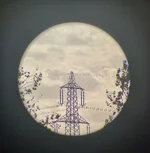
This is the Diamondback 65mm Straight, the electricity pylon is about 965 yards.

As the UK distirbutor if there's anything particular you want to know I might be able to help! (Happy to take more photos if you want to see anything like that!)

20221017_162222.webp
 
Back
Top