Rolled loins and the silver skin / fascia issue

Antonyweeks

Well-Known Member
I regularly watch youtube butchery videos and also the 'reels' etc that pop up on some social media sites. I also see fantastic looking photos of prepared venison cuts: rolled loins with all the back stripes rolled around the joint. Very impressive indeed. Same goes for fallow chops with lots of fat on them. They look the business and very appealling.
However, unless I'm going round the bend (which is entirely possible) in my experience rolling a loin without trimming away the fascia/silver skin and so on results in a meat that whilst looking decent as it goes into the oven is not the best eating when it comes out. Particularly when compared with either the rack of loin chops for example without all of the thin muscle & sinew on the top.
Leaving silver skin or fascia causes the meat to tighten when cooking surely? Additionally, deer fat - particularly the back fat on fallow - is in my experience bitter and unpleasant tasting, unlike a fatty lamb chop or a beef steak. I appreciate that some folks do like this taste. I'm not a fan of subcutaneous fat on deer, the visceral fat on the otehr hand is excellent in cooking.
Whilst I'm definitely not Scott Rea (great videos) I've cut lots of chops from venison loins and unless I take off most of the tissue etc and just leave the eye of the loin, the outer part of the chops can be tough.
I may be doing something wrong of course.
Happy to be shot down in flames!
Cheers
 
Depends entirely on whether you're prepping the loin for steaks (quick cook) or as a roasting joint (which is cooked for longer).

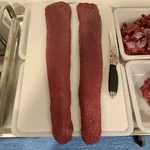
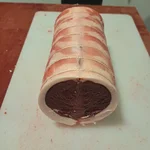
Two examples of loin prep (by me) below. In one pic the silver skin has been removed, and in the other it hasn't. Both perfect for their intended purpose:

View attachment 472404

View attachment 472405
When are you holding the sd summer bbq?
 
If cooking venison in a stew / casserole etc I leave the membranes and Cartledge bits on. They break down into a lovely and unctuous jelly which is the basis for a beautiful sauce. Adding bones to the cooking makes it even better.
Edit: even better to keep the trimings and bones, roast them in the oven till nicely caramelised, then use these as the basis of a really good venison stock. Use this when making a venison stew / casserole. Reduce the stock down somewhat once you have strained it - it should nicely coat a spoon. Freezes well and use as required.
 
I regularly watch youtube butchery videos and also the 'reels' etc that pop up on some social media sites. I also see fantastic looking photos of prepared venison cuts: rolled loins with all the back stripes rolled around the joint. Very impressive indeed. Same goes for fallow chops with lots of fat on them. They look the business and very appealling.
However, unless I'm going round the bend (which is entirely possible) in my experience rolling a loin without trimming away the fascia/silver skin and so on results in a meat that whilst looking decent as it goes into the oven is not the best eating when it comes out. Particularly when compared with either the rack of loin chops for example without all of the thin muscle & sinew on the top.
Leaving silver skin or fascia causes the meat to tighten when cooking surely? Additionally, deer fat - particularly the back fat on fallow - is in my experience bitter and unpleasant tasting, unlike a fatty lamb chop or a beef steak. I appreciate that some folks do like this taste. I'm not a fan of subcutaneous fat on deer, the visceral fat on the otehr hand is excellent in cooking.
Whilst I'm definitely not Scott Rea (great videos) I've cut lots of chops from venison loins and unless I take off most of the tissue etc and just leave the eye of the loin, the outer part of the chops can be tough.
I may be doing something wrong of course.
Happy to be shot down in flames!
Cheers
Another thing to bear in mind is as @VSS said depending on the purpose of the cut will also change how you serve it.

Leaving the silver on a steak will make it tough as it is cooked quickly, then also cut into largish pieces when eaten - so you may end up eating a big piece of sinew in a go.

Something like a rolled loin which is roasted for longer, but then cut very thin before serving means that any silverskin left on the cut is in manageable proportions, so isn’t noticed as you eat it.

That’s why stir fry strips from the less tender cuts, or cuts with connective tissue, work well - the actual amount of sinew you eat per mouthful isn’t noticeable.
 
  • Like
Reactions: VSS
Depends entirely on whether you're prepping the loin for steaks (quick cook) or as a roasting joint (which is cooked for longer).

Two examples of loin prep (by me) below. In one pic the silver skin has been removed, and in the other it hasn't. Both perfect for their intended purpose:

View attachment 472404

View attachment 472405
Both pics are great. In the top one the joint looks perfect: and clearly you don't find that leaving that skin on affects the carving or cooking of it. Also with that all that fat around it - it doesn't taint the meat? I shall have to give it another go then. When I rolled a joint like this (pardon the expression!) the person I gave it to said she didn't the like the flavour of the fat......TBH I butcher most of my loins like the second photo and then cut into steaks. However, I'd like to give the rolled loin a better chance!
 
What are your cooking instructions for the skin on rolled loin please.

Seal all surfaces in a very hot pan.
Put it in a roasting dish with a small amount of liquid (vegetable, chicken or venison stock or a glug of red wine. NEVER beef stock).
Cover (eg foil) and cook for about the same time as lamb.
Remove cover towards the end of the cooking time, just to finish off.
Rest before carving
 
Seal all surfaces in a very hot pan.
Put it in a roasting dish with a small amount of liquid (vegetable, chicken or venison stock or a glug of red wine. NEVER beef stock).
Cover (eg foil) and cook for about the same time as lamb.
Remove cover towards the end of the cooking time, just to finish off.
Rest before carving
Thank you.
 
Back
Top