
You are using an out of date browser. It may not display this or other websites correctly.
You should upgrade or use an alternative browser.
You should upgrade or use an alternative browser.
U.K. deer populations
- Thread starter gixer1
- Start date

Have you thought about contracting to the government to control immigration numbers?I’m the U.K., there are an estimated (not including park deer) -
500k Roe deer
350k Red deer
100k Fallow
40k Muntjac
12k Sika
1.5k CWD….
What are peoples thoughts on the accuracy, are there more or less of any particular species and if so why do you think this?
Regards,
Gixer


Not my figures…..government figures.Given that there are individual herds of wild fallow numbering in the thousands (actual counts, not estimates), I should say that there are more fallow than your figures suggest.

Free range rob
Well-Known Member
Sounds like someone plucked those figures out the air to me.
I’ve seen farms of less than 200 acres with 100 plus CWD on, and the neighbours to them having similar numbers, I’ve seen fields less than 20 acres with over a 30 head count……
Those munt figures sound nonsense as well, if we really only have so few total, Bedfordshire must have over 50% of the countries population
I’ve seen farms of less than 200 acres with 100 plus CWD on, and the neighbours to them having similar numbers, I’ve seen fields less than 20 acres with over a 30 head count……
Those munt figures sound nonsense as well, if we really only have so few total, Bedfordshire must have over 50% of the countries population

RF76
Well-Known Member

Fact or fiction? UK deer numbers are higher than ever - at 2 million
Since 2022 a story of 2 million deer and soaring deer populations in the UK has slowly been repeated (and repeated) - but is it the truth?
 bds.org.uk
Minus 2 I got last nightAnyway I thought the latest deer estimate was more like 2 million
I guess some estimates could also be based on greed and the drive from the government to have trees planted everywhere and make deer public enemies…..as politically they don’t like saying “shoot fluffy things” but to get the green agenda tick they also need the trees.

As others have rightly said, some of those figures are woefully low. In the 1990s I was seeing a lot of muntjac and just up the road at the Ecology Centre, they reckoned there was a population in excess of 3000 on their ground alone. I wasn't deer managing then but started in 2015 taking one or 2 muntjac a year. Now, I've taken 22 in the last 6 months and I wasn't looking for them! As for fallow, don't get me started!

I'd second that, OK they are transient but in this part of the world there are a LOT of them around!Fallow figure seems low.
K
I'd also question the ratio of Roe to Muntjac, on my patch there are easily as many if not more Muntjac than Roe & there are plenty of Roe about!
Appreciating that numbers vary region by region but to me the figures from the OP & from the HMG data seem to be, shall we say, a little 'conservative'?

The numbers for the smaller deer could be out by a factor of 10 and it would be nearly impossible to tell.I’m the U.K., there are an estimated (not including park deer) -
500k Roe deer
350k Red deer
100k Fallow
40k Muntjac
12k Sika
1.5k CWD….
What are peoples thoughts on the accuracy, are there more or less of any particular species and if so why do you think this?
Regards,
Gixer
Red might be within 100K of the real number. The rest are fiction.
Agreed, I would say as technology advances these numbers will get more accurate, thermal drone counts should help get to improve these numbers.The numbers for the smaller deer could be out by a factor of 10 and it would be nearly impossible to tell.
Red might be within 100K of the real number. The rest are fiction.
Regards,
Gixer
Thermal Imaging Drones | Wildlife, Search & Rescue | Scott Country
A thermal imaging drone is designed for aerial surveys, such as thermal wildlife surveys, thermal deer counts or for wildlife ecology. View our range of drones.
 www.scottcountry.co.uk
I have colleagues doing formal survey work with thermal drones, and attempting to establish the boundaries of the measurement error.Agreed, I would say as technology advances these numbers will get more accurate, thermal drone counts should help get to improve these numbers.
Regards,
Gixer
As you might expect, they’re very good for large things in open spaces. They get rapidly worse as things get smaller and vegetation thicker.
The emerging consensus is that they will speed up and reduce the cost of counting, but the margin of error isn’t going to change by much. With things like roe and muntjac in woodland, it looks like they’re about as useless as every other way of counting them!

Heym SR20
Well-Known Member
I would suggest that any of these estimates are based on survey data, which is at best an educated guess. And the fact that especially Red and Fallow move over large distances.
We don’t have a reliable and consistent survey of our wildlife, whether its deer, wildfowl, raptors, fish etc. As a society on the whole we don’t care - use it till its gone seems to be the norm. Certainly with fish in our seas, salmon in our rivers, timber in the woods etc.
We don’t have a reliable and consistent survey of our wildlife, whether its deer, wildfowl, raptors, fish etc. As a society on the whole we don’t care - use it till its gone seems to be the norm. Certainly with fish in our seas, salmon in our rivers, timber in the woods etc.

Dunwaters
Well-Known Member
Apex predator’s will have a disproportionately large impact on deer population, because they will do what we don’t or can’t and target the easiest prey, ie females and young, 24x7x365.I've read estimates of the UK deer population at anywhere between 1 and 2.4 million, which tells you all you need to know about the accuracy of the number!
What is even stranger are those people who jump on the growing deer population to advocate for the reintroduction of wolves, lynx and other apex predators.
First, we don't have an accurate estimate of the population, and second, what use are apex predators outside of so-called wilderness areas?
They’ll do it with particular effect wherever deer are concentrated, regardless of land ownership or management policy and they’ll do it with complete ruthlessness.
Even if we were allowed to operate under a similar “ black flag” approach, most of us wouldn’t do it, which is at least partly why we are in our current mess.
I was talking to a German forester a few months ago, he was shocked at the amount of damage he saw here.
Over most of the continent you would lose your lease and have to pay hefty compensation to both landowner and forestry company if you don’t achieve your management objectives, and there they have the apex predators.

Apex predator’s will have a disproportionately large impact on deer population, because they will do what we don’t or can’t and target the easiest prey, ie females and young, 24x7x365.
They’ll do it with particular effect wherever deer are concentrated, regardless of land ownership or management policy and they’ll do it with complete ruthlessness.
Even if we were allowed to operate under a similar “ black flag” approach, most of us wouldn’t do it, which is at least partly why we are in our current mess.
I was talking to a German forester a few months ago, he was shocked at the amount of damage he saw here.
Over most of the continent you would lose your lease and have to pay hefty compensation to both landowner and forestry company if you don’t achieve your management objectives, and there they have the apex predators.
The problem is that most studies suggest the Highlands and Grampians are the only suitable habitats for the reintroduction of wolves, adding Northumberland when it comes to the lynx.
Map that against the current distribution of deer in the UK and it is obvoius that, however efficient apex predators might be in despatching deer, there will be huge swathes of the countryside where it matters not a jot, as apex predators won't be in those areas!
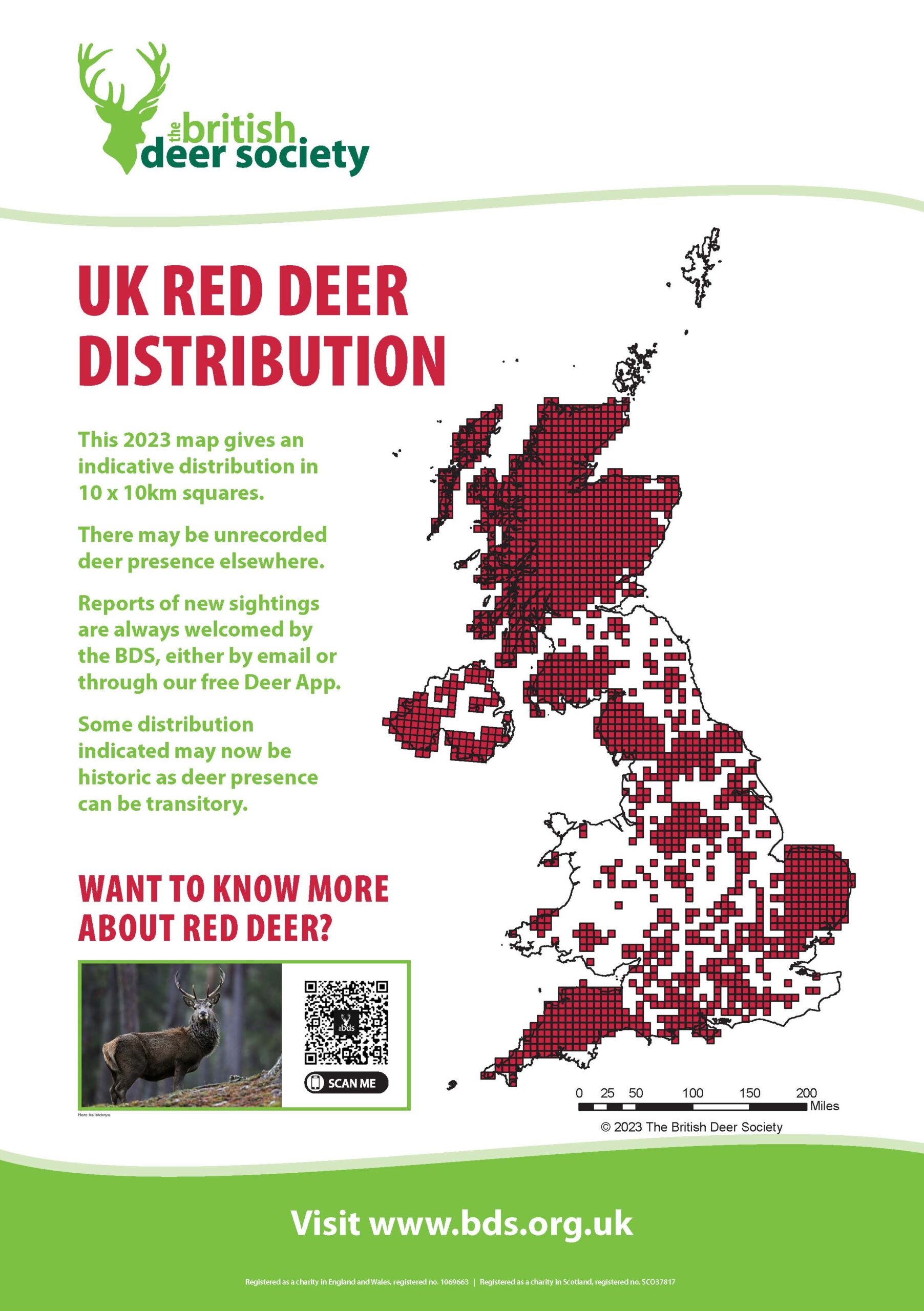
Deer Distribution Survey - The British Deer Society
Deer Distribution SurveyCheck out the new BDS UK deer distribution map! Learn what species of deer you can see in your area Photo by: Mark BridgerFIND OUT MORE ABOUT THE DEER SURVEY If you want to know where you can see water deer or how far muntjac have spread across England you need a survey...
bds.org.uk
It's like Mr Monbiot raging about landowners in Scotland not controlling deer as a reason to reintroduce wolves, but with no suggestion as to how the expanding deer population should be controlled in his native Oxfordshire.
Dunwaters
Well-Known Member
I hope you’re right, but the experience in Europe would indicate that once they’re on the ground, the apex predator’s decide for themselves what and where is a suitable habitat.The problem is that most studies suggest the Highlands and Grampians are the only suitable habitats for the reintroduction of wolves, adding Northumberland when it comes to the lynx.
Map that against the current distribution of deer in the UK and it is obvoius that, however efficient apex predators might be in despatching deer, there will be huge swathes of the countryside where it matters not a jot, as apex predators won't be in those areas!
Deer Distribution Survey - The British Deer Society
Deer Distribution SurveyCheck out the new BDS UK deer distribution map! Learn what species of deer you can see in your area Photo by: Mark BridgerFIND OUT MORE ABOUT THE DEER SURVEY If you want to know where you can see water deer or how far muntjac have spread across England you need a survey...
It's like Mr Monbiot raging about landowners in Scotland not controlling deer as a reason to reintroduce wolves, but with no suggestion as to how the expanding deer population should be controlled in his native Oxfordshire.
There are wolves on the outskirts of several large European cities.
Bavarianbrit
Well-Known Member
The auto insurance RTA figures would give a better extrapolation to work with IMO.
I hope you’re right, but the experience in Europe would indicate that once they’re on the ground, the apex predator’s decide for themselves what and where is a suitable habitat.
There are wolves on the outskirts of several large European cities.
Yes, and in the Netherlands, which has a population density almost double that of the UK, they are now having to find ways to reinforce the wolves natural fear of humans, as they have become too tame and are even chasing cyclists in one of the national parks!
In Italy they have found that, whilst wolves originally did a good job of controlling deer and wild boar, they are natural scavengers and will end up taking the easy option, whether that's eating roadkill, domestic waste, or livestock.
Hence why in many European countries the rewilding bodies are wanting to restore populations of deer to reduce livestock attacks, with somewhere between 30,000 and 40,000 domesticated animals (mostly sheep) falling prey each year to wolves.
The law of unintended consequences.....
Similar threads


- Replies
- 7
- Views
- 1K
- Replies
- 2
- Views
- 460

- Replies
- 72
- Views
- 4K
