
You are using an out of date browser. It may not display this or other websites correctly.
You should upgrade or use an alternative browser.
You should upgrade or use an alternative browser.
PSE Stocks
- Thread starter DLH_
- Start date



Peek into our new technology. Hopefully launch at IWA or shortly after.

edi
I really think composite carbon would be a better look.
The pattern is far more modern. I know nothing of manufacturing processes though.
Attachments
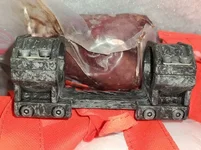
Scotch,
The mount is made in a process now called "carbon forging" . Funny thing is this process is known to me since over 40 years... just not the fancy name. We had a better process that also used long structural fibres as well as the shorter ones. Carbon forging is strength wise way off structural fibre design. Still it is interesting and has it's place.
edi
The mount is made in a process now called "carbon forging" . Funny thing is this process is known to me since over 40 years... just not the fancy name. We had a better process that also used long structural fibres as well as the shorter ones. Carbon forging is strength wise way off structural fibre design. Still it is interesting and has it's place.
edi
Scotch,
The mount is made in a process now called "carbon forging" . Funny thing is this process is known to me since over 40 years... just not the fancy name. We had a better process that also used long structural fibres as well as the shorter ones. Carbon forging is strength wise way off structural fibre design. Still it is interesting and has it's place.
edi
Can the pattern be used in your new design?
You could make flat tops that can be milled for different rifles instead of moulding all the inlets.

Have to say I really hate the look of these (and all the others with visible carbon). Much, much prefer the current stocks. Please say you’re keeping those going too!Peek into our new technology. Hopefully launch at IWA or shortly after.
edi

We believe the demand for all out visual carbon is not very big however the market that want some carbon visible (just to be sure it is a carbon stock) is quite large. Then there are those that need a heavy duty no frills hunting stock however we notice this market is quite small. Goal is to cater for all.Have to say I really hate the look of these (and all the others with visible carbon). Much, much prefer the current stocks. Please say you’re keeping those going too!
The newer tech seems to save about 300 grams of weight on first samples.
edi
Have to say I really hate the look of these (and all the others with visible carbon). Much, much prefer the current stocks. Please say you’re keeping those going too!
You can always paint it
Moulded inlets the way we do it is much stronger and takes recoil long term much better than milled inlets. There could be a way of around the flaws, we are not completely against milling. The forged fattern could be used in some parts of the inlet. Outside one would loose some strength or increase weight.Can the pattern be used in your new design?
You could make flat tops that can be milled for different rifles instead of moulding all the inlets.
for now we hunt with our proven stocks.
Yesterday a lovely frosty day.


edi
We believe the demand for all out visual carbon is not very big however the market that want some carbon visible (just to be sure it is a carbon stock) is quite large. Then there are those that need a heavy duty no frills hunting stock however we notice this market is quite small. Goal is to cater for all.
The newer tech seems to save about 300 grams of weight on first samples.
edi
300g is huge.
People forget that paint weighs so much.
You could offer a painted option with a stencil of your logo removed to show the carbon underneath on the butt.
Moulded inlets the way we do it is much stronger and takes recoil long term much better than milled inlets. There could be a way of around the flaws, we are not completely against milling. The forged fattern could be used in some parts of the inlet. Outside one would loose some strength or increase weight.
for now we hunt with our proven stocks.
Yesterday a lovely frosty day.
edi
It was just an idea to open up the market to yourselves. Have a single stock style option with this information and let the customer decide. The number of requests I see for Sako inlets can surely make the investment pay dividends.
It is not the paint, carbon finish stocks are also painted, just clear. The manufacturing process between our standard products and the new method is completely different. Both have their good points. Of course one can paint any stock or semi paint as in cammo Gucci which I prefer over just carbon.300g is huge.
People forget that paint weighs so much.
You could offer a painted option with a stencil of your logo removed to show the carbon underneath on the butt.

edi
It is not the paint, carbon finish stocks are also painted, just clear. The manufacturing process between our standard products and the new method is completely different. Both have their good points. Of course one can paint any stock or semi paint as in cammo Gucci which I prefer over just carbon.
edi
Sorry, but the step down from the stock to the recoil pad really does not look good on that... know it might be an early prototype but I would not be buying one like that.

You are right, the recoil pad and spacer is from the older generation.Sorry, but the step down from the stock to the recoil pad really does not look good on that... know it might be an early prototype but I would not be buying one like that.
edi
I would love to see the E-Tac forend and grip with the E-lite butt stock.
The E-Tac forend is unique and the lines look sharp.
The E-Tac forend is unique and the lines look sharp.

I would love to see the E-Tac forend and grip with the E-lite butt stock.
The E-Tac forend is unique and the lines look sharp.
Get a Choate...



It’s the butt I don’t like haha
It’s the butt I don’t like haha
It's plastic, so 'I can be anything you want me to be...
 '
'Similar threads


