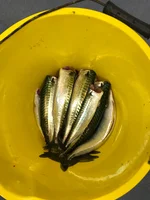
Not sure I agree with that! On light gear, they’re seriously aggressive.Not a great deal of fight, but so delicious.
I’m determined to go after them on fly gear at some point. On a 5wt, I think they’d be great fun.

Not sure I agree with that! On light gear, they’re seriously aggressive.Not a great deal of fight, but so delicious.
These beastly bluefin tuna are taking their toll…The days of Mackerel have long gone, thanks to our association with the EU.
I must be imagining these then…The days of Mackerel have long gone, thanks to our association with the EU.

I agree that Mackerel stocks have declined in the past but there are still plenty to catch if you put the effort in and find a good spot where the "Black Bag Gangs" don't frequent!The days of Mackerel have long gone, thanks to our association with the EU.

How many casts did it take?I must be imagining these then…
Fish a castHow many casts did it take?
When my dad was growing up in Abbotsbury, there were ten seine crews operating on the beach throughout the mackerel season, it was 'like a factory turning out' when they came home for breakfast. 50 years ago, you could catch enough to fill a freezer for Winter in a couple of evenings after tea with rod and line.. Brussels put paid to all that.The days of Mackerel have long gone, thanks to our association with the EU.

Okay if using very light tackle.Absolutely love mackerel grilled whole over an open fire, or if king mackerel cut into steaks for the same treatment.
Not bad smoked either.
Not a great deal of fight, but so delicious.

Out of interest, how and when you think this happened? Genuine question.Brussels put paid to all that.
You sound like one of those people who think we should be compensating for things that people like Sir Francis Drake did hundreds of years ago while establishing the British Empire. This is the here and now!Out of interest, how and when you think this happened? Genuine question.
AFAIK British waters have been overfished for few centuries, Brits have tried overfish other areas like Iceland waters, and global "peak fish" occured about 1990 I think. I.e. despite vastly growing effort and much more efficient techniques, global catch has been declining since then. EU might have some internal quibles but there are "other countries" that contribute far more to overfishing problem...
I dont think the modern commercial fisher mans country of origin matters, they all destroy the sea for the sake of profit.You sound like one of those people who think we should be compensating for things that people like Sir Francis Drake did hundreds of years ago while establishing the British Empire. This is the here and now!
The EU's fisheries policy meant that we have very much less fish for our chaps to catch in our own waters, the French and Spanish seem to get mentioned most as the main plunderers.

One of the biggest problems has been large factory boats dredging the seabed. These are totally indiscriminate in what they catch and pretty much destroy everything on the sea bed. The sea bed is breeding ground and nursery for many young fish.Out of interest, how and when you think this happened? Genuine question.
AFAIK British waters have been overfished for few centuries, Brits have tried overfish other areas like Iceland waters, and global "peak fish" occured about 1990 I think. I.e. despite vastly growing effort and much more efficient techniques, global catch has been declining since then. EU might have some internal quibles but there are "other countries" that contribute far more to overfishing problem...
The EU fishery policy though did allow our fishermen to go into other EU waters and fish there, and also land their catches in other EU countries where they got a better price for their fish. It also allowed British boats access to a wider range of fish species.You sound like one of those people who think we should be compensating for things that people like Sir Francis Drake did hundreds of years ago while establishing the British Empire. This is the here and now!
The EU's fisheries policy meant that we have very much less fish for our chaps to catch in our own waters, the French and Spanish seem to get mentioned most as the main plunderers.

There is a potential problem with marine wildlife beaching, getting lost (such as whales, dolphin etc.) though as well as umpteen birds... wouldn't it be easier to just stop humungous ships, the biggest being foreign flags, from fishing here, like they used to do?One of the biggest benefits of all the offshore windfarms is that are complete no go zones for any boats with patrol boats keeping everone out.

It would. But the political consequences of upsetting the industrial fishing lobby seems to scare all the politicians from doing the right thing.There is a potential problem with marine wildlife beaching, getting lost (such as whales, dolphin etc.) though as well as umpteen birds... wouldn't it be easier to just stop humungous ships, the biggest being foreign flags, from fishing here, like they used to do?
I agree with every thing you said regarding salmon, but aren't we discussing mackerel in this thread?It would. But the political consequences of upsetting the industrial fishing lobby seems to scare all the politicians from doing the right thing.
There is also the wee matter of the fish farms. If you think that 50 to 60 years ago there were active salmon netting stations all around our shores catching large numbers of salmon every day. These salmon had bred in our rivers, swam out to sea for a few years, got big and fit and healthy and then swam back to the rivers - for some to be caught. And all done with minimal input from mankind.
Salmon farms, first catch female salmon and milk them into a tray, then molk a male salmon and mix the sperm with the eggs to fertilise them. Them once they hatch you have to look after all the baby salmon, moving from tank to tank then out into nets in freshwater lakes, then when they are bigger transport them by truck, boat or helicopter out to large sea cages.
In the meantime send fishing boats out to catch lots of fish, that could be fed to humans, which you grind up in fish meal, which you then make into pellets, probably with the addition of bean and wheat meal to bind all together, which are then fed to the salmon in the nets. And to stop them getting bored and attacking each other and to get them to swim, so that they actually have some firmness ti the flesh you have to put the cages into reasonably good tidal flows, which means lots of big steel cables and anchors for the farms. After several months you catch the salmon and have to transport them by boat back to the shore for processing.
The old netting stations, or salmon traps. At low tide string up nets. Go home and do other jobs. Next low tide - drive down in tractor and collect salmon from nets. Go to fish market with fresh wild salmon. Repeat.
Can’t think which is easier.
However salmon industry is a large corporate affair in partnership with large supermarkets
Salmon netting is / was a local small business affair.

Agreed, apologies, but if we had good wild populations of all fish then @Mungo could be catching makeral and salmon. In the olden days mackerel were used as fertiliser and salmon was the food of the poor.I agree with every thing you said regarding salmon, but aren't we discussing mackerel in this thread?

I can’t remember that last time I used ultralight tackle in saltwater - exceptOkay if using very light tackle.
Kb