Dehumidifier and Biltong box

Jvoelcker

Well-Known Member
I have been toying with building a 'biltong box' and on suggesting it to my wife she tells me she has been thinking of getting a dehydrator.

As far as I can gather I could build a single box with rails at the top, slots for trays and then a fan at the top and a thermostatically controlled heater element at the bottom and that should be able to do both jobs.

Does that sound like a plan or am I better off just buying something off the shelf?

What have you done?
 
Plastic bucket (food grade) with some holes in the top and bottom and a USB computer fan to circulate the air. Comes under £30 and takes about 6-10 days to make biltong. The dehydrator and thermostat might end up making the meat very dry and taste more like leather. Just make it in summer when the room temperature is above 20 degrees.

Biltong is just air dried meat. Keep it simple.
 
I have seen plenty of plans and was looking to make a single wooden box for both jobs - I don't have to use the heater for the biltong however will be running it in a garage all year round so it may help.
 
Dehydrators don't work well for biltong which is cut fairly thick compared to jerky. Box is best. All you need is an incandescent light bulb for a bit of heat, and optionally a fan too. I've had the same wood biltong box for 30 years, still going strong!

as it happens, I did a bit of a home automation experiment with by box to regulate the humidity - worked very well, albeit without any meat in there.

basically had the fan on 100% of the time, and regulated internal humidity to by switching the bulb (40w) on and off at specific humidity set points.

3A2463F9-8234-4C74-A257-5C13AF16525F.png
 
I use large box with computer fan,220/240 volt, at the bottom. Rails on top,line of holes opposite end to fan along top of box. No heat other than ambient temperature of boot room where box is used. Make good enough biltong for me.
 
I use large box with computer fan,220/240 volt, at the bottom. Rails on top,line of holes opposite end to fan along top of box. No heat other than ambient temperature of boot room where box is used. Make good enough biltong for me.

Essentially this is all you need. The heat does help speed things up, and also reduces risk of mould/spoilage. It really depends on the external environmental factors.

Back in the day - butchers in Southern Africa would just hang the meat in the rafters of their shop, and point a fan at it.

One other thing which is handy (again depending on environment) is some sort of fly screen over any ventilation holes.
 
A piece of string across the underside of the kitchen shelf. Cost pennies. This lot was hung up last Monday. None of it made to this Monday as it had dried and been eaten in that time.

It is an Edinburgh flat complete with sash windows so plenty of natural ventilation - not at all like a modern hermetically sealed box.

Flies - simple - plenty of salt, pepper and coriander and make sure the meat is well covered. Even in Zambia where the flies are terrible the spices keep them off.

To keep the Biltong hanging up you do need to mount an armed guard, as tall two legged rats seem to steal it when not looking.

And it uses no power.
 

Attachments

  • C4A53113-BB8A-4454-BBB5-196D0CC02595.webp
    C4A53113-BB8A-4454-BBB5-196D0CC02595.webp
    212.3 KB · Views: 64
But surely a dehydrator is a biltong box with a bigger heater at the bottom and shelves, not rails?

I am planning to make a box based on the size of some dehydrator racks I'm looking at with a thermostatically controlled heater at the bottom, slats to support half a dozen drying shelves, some rails at the top to hang biltong on and then a fan at the top.
 
Dehydrators don't work well for biltong which is cut fairly thick compared to jerky. Box is best. All you need is an incandescent light bulb for a bit of heat, and optionally a fan too. I've had the same wood biltong box for 30 years, still going strong!

as it happens, I did a bit of a home automation experiment with by box to regulate the humidity - worked very well, albeit without any meat in there.

basically had the fan on 100% of the time, and regulated internal humidity to by switching the bulb (40w) on and off at specific humidity set points.

View attachment 248270

Have you actually tried a dehydrator?

They can work very well for biltong. I make it in batches by hanging thick strips of venison upright in my Excalibur dehydrator, put it on a low heat and dry it over several days. I've certainly never had any complaints about it!

Biltong_s.jpg


Here's the recipe I follow - perhaps give it a try and see what you think?

How To Make Biltong Using An Excalibur Dehydrator - Self Sufficient Me
 
Last edited:
It can work - really depends. I've been doing it for over 30 years - and have come to the conclusion that it is both a science and an art.

Traditionally - it is hung. The shelf type dehydrators you see are designed for thinly sliced fruits and vegetables - but it can work for biltong. Just slice it thinly - say 1cm thick max. Maybe turn it over too half way perhaps. If you already have a dehydrator - give it a go. I personally like my biltong to be moist inside - so I cut 2 - 2.5 cm thick, and dry very slowly to get a nice maroon colour and softness inside.
 
It can work - really depends. I've been doing it for over 30 years - and have come to the conclusion that it is both a science and an art.

Traditionally - it is hung. The shelf type dehydrators you see are designed for thinly sliced fruits and vegetables - but it can work for biltong. Just slice it thinly - say 1cm thick max. Maybe turn it over too half way perhaps. If you already have a dehydrator - give it a go. I personally like my biltong to be moist inside - so I cut 2 - 2.5 cm thick, and dry very slowly to get a nice maroon colour and softness inside.
I agree.

The nice thing with the Excalibur type of dehydrators is that you can remove all the trays except the top one and hang the biltong from that. Somewhere I have a photo from when I made it - I'll try to dig it out.

Personally I prefer dry biltong, but have made it with a "soft center".
 
In South Africa they do a type of biltong called 'stokkies' which are basically thin and narrow strips of meat which are spiced then dried completely. Nice beer snack as they have more surface area and are a bit more spiced/salty These are probably ideal for a tray-style dehydrator.
 
In South Africa they do a type of biltong called 'stokkies' which are basically thin and narrow strips of meat which are spiced then dried completely. Nice beer snack as they have more surface area and are a bit more spiced/salty These are probably ideal for a tray-style dehydrator.
Yes, had stokkies, also chilli bites. Developed a taste for them since my first trip to ZA back in the late 80's 🥰

The Excalibur type of dehydrator, with the trays removed, is really no different to a regular biltong box - it has a heating element and a fan to circulate the air, just the same. You can suspend anything up to about a 10" chunk of venison from the top tray. The round dehydrators, on the other hand, are far less versatile. Where a dehydrator scores compared to a biltong box is that, as well as jerky, you can also use it for drying fruit and veg - with an allotment as well as a garden, that comes in handy sometimes.

I find making biltong is a great way to use up old venison haunches and fillet when I periodically empty my freezer of stock.
 
Can't find the photo of the suspended biltong, but this photo of the box itself might help.

Simply remove all the trays (these have jerky on them) with the exception of the very top one. From that tray you can suspend the biltong using either bent paperclips or small plastic hooks. Then simple replace the front cover and start drying.

The smell from the larder when biltong is being made is simply to die for - both me and the dogs line up outside and soak it up!


Biltong Box.jpg
 
Do you need to monitor the humidity with a biltong box or dehydrator? I can't see anything to suggest it.
 
I find making biltong is a great way to use up old venison haunches and fillet when I periodically empty my freezer of stock.
If you take it to the next step, you can make Droewors (dried sausage) using your venison trim too. Basically you make a chipolata sausage, and hang it in a biltong box to dry (must be 100% dry).

Do you need to monitor the humidity with a biltong box or dehydrator? I can't see anything to suggest it.

In theory it is all relevant, but if you stick to a tried a true box design, you should not have an issue. It is kind of self-regulating if done right. There are other precautions you must take too - like not overloading the box - make sure there is plenty of space between each piece.
 
Thanks everyone. Based on the boss's requirements I'm going to build a box with a vent and heating element in one end and an extraction fan at the other end with space in the middle to either slot in 9 drying racks it hang some biltong, etc.

The heater will be thermostatically controlled when dehumidifying and turned off or right down when making biltong just leaving the fan running.

Planning on cross flow design similar to some the escalibur dehydrators, bit not fully committed to that.

Will post up pics when done
 
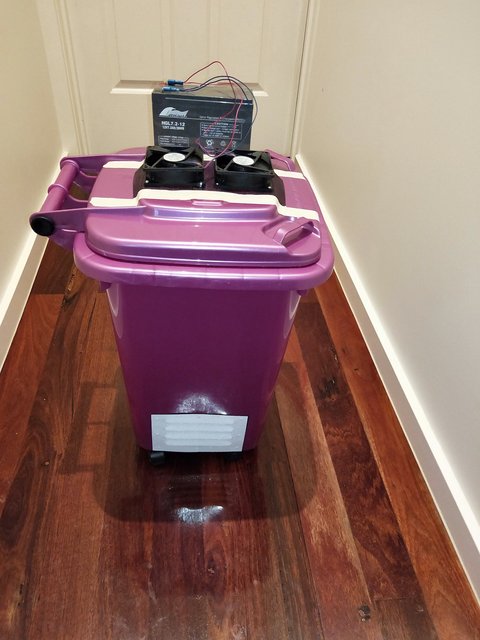
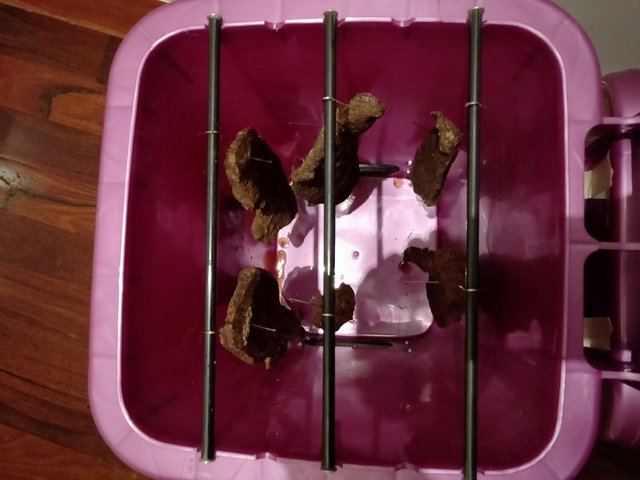
My biltong box is very low tech. Looks ugly and gets stupid comments, but actually works well. Fans at the top pull air through it:

IMG20200412161105.jpg


IMG20200412160806.jpg
 
First attempt at my biltong box/dehydrator.

Heater element on air inlet in left, cross flow of air and then fan in the right.

Adjustable speed on the fan and cheap thermostat controller on the heater using a probe in the centre.

9 removable stainless shelves and then four hanging bars across the top. 55cm from rails to floor so should be long enough.

Will add a catchment tray on the bottom at some point.

Aiming to try the first batch of biltong tomorrow.

Struggling a little bit with the heater to get it much over 50 degrees c for dehydrating, but can sort that later when I start to do more if that later in the summer.
PXL_20220327_154336013.webpPXL_20220327_154154121.webpPXL_20220327_153653266.webpPXL_20220327_153644771.webp
 
Back
Top