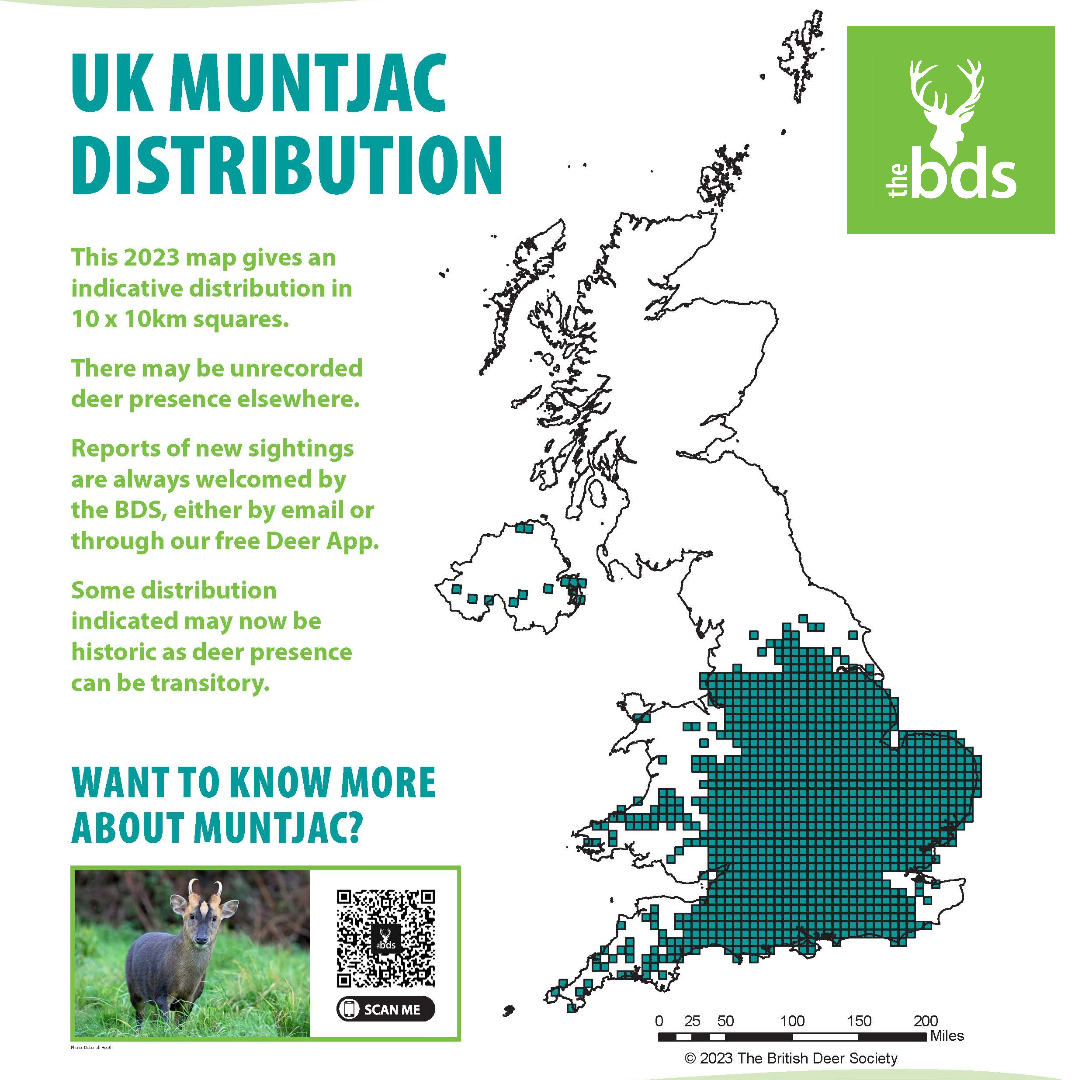
Hard to tell, but based on conversations with people at the Non Native Species Secretariat the assessment is that the distribution stops being continuous around the Humber, though there are quite large self sustaining patches North of that, on either side of the A1, as far as Darlington/Bishop Auckland.
There are then small and probably not permanent patches scattered across Northumberland. There are periodic reports as far North as Dunbar and Torness. There were dead ones on the roads around Torness for a year or two in about 2019, but those seem to have disappeared again, so probably a local release.
The prediction is that the next area likely to develop a self sustaining established population will be the Lower Tweed valley, up as far as Kelso. Quite possibly this has already started but low numbers as yet.
There is also a strong expectation that they’ll ‘show up’ in the Lothians: the South Esk valley through Arniston down to Dalkeith Country Park; the North Esk through Penicuik estate and Roslin Glen; and almost all the Tyne valley from Pathhead to Tyninghame are all perfect habitat. Going further North, they are surprised they aren’t already established in numbers in Fife based on local releases (and in fact there is a suspicion they must be, but just in very localised clusters). Curiously, they are also predicting that it’s only a matter of time before someone releases CWD in Fife, either at Loch Leven or in the reed beds along the Tay estuary.