

? Not sure I understand the question...It's this your OF set for reloaders?
You are using an out of date browser. It may not display this or other websites correctly.
You should upgrade or use an alternative browser.
You should upgrade or use an alternative browser.
Thinking of reloading,
- Thread starter Tikkat1x
- Start date


bluesako
Well-Known Member
got to love a dillon set up i had in the 90s two dillon presses awsome some“It’ll save money” they said, “It’ll be fun!” they said….LOL!
View attachment 345858
View attachment 345859
View attachment 345860
It’s a sickness…

Yes, and the Autodrives are an additional benefit (once they are adjusted and sensors set). Recent physical recovery challenges pushed me (Read: gave me the "justification"got to love a dillon set up i had in the 90s two dillon presses awsome some
 ) to add them to the Dillons, making reloading more of a mechanical endeavor, rather than a physical one. Still, they have both come in handy for processing a LOT of ammo at one time.
The rollsizer (in the bottom left of the third photo) was also a nice little addition. It's fed by the Dillon case feeder, and will roll size (removes the bulge at the base of the cartridge, that a normal die/shellholder doesn't) about 900 9mm cases an hour. I "need" to get the .223 roller, since some of the brass I get comes out of belt fed machine guns, and can be bloated at times...

dropmdead
Well-Known Member
Over the years I've tried to refine and simplify my reloading to get it to a point of knowing what works (and doesn't) without too many gadgets.
You can get some good results with lee dies and simple press, primer tool etc.
One thing I would recommend is to keep a book for each rifle you own. Keep notes of every process you do when you get started.
Keep a spare box of factory ammo to use as a diagnostic if your reloads aren't going to plan.
As you get better with your reloading, refine (make more consistent) one process at a time.
If you can find a mentor - even better, hopefully they will guide you through the process in a safe manner.
You can get some good results with lee dies and simple press, primer tool etc.
One thing I would recommend is to keep a book for each rifle you own. Keep notes of every process you do when you get started.
Keep a spare box of factory ammo to use as a diagnostic if your reloads aren't going to plan.
As you get better with your reloading, refine (make more consistent) one process at a time.
If you can find a mentor - even better, hopefully they will guide you through the process in a safe manner.

sent you a PM mate.I have a Lee set of dies for .223 for sale if you’d pm me?
thanks.
lee

Hi, I ‘ll see what I can find. I have lots of .223 once fired brass if interested?
Bavarianbrit
Well-Known Member
Do you park wet vehicles in the heated garage? I have seen lots of dies for sale used on the net with surface rust. Just saying.im picking up my new gear next weekend, just need a 223 die set and ill be good to go, ish
the money side of it doesnt matter, im just writing off the cost of any equipment i buy, as long as the other bits dont cost more i will be happy, i just know i will enjoy the prosses,
iv plenty of time on my hands and a big double garage, heated with a long work bench so i will set up in there and get at it

no cars in it no, and when i say heated i actually mean iv got a big diesel space heater that i put on when im in there doing stuff and it cold,Do you park wet vehicles in the heated garage? I have seen lots of dies for sale used on the net with surface rust. Just saying.

Hunter300
Well-Known Member
This is not the “best” advice……. It’s the ONLY advice!Its a hobby all in its own,my advice would be buy once cry once


paul o'
Well-Known Member
My dealer had a big box of what he called stuff!
So I helped him and built two Dillon 550 B's and found another two shotgun reloading mech's. Many other Dillon tool heads for quick change dies with powder heads .
primer tubes lots both small and large. new powder handling hopper .if anyone wishes to contacted him its Independent shooting Supplies in Essex.
I have nothing to do with them apart from taking the pictures and giving thre heads up.


So I helped him and built two Dillon 550 B's and found another two shotgun reloading mech's. Many other Dillon tool heads for quick change dies with powder heads .
primer tubes lots both small and large. new powder handling hopper .if anyone wishes to contacted him its Independent shooting Supplies in Essex.
I have nothing to do with them apart from taking the pictures and giving thre heads up.

Just a few safety things worth mentioning if you are starting out reloading:
1. Don't reload or process cases in an area that is used for food or that children can access at any time, e.g. your kitchen or living room. If a child eats a spent primer, there is still enough lead styphnate in it to give lead poisoning. Metallic lead and white lead oxide are much less of a problem because they do not dissolve in water, but there is a chap on the US sniper site with life long injuries from lead due to playing in his father's reloading area where he had repeated exposure to lead dust. Same for tumbling cases - not something to do in a house - you need a shed. In a house use wet tumbling. I am of the generation where we used our teeth to close lead fishing weights, poured lead in the house and handled mercury but am now a little wiser.
2. Do not believe other people's loads. Download Gordon's Reloading Tool and use it to check every load. It is free, and revealing. Cross check it with the powder supplier's recommended load data when starting out. How do I know this? I copied loads from a champion shooter that I bought a rifle from once without checking the load data ... that was dumb, especially when they had increased COAL to hard jam. Fortunately, saw the pressure signs on first round then did the sums - it was almost 100,000 psi. Good job it was a huge fat barrel.
3. Do not use any load under 60% full, as sooner or later you will double load. If your load works out at under 60% full, then get a different powder. Most other don'ts are common sense or are widely reported.
On the toys you need:
1. You need two scales. A simple beam scale is ideal, especially with a trickler, but get in addition a cheap scale that shows grains to 0.02 to check: beam scales can stick and the level adjustment can give you a significant error if used blind.
2. Targetmaster tricker and a beam scale, is a steal. £110 well worth spent, even if you go for an RCBS chargemaster later.
3. Chinese verniers are often out by +/-0.2mm. A good vernier is accurate to +/-0.02mm (e.g. Mitutoyu, Sylvac or M-Sure), a micrometer is ten times better than that but you need a few sizes. Go for M-Sure if your budget is limited. How I know this: I am a professional engineer and I do calibrate verniers against calibration blocks once a year, and scrap many calipers especially the sub £30 ones from China. I have never had need to scrap a Mitutoyu, Sylvac or M-Sure.
Other than that, buy what you need once and get the proper kit from the outset. If you don't like it, you can always sell it on here to those further down the food chain.
1. Don't reload or process cases in an area that is used for food or that children can access at any time, e.g. your kitchen or living room. If a child eats a spent primer, there is still enough lead styphnate in it to give lead poisoning. Metallic lead and white lead oxide are much less of a problem because they do not dissolve in water, but there is a chap on the US sniper site with life long injuries from lead due to playing in his father's reloading area where he had repeated exposure to lead dust. Same for tumbling cases - not something to do in a house - you need a shed. In a house use wet tumbling. I am of the generation where we used our teeth to close lead fishing weights, poured lead in the house and handled mercury but am now a little wiser.
2. Do not believe other people's loads. Download Gordon's Reloading Tool and use it to check every load. It is free, and revealing. Cross check it with the powder supplier's recommended load data when starting out. How do I know this? I copied loads from a champion shooter that I bought a rifle from once without checking the load data ... that was dumb, especially when they had increased COAL to hard jam. Fortunately, saw the pressure signs on first round then did the sums - it was almost 100,000 psi. Good job it was a huge fat barrel.
3. Do not use any load under 60% full, as sooner or later you will double load. If your load works out at under 60% full, then get a different powder. Most other don'ts are common sense or are widely reported.
On the toys you need:
1. You need two scales. A simple beam scale is ideal, especially with a trickler, but get in addition a cheap scale that shows grains to 0.02 to check: beam scales can stick and the level adjustment can give you a significant error if used blind.
2. Targetmaster tricker and a beam scale, is a steal. £110 well worth spent, even if you go for an RCBS chargemaster later.
3. Chinese verniers are often out by +/-0.2mm. A good vernier is accurate to +/-0.02mm (e.g. Mitutoyu, Sylvac or M-Sure), a micrometer is ten times better than that but you need a few sizes. Go for M-Sure if your budget is limited. How I know this: I am a professional engineer and I do calibrate verniers against calibration blocks once a year, and scrap many calipers especially the sub £30 ones from China. I have never had need to scrap a Mitutoyu, Sylvac or M-Sure.
Other than that, buy what you need once and get the proper kit from the outset. If you don't like it, you can always sell it on here to those further down the food chain.
Last edited:
thanks mate, that all sounds like good advice, i was wondering about some digital callipers, id seen some hornady ones in my local shop for £50,
im now just working out what die set to get, iv seen them with 2-4 dies in, seems and i could be wrong but i dont really need a set with a crimp, i was looking at lee dies,
thanks.
lee
im now just working out what die set to get, iv seen them with 2-4 dies in, seems and i could be wrong but i dont really need a set with a crimp, i was looking at lee dies,
thanks.
lee
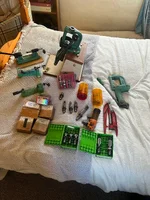
this is the kit im buying next week,
1x rcbs rockchucker press
1x rcbs trim Pro manual case trimmer with .22 and .27 pilots
1x rcbs lube pad
2x rcbs case lubes (1 half full)
1x rcbs case neck lube brush (2 brush sizes)
1x rcbs powder funnel
1x rcbs case neck chamfer tool
1xrcbs and 1x Dilton precision 50 round ammo case
1x mtm 150 round loading tray
2x Lee auto prime hand priming tools (large and small primer trays)
1× Lee powder thrower
1x hornady beam powder scales
1x horbady power dribbler
1 lyman primer pocket uniforming tool (the bit where the primer sits) large primer size
1x lyman flash hole deburring tool
1x hogdon reloading manual (an older one but still valid)
1x rcbs rockchucker press
1x rcbs trim Pro manual case trimmer with .22 and .27 pilots
1x rcbs lube pad
2x rcbs case lubes (1 half full)
1x rcbs case neck lube brush (2 brush sizes)
1x rcbs powder funnel
1x rcbs case neck chamfer tool
1xrcbs and 1x Dilton precision 50 round ammo case
1x mtm 150 round loading tray
2x Lee auto prime hand priming tools (large and small primer trays)
1× Lee powder thrower
1x hornady beam powder scales
1x horbady power dribbler
1 lyman primer pocket uniforming tool (the bit where the primer sits) large primer size
1x lyman flash hole deburring tool
1x hogdon reloading manual (an older one but still valid)

CBH Australia
Well-Known Member
I expect you can get a good press, scales and powder measure with a few other items in a kit under 500quid. Then you might find buying some individual tools worthwhile blowing out to a thousand quid.the do set for each cartridge you load for will be purchased separately at probably £50ideally, i could do with someone making me a list of everything i need to do the job right, then i will just go and buy it
Be sure you can get components to load. Primers for one but also powder and Projectiles. Primers are in demand due to a world wide shortage.
I reload and enjoy making part of my hobby but it's a slippery slope quickly becoming costly if you go down that proverbial Rabbit hole chasing perfection.
You should be able to make accurate ammo with a modest range of equipment
CBH Australia
Well-Known Member
This makes my last post redundant. I read 2 of 4 pages and posted a reply before heading to work. I'm here now so I can read through thoroughly.this is the kit im buying next week,
1x rcbs rockchucker press
1x rcbs trim Pro manual case trimmer with .22 and .27 pilots
1x rcbs lube pad
2x rcbs case lubes (1 half full)
1x rcbs case neck lube brush (2 brush sizes)
1x rcbs powder funnel
1x rcbs case neck chamfer tool
1xrcbs and 1x Dilton precision 50 round ammo case
1x mtm 150 round loading tray
2x Lee auto prime hand priming tools (large and small primer trays)
1× Lee powder thrower
1x hornady beam powder scales
1x horbady power dribbler
1 lyman primer pocket uniforming tool (the bit where the primer sits) large primer size
1x lyman flash hole deburring tool
1x hogdon reloading manual (an older one but still valid)
crow juice
Well-Known Member
In use since the fall of 1979 the trusty RCBS RELOADER SPECIAL ie. RCBS Jr.
This was my first press and was used to load 6 5 Creedmoor's last week. I have bought 5 presses in the last 40 years. Use all of them but I could have gotten by with just the Rock Chucker .
This was my first press and was used to load 6 5 Creedmoor's last week. I have bought 5 presses in the last 40 years. Use all of them but I could have gotten by with just the Rock Chucker .
Attachments

Bavarianbrit
Well-Known Member
You missed getting a decent vernier caliper the Hornady one will be a made in Chinea = go for quality. I bought a used Mitutoyu dial analogue one in 1985 when I was in Detroit it is calibrated in inches and is still as good as the day I bought it. Todays ones will be battery digital and changeable from/to inch/metricthis is the kit im buying next week,
1x rcbs rockchucker press
1x rcbs trim Pro manual case trimmer with .22 and .27 pilots
1x rcbs lube pad
2x rcbs case lubes (1 half full)
1x rcbs case neck lube brush (2 brush sizes)
1x rcbs powder funnel
1x rcbs case neck chamfer tool
1xrcbs and 1x Dilton precision 50 round ammo case
1x mtm 150 round loading tray
2x Lee auto prime hand priming tools (large and small primer trays)
1× Lee powder thrower
1x hornady beam powder scales
1x horbady power dribbler
1 lyman primer pocket uniforming tool (the bit where the primer sits) large primer size
1x lyman flash hole deburring tool
1x hogdon reloading manual (an older one but still valid)

Heym SR20
Well-Known Member
I invested about £100 for a set of reloading kit from a gentleman who was giving up about 15 years ago It included about 800 large primers.
My only purchases have been dies for various different calibres - all 2nd hand.
I look at this as a capital cost - probably invested about £200 in total. It’s not the fastest, but I can reload good quality ammo at considerably less than I pay for factory. Especially as I run a 7x65R which in the UK is somewhat difficult.
I do load 223 I my cost of bullets, primers and powder means my ammo is considerably cheaper than cheap factory ammo. Perhaps not as cheap as the bargain buckets of plinking ammo, but you don’t see these very often.
As regards my reloading kit. I could sell it quite easily for what I paid for it.
I don’t think my ammo cost is lower, but I happily shoot more, especially with the 223.
My only purchases have been dies for various different calibres - all 2nd hand.
I look at this as a capital cost - probably invested about £200 in total. It’s not the fastest, but I can reload good quality ammo at considerably less than I pay for factory. Especially as I run a 7x65R which in the UK is somewhat difficult.
I do load 223 I my cost of bullets, primers and powder means my ammo is considerably cheaper than cheap factory ammo. Perhaps not as cheap as the bargain buckets of plinking ammo, but you don’t see these very often.
As regards my reloading kit. I could sell it quite easily for what I paid for it.
I don’t think my ammo cost is lower, but I happily shoot more, especially with the 223.
Similar threads
- Replies
- 94
- Views
- 5K

- Replies
- 11
- Views
- 801
- Replies
- 15
- Views
- 1K

- Replies
- 23
- Views
- 1K
- Replies
- 31
- Views
- 4K
