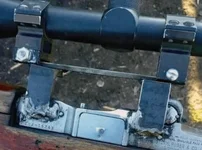
Ensuring scope reticle is perpendicular to action [avoids cant POI error at extended ranges]

...that is if one has nothing better to do with one's time...:doh::lol:

I resemble that remark!

Honestly. You work hard all your life so you can retire early and spend more time in your man cave re-inventing the wheel. You gather some [you thought] like-minded folk about you and start tinkering...

Well, do your compadres leave you to your fruitless febrile fettling? Do they let you fritter your hours of ease by devising ever more convoluted solutions to questions rarely asked?

Do they heck! Nooo...they tell you KISS. They show you the easy way. The proven way. Fie on you all.


;):lol:

I double checked my work with Alan's method, and I am good to go:

IMG_5345.webp IMG_5347.webp
 
I resemble that remark!

Honestly. You work hard all your life so you can retire early and spend more time in your man cave re-inventing the wheel. You gather some [you thought] like-minded folk about you and start tinkering...

Well, do your compadres leave you to your fruitless febrile fettling? Do they let you fritter your hours of ease by devising ever more convoluted solutions to questions rarely asked?

Do they heck! Nooo...they tell you KISS. They show you the easy way. The proven way. Fie on you all.


;):lol:

I double checked my work with Alan's method, and I am good to go:
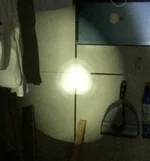
View attachment 175423 View attachment 175424

I have to confess here and now that I set it up and asked Lesley to take the photograph after I had written my post describing it...but before I pressed send...just to make sure it would work.

I have always set my scopes by eye ensuring the reticule alignment with the bore centre as I wrote earlier in post #28.

It is only your inestimable tinkering and convoluted solutions (and the Subsequent posts referring to using flashlights to project the reticule), that prompted the invention of the twin torch solution and led me to try it in order to prove it!

Pats on the back and Win win all round eh?

Alan
 
Last edited:
It's all good fun but there is a practical element - I have noticed that getting the optical centre of the scope precisely lined up with the bore gives a noticeably better picture, especially in low light. So if someone has splashed the cash on a decent scope it is a waste not to get it perfectly aligned with the bore of the rifle.
 
For most hunting, the info below is unlikely to be an issue.

But for successful long range target shooting, particularly PRL/ELR comps (no sighters, no shot feedback beyond what you see), having a consistently vertical reticle which tracks true vertical is essential.

The former requires correct mounting of the scope, different techniques as described above.

I use the horizon (I live by the sea) with both a scope and a rail mounted bubble-level (the latter is removed after set-up as it becomes redundant).

Once the reticle is matched to the horizon, the rings are carefully tightened (checking that no cant is induced) and the scope-mounted bubble level is set to horizontal and tightened, making sure the reticle stays true to the horizon. The reticle and scope-mounted bubble level are now "matched."

As a result, the scope-mounted bubble-level provides visual reference at the range, where there are rarely true vert/horiz references visible through the scope. Scope mounts with bubble level incorporated do not allow this matching to the trued reticle.

A tall test and a box test (with or without firing, if a reference grid and plumb line is used) will test if the reticle adjusts truely vertical (ie. It is correctly mounted in the erector assembly) and tracks repeatedly/consistently with return to "zero".

So long as your grid is at a known, accurate distance (preferably 100m, if working in mRad) can also be used to validate the click value or determine the actual click value for use in your ballistics program.

If, when you mount the rifle, the bubble is always off centre, you now know you either need to adjust your hold/mounting or fit your rifle to you (angled butt plate, change cheek riser position etc.)

None of the above are relevant to my hunting but are vital for my long range target shooting (the further you go, the more relevant it becomes.) Checking the bubble-level becomes second nature and an instinctive part of building a position.

Lots of info out there if you want need to know more but it's not likely to be relevant if you're shooting deer-sized animals at ethical ranges (don't open that can of worms...!)
 
Last edited:
An in true window frame or door jamb or if not a piece of green, white wool about four feet long with a weight at the end to make a plumb like pinned up from the top part of a door frame. Then use the Mk1 Eyeball device. On most of my rifles however as they were Mauser 98 actions I actually used the trigger sear where in emerges into the boltway and get my perpendicular off that
 
Several makes of scope mount have a bubble level built into them, so you can check with left eye to prevent cant. They have limited application for shooting at live quarry, but for range work they are yet another tool to help eliminate the variables. I've got them on my Spuhr and Tier one mounts.

but again if you hold your rifle and there is a slight cant why would you adjust to an uncomfortable position just to get the rifle level? You could simply adjust the scope plumb to where you mount as opposed to where the rifle is level, this means when zeroing to your natural mount the adjustments would be correct....it’s swings and roundabouts really unless you are using a benchrest or lead sled or something that holds the rifle perfectly level, as a bipod or rated on elbows/sticks may not result in a level rifle.
 
but again if you hold your rifle and there is a slight cant why would you adjust to an uncomfortable position just to get the rifle level? You could simply adjust the scope plumb to where you mount as opposed to where the rifle is level, this means when zeroing to your natural mount the adjustments would be correct....it’s swings and roundabouts really unless you are using a benchrest or lead sled or something that holds the rifle perfectly level, as a bipod or rated on elbows/sticks may not result in a level rifle.
Well, I don't really know where to start with this. If you mount your scope like you suggest you will only ever have one range at which the rifle is accurate. Any adjustments you make to the vertical, either by dialling or by holdover will then incorporate an amount of horizontal variation.

If your rifle fits so badly that you can't hold it without cant then it isn't going to be as accurate as it could be. Again, you're trying to tell us that stalking is the only application for any rifle and scope combination. It isn't.

I take it from your moniker that you either own or have owned a superbike capable of speeds in excess of 150mph. Did you make sure it was only ever set up so you could commute, or nip to the shops, or did you make sure the tyres, brakes and suspension would perform properly on fast swooping A roads, or even the occasional track day?
 
^This

Different clothing, slope of ground, resting on sticks/gate/post etc. can all change how you mount the rifle.

As I said already, probably doesn't matter in the context of most UK Stalking, as evidenced by many of the responses to this thread.
 
Never bothered TBH - I just get the scope on, get it aligned to my eye and job done. I did also ask Steve Beaty about this when I was up at Ivythorn a while back and he said the same thing - he never bothers either, just gets it so it looks right and thats enough.

Lets face it you could spend a load of time getting the crosshairs absolutely plumb line on and then when you mount the rifle you do so with a slight cant, and you're back to being off as others have said.

I do think the phrase "close enough for government work" applies in some cases, this being one of them. This isnt 1000y F class target rifle we're shooting here, its generally a case of hit something the size of a small plate inside 300y.
 
If you mount your scope like you suggest you will only ever have one range at which the rifle is accurate. Any adjustments you make to the vertical, either by dialling or by holdover will then incorporate an amount of horizontal variation

Not so. If you mount and fire your rifle as @gixer1 said with the scope plumb...provided you allow for the millimetre or two Windage offset from the vertical plane described by the bore and trajectory when zeroing the windage, it will maintain that offset throughout the trajectory no matter what degree of rotation the rifle is at.

However I think it is just easier to hold the rifle plumb if the scope reticule is aligned vertically above the bore. All the intuitive signals we pick up from the symetricality of the stock and the surfaces of the action let alone the relationship of scope tube to barrel.

Alan
 
Well, I don't really know where to start with this. If you mount your scope like you suggest you will only ever have one range at which the rifle is accurate. Any adjustments you make to the vertical, either by dialling or by holdover will then incorporate an amount of horizontal variation.

If your rifle fits so badly that you can't hold it without cant then it isn't going to be as accurate as it could be. Again, you're trying to tell us that stalking is the only application for any rifle and scope combination. It isn't.

I take it from your moniker that you either own or have owned a superbike capable of speeds in excess of 150mph. Did you make sure it was only ever set up so you could commute, or nip to the shops, or did you make sure the tyres, brakes and suspension would perform properly on fast swooping A roads, or even the occasional track day?

sorry, but that is incorrect, you could in theory fire a rifle upside down or 90° to one side or the other and as long as the scope is plumb to the target and mounted to the rifle securely wouldn’t matter.

any drop is based n the bullet after it leaves the barrel!

And I understand scope cant would be an issue for target shooting from bench rest or long range but for average stalking ranges it just isn’t that big a deal.
 
or 90° to one side or the other and as long as the scope is plumb to the target and mounted to the rifle securely wouldn’t matter.


I might be misunderstanding you.

But that sounds off.

As soon as a bullet leaves the barrel it starts to lose its battle with gravity. That is a downward force perpendicular to the horizon. If a rifle is fired lying on its side, the scope and bore are not in the same verticle plane, so no "holdover" adjustment on the scope can possibly accommodate the bullet drop since the scope's Y axis adjustment is now swinging the reticle across the horizon with no relevance to the parabola described by the bullet.
 
I might be misunderstanding you.

But that sounds off.

As soon as a bullet leaves the barrel it starts to lose its battle with gravity. That is a downward force perpendicular to the horizon. If a rifle is fired lying on its side, the scope and bore are not in the same verticle plane, so no "holdover" adjustment on the scope can possibly accommodate the bullet drop since the scope's Y axis adjustment is now swinging the reticle across the horizon with no relevance to the parabola described by the bullet.

If the scope is plumb when firing, i.e. the windage hair is vertical, it doesn't matter where the barrel is in relation to it...zeroed appropriately any horizontal offset from the barrel will be constant throughout the trajectory.

Given a scope which is mounted so that the centre is 40mm above the bore centre...mounted correctly as we have done with windage hair in line with the bore, there is no offset so the two coincide....if you lean the rifle over the scope reticule is no longer plumb so you will get the "cant" problems at different ranges.

However if for instance the scope is rotated clockwise 45˚ in its rings and the whole lot is rotated anticlockwise 45˚ the reticule is now plumb but will have a parallel 20mm offset to the left of the bore/plane of the trajectory...Zeroed appropriately POI will always 20mm to the right of POA at any range.

Rotate the scope 90˚ clockwise in its rings and rotate the whole shebang anticlockwise 90˚ the reticule is again plumb but is offset by 40mm from the plane of the trajectory. Zeroed appropriately POI will always be 40mm to the right of POA.

The bullet will always fall down towards the centre of the earth, so as long as the windage hair also points to the centre of the earth, the plane of the bullet trajectory will always be parallel to it...

Alan
 
Last edited:
I might be misunderstanding you.

But that sounds off.

As soon as a bullet leaves the barrel it starts to lose its battle with gravity. That is a downward force perpendicular to the horizon. If a rifle is fired lying on its side, the scope and bore are not in the same verticle plane, so no "holdover" adjustment on the scope can possibly accommodate the bullet drop since the scope's Y axis adjustment is now swinging the reticle across the horizon with no relevance to the parabola described by the bullet.

but if your scope is adjusted correctly for windage, and the scope is plumb but not in line with the barrel the elevation would not effect left to right as the scope is still plumb. (I’m probably doing a sh*t job of describing this! 😂
 
but if your scope is adjusted correctly for windage, and the scope is plumb but not in line with the barrel the elevation would not effect left to right as the scope is still plumb. (I’m probably doing a sh*t job of describing this! 😂
I think there's a substantial difference between the effects caused by a scope that's plumb but out of alignment, and a scope that's canted. In the first instance, it just needs zeroing. In the second instance, it will be impossible to zero properly.
 
If the scope is plumb when firing, i.e. the windage hair is vertical, it doesn't matter where the barrel is in relation to it

Agree. But gixer1 declared that rotating the rifle made no odds to point of impact:

you could in theory fire a rifle upside down or 90° to one side or the other and as long as the scope is plumb to the target

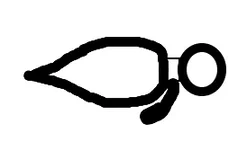
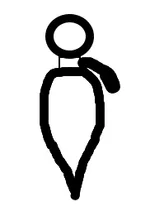
Surely those words mean: 1600983741470.webp


The bullet will always fall down towards the centre of the earth, so as long as the windage hair also points to the centre of the earth, the plane of the bullet trajectory will always be parallel to it...

Surely those words mean: 1600983702137.webp
 
I think there's a substantial difference between the effects caused by a scope that's plumb but out of alignment, and a scope that's canted. In the first instance, it just needs zeroing. In the second instance, it will be impossible to zero properly.

What I was saying is the rifle is canted but the scope plumb, so if you mount the rifle and the rifle was off a few degrees but the scope was plumb there should be no effect.
 
Back
Top