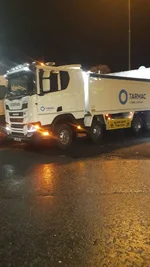
60 mph speed limit

My company van can do 60 in second gear, not sure it would be low polluting at those revs though.
The emissions done on the MOT test are done at high revs, so even at high revs the emissions would be within an acceptable level,(if it passed) low revs are the worst pollution, like standing in traffic, this was why stop/start was brought in.
We are fighting a losing battle, ... Me to the Missus . . . "F****ng morons not using indicators", Missus to me (She is a qualified assessor for County Council) " AAH, They don't teach that anymore" :banghead::banghead::banghead::banghead::banghead::banghead::banghead:
Recent driving assessment for me, in a 44 tonner, Assessor to me, " Why are you using the gearbox to slow down,the brakes are for slowing, " Seems he couldn't grasp the fact I was using both brakes and gears in tandem.
Ref the Assessors comments, he was 100% correct in what he said, it's simple, it's cheaper to change the brakes on a truck than put in a new gearbox, and when you are braking it's advisable to keep two hands on the steering wheel, "Gears are for going, brakes are for slowing", if you recall your driving test for HGV, depending how long ago you did it, you would have been asked to do a gear change exercise, going down to the lowest gear, the reason for this was that it shows you are capable of doing it, as you would not be expected to do it under normal driving conditions. On the old trucks, it would have been near impossible to brake and change down a gear at the same time, as you had to hit the gas to get the revs higher to accept the lower gear.
 
The emissions done on the MOT test are done at high revs, so even at high revs the emissions would be within an acceptable level,(if it passed) low revs are the worst pollution, like standing in traffic, this was why stop/start was brought in.

Ref the Assessors comments, he was 100% correct in what he said, it's simple, it's cheaper to change the brakes on a truck than put in a new gearbox, and when you are braking it's advisable to keep two hands on the steering wheel, "Gears are for going, brakes are for slowing", if you recall your driving test for HGV, depending how long ago you did it, you would have been asked to do a gear change exercise, going down to the lowest gear, the reason for this was that it shows you are capable of doing it, as you would not be expected to do it under normal driving conditions. On the old trucks, it would have been near impossible to brake and change down a gear at the same time, as you had to hit the gas to get the revs higher to accept the lower gear.
And select a low gear, where have you seen engine braking advised?
 
The emissions done on the MOT test are done at high revs, so even at high revs the emissions would be within an acceptable level,(if it passed) low revs are the worst pollution, like standing in traffic, this was why stop/start was brought in.

Ref the Assessors comments, he was 100% correct in what he said, it's simple, it's cheaper to change the brakes on a truck than put in a new gearbox, and when you are braking it's advisable to keep two hands on the steering wheel, "Gears are for going, brakes are for slowing", if you recall your driving test for HGV, depending how long ago you did it, you would have been asked to do a gear change exercise, going down to the lowest gear, the reason for this was that it shows you are capable of doing it, as you would not be expected to do it under normal driving conditions. On the old trucks, it would have been near impossible to brake and change down a gear at the same time, as you had to hit the gas to get the revs higher to accept the lower gear.
Never heard of toe/heeling?

David.
 
There is certainly data from the West Country which shows that the 20MPH limit does not reduce accidents. This is real world stuff. Also after the big oil crisis when the US returned the 50 limit to the pre crisis 70 accidents fell there too.

David.
Where is the data ?
Incidentally 20mph is much more polluting than 30mph.
Nope
You’ll have to back that up.
Engines are as clean at 20 as at 30.
Air quality studies in Edinburg showed an improvement in quality with a reduction in average traffic speeds.
Cf. the link you showed which contained no coherent evidence of safety improvement
Apart from where it showed the reduction in speeds across the range and linked to the accident maps which showed less accidents after the introduction of lower speed limits.
 
There is certainly data from the West Country which shows that the 20MPH limit does not reduce accidents. This is real world stuff. Also after the big oil crisis when the US returned the 50 limit to the pre crisis 70 accidents fell there too.

David.
55 mph was the limit I lived there then.
 
2am this morning whilst running tar to the A1 at Tranent I was overtaken by a **** at over 100mph at Wallyford. My truck has about £3,000 worth of LED lights which are like daylight if not brighter. As the speed freak passed I "blipped" the lights twice just like a speed camera and you never seen a ton go to a 70 as quick. He will be antisipating a NIP coming through his letterbox.20210324_210710.webp
 
Large sections of the M4 through South Wales are now 50mph, mainly at sections that pass through cities. All under the guise of reducing polution. Makes no difference as most of these areas are gridlocked 90% of the time and always have been, though it does earn them a couple of quid from the poor guy travelling at 3am on an empty motorway.
 
2am this morning whilst running tar to the A1 at Tranent I was overtaken by a **** at over 100mph at Wallyford. My truck has about £3,000 worth of LED lights which are like daylight if not brighter. As the speed freak passed I "blipped" the lights twice just like a speed camera and you never seen a ton go to a 70 as quick. He will be antisipating a NIP coming through his letterbox.View attachment 214482
Is that bloody road shut again ?
Been away a few weeks but home on Tuesday . Hope it’s fixed by then.
As an aside , I managed 168 on the stretch between Haddington and Dunbar.

In my stupider days.
 
I am not sure your solicitor will see that as a “bomb proof“;plan to get you acquitted
There is a very simple fix for that, as you mentioned we have speed limits, stick to them 👍

Neil.

PS: I find it works well with fishing club rules as well
 
And select a low gear, where have you seen engine braking advised?
They fitted retarders on vehicles which use the engine as a compressor to slow the vehicle down, or an electric retarder which mainly used on coaches was a device on the propshaft, that induced an electric force which slowed the propshaft down, thus slowing the vehicle down, the selection of a lower gear especially when going down a steep hill, was done after the vehicle had been slowed down to a suitable speed by using the footbrake,, not using the footbrake and changing gear at the same time, the idea was to avoid heavy braking going down the hill and avoid brake fade. If the driver was unable to engage the correct gear through trying to change down at too high a speed for instance (usually on a crash box) the the vehicle would technically be out of control and liable to brake fade, one of the commonest places this happened in the old days was at Brighouse.

The use of a lower gear is normally engaged after braking, for instance on the approach to a sharp bend, the vehicle should be slowed down using the footbrake, and a suitable gear should be chosen to navigate the bend, and just enough acceleration should be used to take you around the bend at the same speed you slowed down to, to negotiate the bend, if you have to brake whilst going around the bend, it would show you are going too fast, and of course you would be steering with only one hand on the wheel, and the braking would make the vehicle unstable..
Many think that the introduction of automatic gearboxes in HGV's was done to save fuel, they were introduced to save wear and tear on the vehicle, renewing brakes on a HGV can be done in a day, a gearbox can take a week,, probably longer if it is repaired rather than replaced.

VSG is an acronym used,
V= view the obstruction /hazard ahead.
S=get the speed down to meet. whatever is ahead.
G=select the correct gear to negotiate the hazard/ahead
Always avoid secondary braking..

Ref toe/heeling not what you should be doing whilst driving a HGV, and not possible in a lot of vehicles due to the offset in height of the pedals. possible in a car, but what benefit?

(only my opinion on these matters, after 50+years in the transport industry, Both as Driver, Trainer, Assessor etc)
 
They fitted retarders on vehicles which use the engine as a compressor to slow the vehicle down, or an electric retarder which mainly used on coaches was a device on the propshaft, that induced an electric force which slowed the propshaft down, thus slowing the vehicle down, the selection of a lower gear especially when going down a steep hill, was done after the vehicle had been slowed down to a suitable speed by using the footbrake,, not using the footbrake and changing gear at the same time, the idea was to avoid heavy braking going down the hill and avoid brake fade. If the driver was unable to engage the correct gear through trying to change down at too high a speed for instance (usually on a crash box) the the vehicle would technically be out of control and liable to brake fade, one of the commonest places this happened in the old days was at Brighouse.
Hi.
I know Brighouse well. Do you mean the road coming down from Marshalls factory? To be honest i am surprised there have not been more accidents there considering the amount of artics that use it.
 
They fitted retarders on vehicles which use the engine as a compressor to slow the vehicle down, or an electric retarder which mainly used on coaches was a device on the propshaft, that induced an electric force which slowed the propshaft down, thus slowing the vehicle down, the selection of a lower gear especially when going down a steep hill, was done after the vehicle had been slowed down to a suitable speed by using the footbrake,, not using the footbrake and changing gear at the same time, the idea was to avoid heavy braking going down the hill and avoid brake fade. If the driver was unable to engage the correct gear through trying to change down at too high a speed for instance (usually on a crash box) the the vehicle would technically be out of control and liable to brake fade, one of the commonest places this happened in the old days was at Brighouse.

The use of a lower gear is normally engaged after braking, for instance on the approach to a sharp bend, the vehicle should be slowed down using the footbrake, and a suitable gear should be chosen to navigate the bend, and just enough acceleration should be used to take you around the bend at the same speed you slowed down to, to negotiate the bend, if you have to brake whilst going around the bend, it would show you are going too fast, and of course you would be steering with only one hand on the wheel, and the braking would make the vehicle unstable..
Many think that the introduction of automatic gearboxes in HGV's was done to save fuel, they were introduced to save wear and tear on the vehicle, renewing brakes on a HGV can be done in a day, a gearbox can take a week,, probably longer if it is repaired rather than replaced.

VSG is an acronym used,
V= view the obstruction /hazard ahead.
S=get the speed down to meet. whatever is ahead.
G=select the correct gear to negotiate the hazard/ahead
Always avoid secondary braking..

Ref toe/heeling not what you should be doing whilst driving a HGV, and not possible in a lot of vehicles due to the offset in height of the pedals. possible in a car, but what benefit?

(only my opinion on these matters, after 50+years in the transport industry, Both as Driver, Trainer, Assessor etc)

And gearboxes are only designed to stress / drive in one direction?
 
Hi.
I know Brighouse well. Do you mean the road coming down from Marshalls factory? To be honest i am surprised there have not been more accidents there considering the amount of artics that use it.
There were a few bad roads coming into Brighouse, Halifax Rd, and Brookfoot Lane, which IIRC is the one near to Marshalls, both were long downhill roads, and if my memory serves me right, both had very sharp left turns at the bottom, quite a few trucks would never make the turn, and hit the house at the bottom, this was in the days when HGV's had drum brakes not like the disc brakes of today, that stay cool longer, it was not unusual to see the back wheels on fire at the bottom of steep hills. I am sure things have changed for the better there now.

Obviously this was before the motorways were built, or even decent main roads, but I am surprised that it is still a busy route for HGV's, unless they are coming out from somewhere local, always prefer to go uphill than downhill me. Though not always possible down here in Cornwall
 
Back
Top