
You are using an out of date browser. It may not display this or other websites correctly.
You should upgrade or use an alternative browser.
You should upgrade or use an alternative browser.
21 Sharp anyone?
- Thread starter Border
- Start date


I think the manufacturers will sort the non lead issue/ accuracy with the 22LR if and when it becomes mandatory. I think the fate of the 21 Sharp, as @mealiejimmy mentioned in another post (17WSM)depends on
A. Ammo
B. Which rifles it is chambered in.....
A. Ammo
B. Which rifles it is chambered in.....

Claret_Dabbler
Well-Known Member
Why don’t Winchester just redesign a 22lr for the 21st century which chambers in existing 22 rifles?

Does this have a .21 calibre barrel then. Surely no one make a .21 calibre barrel
The video states that existing .22"lr owners can re-barrel their actions or "better still" buy a new rifle. Option 1 isn't really a viable alternative in the UK and since most .22"LR indoor ranges use steel bullet catchers that rely on the lead bullet disintegrating a copper only projectile is a no for target shooting. Whilst it may appeal to hunting scenarios, the UK market is miniscule so it would take a optimistic dealer to think it's ever going to replace the .22"LR in the UK. It was designed for the California market so quite niche and so far no other rimfire has come close to displacing the .22"LR

Sinistral
Well-Known Member
I don't know why YouTube has become the default, it takes too much time to watch so didn't bother.Why don’t Winchester just redesign a 22lr for the 21st century which chambers in existing 22 rifles?
I've followed the promo with the text of a technical evaluation that can't be posted as a link.
This could be a winner or a prize-grade turkey, but my bet's on the latter.

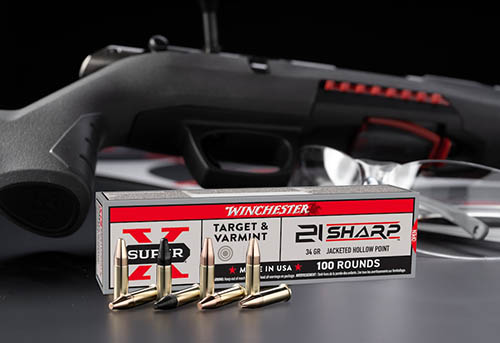
Winchester® Ammunition Introduces NEW 21 Sharp™ Rimfire Cartridge | Winchester Ammunition
Winchester Ammunition introduces 21 Sharp™, a new rimfire cartridge with an innovative design that provides significant benefits for recreational shooters and small game hunters.
 winchester.com
A mid-power offering in the evolutionary chain of the French sportsman/inventor Louis-Nicolas Flobert’s .22 BB Cap of 1845, the .22 Long Rifle walked a perfect line between power, recoil, noise and cost that outshined all other rimfires and is still going strong today. Indeed, it’s estimated that roughly 2.5 billion rounds of .22 LR are manufactured each year!
But just because the .22 LR is winning the popularity polls doesn’t mean the cartridge is perfect. Had it been invented just a few years later it likely would’ve looked slightly different, because ballisticians of the time were already developing better bullet technology.
The .22 LR was designed with a case diameter and bullet diameter that were exactly equal. This means that the bullet cannot be seated in its case without the rear of the bullet being “heeled,” or of lesser diameter than the exposed frontal portion of the bullet. The fact is, heeled bullets are ballistically inferior compared to modern bullet designs, they have limitations in terms of terminal performance, and they are a pain to mass manufacture. That’s the reason only a handful of .22 rimfire manufacturers exist in the world today, and for those who love to shoot but loathe ammo shortages that’s frightening.
Winchester Ammunition has finally achieved what should have been done long ago, to bring the 22 LR into the modern age. In doing so however, its engineers faced a dilemma: To utilize a non-heeled bullet, either the bullet had to be smaller in diameter to fit in a standard .22 LR case, or the case had to be larger to accept a .22-caliber bullet. Winchester opted for the former, and by doing so it dictated that the chambers of .22 rifles would not have to be altered by their makers, but only the barrels. This would make chambering rifles for the new round much easier. Chamber pressures and overall case dimensions would remain exactly the same, while the new-aged bullet would reap ballistical rewards downrange.
Winchester have named the resulting cartridge the .21 Sharp. In essence, it shoots a .210-caliber bullet launched from a .22 LR case. Initial offerings from Winchester include a 34-grain Jacketed Hollow Point, a 37-grain copper-plated lead bullet, a 42-grain Full Metal Jacket and, very interestingly, a 25-grain all-copper bullet Winchester calls the Copper Matrix. Initial velocity results of 1,300 (42-grain) to 1,750 fps (25-grain) indicate the 21 Sharp is slightly faster than standard-velocity .22 LR loads with more energy. Initial accuracy results are very impressive, as is the round’s terminal bullet performance—the Sharp’s forte.
By using modern bullet designs afforded by the non-heeled bullet, Winchester’s engineers were able to make top-quality projectiles for the 21 Sharp that more closely resemble the premium, controlled-expansion bullets of modern centerfires than the antiquated, round-nose lead bullets of most .22 LR loads. Gelatin tests revealed that the 34-grain JHP bullet expanded in a consistent manner to 173-percent of its original size while retaining 99-percent of its weight! Meanwhile, the all-copper load penetrated nearly three feet of gelatin. Sheer performance aside, the Copper Matrix load will be a viable option for rimfire aficionados and small game hunters in jurisdictions where lead-based bullets have been banned.

Dougal McGuire
Well-Known Member
If the heeled design is what's holding back .22 LR for non-lead designs, there are already two very popular non-heeled rimfires (.22 WMR and .17 HMR). I think the non-lead can be sorted anyway for .22 LR, just takes time and effort to find the right alloy.
Sinistral
Well-Known Member
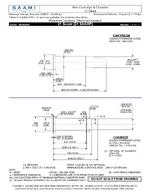
Ha-ha.Variation form at the ready
It would appear that all you need is a barrel, but how to get the ammo?

Attachments


nf-fuse
Well-Known Member
Well look my landowner wants rabbits but is very concerned about the health implication of lead bullets.Ha-ha.
It would appear that all you need is a barrel, but how to get the ammo?
So forced in to it. I don't make the rules.


Smellydog
Well-Known Member
They have and this will chamber in a 22 but probably not shoot very well.Why don’t Winchester just redesign a 22lr for the 21st century which chambers in existing 22 rifles?
Smellydog
Well-Known Member
A barrel can be made to any size friend.Does this have a .21 calibre barrel then. Surely no one make a .21 calibre barrel
Smellydog
Well-Known Member
I don't think it's the heeled design holding it back. It's easy to make a heeled soft lead bullet but not so easy in a harder alloy.If the heeled design is what's holding back .22 LR for non-lead designs, there are already two very popular non-heeled rimfires (.22 WMR and .17 HMR). I think the non-lead can be sorted anyway for .22 LR, just takes time and effort to find the right alloy.
I know anything is possible, but easier to use what is already commercially available. Guess that's why the 17wsm didn't take off due to a new action having to be made to suit it, rather than adapting what's already about?A barrel can be made to any size friend.
Smellydog
Well-Known Member
Yes true.I know anything is possible, but easier to use what is already commercially available. Guess that's why the 17wsm didn't take off due to a new action having to be made to suit it, rather than adapting what's already about?
The wsm didn't really need anything special.
Zee German's have had strong small actions for years that crossed over from rimfires to small center fire with just a tweak to the CNC machining. From the outside there isn't much to tell them apart!
I just think Winchester made a mistake with yet another 17 cal . We already had the Remington, the fireball and 17 hornet and the HMR,despite it's issues is well established.
With the 21 Sharps Winchester may of gotten away in calling the 20 Sharps or 5mm Sharps instead.
I think that would of gotten more interest.

I wonder if the law will be amended to allow the re-barrelling of 22 rimfire semi auto for the .21 non-lead
Similar threads


