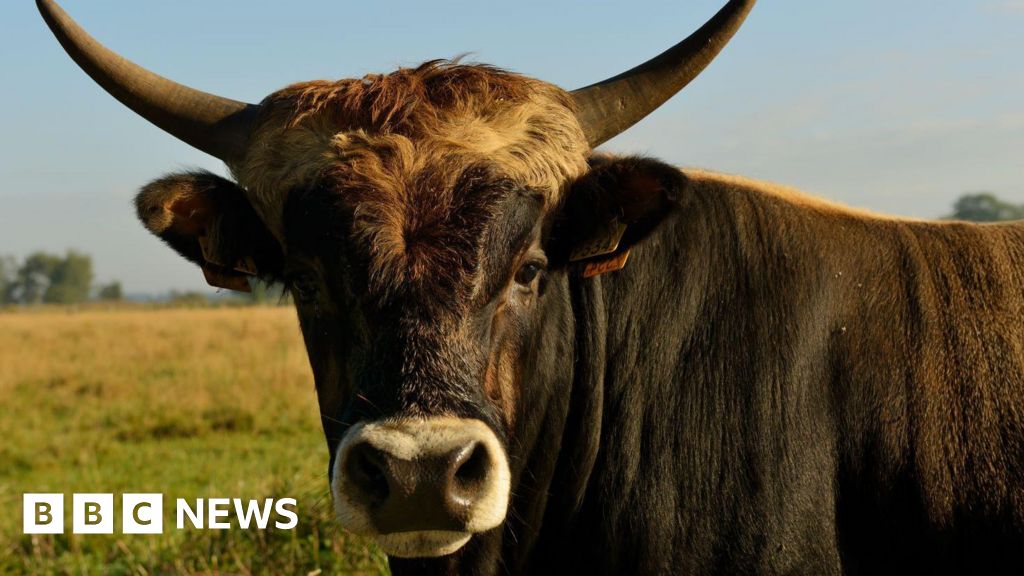
Has the bubble burst on the Scottish land repurposesing drive.

I’ve always thought the word and concept of “rewilding” to be quite vague…and open to interpretation
Does it include the humans and their communities that were present at the time period that rewilders are trying to replicate?

Nearly every developed country has seen a similar pattern, at least during recorded history. The “good old days” had much larger rural populations scratching out a living from “the wild” either from hunting/gathering or small farms. Once the cities developed further, and industrial revolutions happen, the rural areas depopulate.

So what are they seeking, that short transitory period when the rural areas are dehumanized but the wildlife can reap the benefits of an early and artificial transition from agriculture to non-agriculture.

Or are they seeking some mystical time in the past where Irish Elk and Aurochs roamed and humans had only footpaths and fire.
 
I’ve always thought the word and concept of “rewilding” to be quite vague…and open to interpretation
Does it include the humans and their communities that were present at the time period that rewilders are trying to replicate?

Nearly every developed country has seen a similar pattern, at least during recorded history. The “good old days” had much larger rural populations scratching out a living from “the wild” either from hunting/gathering or small farms. Once the cities developed further, and industrial revolutions happen, the rural areas depopulate.

So what are they seeking, that short transitory period when the rural areas are dehumanized but the wildlife can reap the benefits of an early and artificial transition from agriculture to non-agriculture.

Or are they seeking some mystical time in the past where Irish Elk and Aurochs roamed and humans had only footpaths and fire.
Rewilding means as many different things as there are people claiming to be doing it.

I have started calling it ‘conservation gardening’, which REALLY irritates them.

Of course the underlying idea (attempting to reconstruct something approximating an environment before substantial human modification) has been around for over 150 years. But was always called restoration ecology. Rewilding is just trendy (and usually ill-informed) rebranding.
 

Why not. But let’s not stop there. Every abandoned stone Crofter house can be repopulated with Londonites…..
Of course, explain to them they must heat with peat, roof with turf (or thatch if they have woodlands near) and cannot have electricity or internet.
 
  • Like
Reactions: WW.
Rewilding means as many different things as there are people claiming to be doing it.

I have started calling it ‘conservation gardening’, which REALLY irritates them.

Of course the underlying idea (attempting to reconstruct something approximating an environment before substantial human modification) has been around for over 150 years. But was always called restoration ecology. Rewilding is just trendy (and usually ill-informed) rebranding.
Aye
And when asked repeatedly to name one, a friend of mine who is a fairly passionate supporter of "rewilding" was unable to name a single example (certainly in the "developed" world) where a rewilding project or experiment has proven to be truly successful
Some achieve a brief flush of success where the target species and/or general biodiversty improves - but lacking continuous financial input from grants/donations most decline quite rapidly at some point, some catastrophically so
 
Aye
And when asked repeatedly to name one, a friend of mine who is a fairly passionate supporter of "rewilding" was unable to name a single example (certainly in the "developed" world) where a rewilding project or experiment has proven to be truly successful
Some achieve a brief flush of success where the target species and/or general biodiversty improves - but lacking continuous financial input from grants/donations most decline quite rapidly at some point, some catastrophically so
It depends what you include as ‘rewilded’.

There are enormous areas of North America that were clear felled and even cultivated between 1700 and 1900, which are now dense, largely wild forest.

There are also extensive areas of southern, Mediterranean Europe that were quite intensively cultivated up until the late 20th century, and which are now reverting to oak scrub and maquis.

Or there are absolutely vast areas of ex-Eastern bloc countries that are reverting quite rapidly to woodland. The most extreme is Bulgaria, which is a case study in post-industrial woodland expansion.

Nearer to home, the Central Belt of Scotland is covered in patches of woodland, grassland and rough pasture in areas that were very heavily industrialised. In the Edinburgh area alone, I can think of 10-15 areas of quite biodiversity rich woodland that were industrial areas within the last 80 years.

However, these are seldom included when people talk about rewilding. Instead, people tend to mean a very narrow subset of post-agricultural land use changes involving aggressive management to deliberately recreate some sort of Pleistocene-lite environment. Even here, there are examples that have worked, have worked well, and appear to be sustaining that success over at least 20-30 year time scales. The Biesbosch in the Netherlands is a good example. Carrifran woodland in Scotland is arguably another.

It’s worth bearing in mind that the term ‘rewilding’ has only been in common use for maybe 10 years. That’s really too short a time to make any judgements about ecological success.
 
It depends what you include as ‘rewilded’.

There are enormous areas of North America that were clear felled and even cultivated between 1700 and 1900, which are now dense, largely wild forest.

There are also extensive areas of southern, Mediterranean Europe that were quite intensively cultivated up until the late 20th century, and which are now reverting to oak scrub and maquis.

Or there are absolutely vast areas of ex-Eastern bloc countries that are reverting quite rapidly to woodland. The most extreme is Bulgaria, which is a case study in post-industrial woodland expansion.

Nearer to home, the Central Belt of Scotland is covered in patches of woodland, grassland and rough pasture in areas that were very heavily industrialised. In the Edinburgh area alone, I can think of 10-15 areas of quite biodiversity rich woodland that were industrial areas within the last 80 years.

However, these are seldom included when people talk about rewilding. Instead, people tend to mean a very narrow subset of post-agricultural land use changes involving aggressive management to deliberately recreate some sort of Pleistocene-lite environment. Even here, there are examples that have worked, have worked well, and appear to be sustaining that success over at least 20-30 year time scales. The Biesbosch in the Netherlands is a good example. Carrifran woodland in Scotland is arguably another.

It’s worth bearing in mind that the term ‘rewilding’ has only been in common use for maybe 10 years. That’s really too short a time to make any judgements about ecological success.
Well done @Mungo, you fared better than my wildlife group associates 👍

One of the most interesting places is around the site of the Chernobyl incident, wildlife has apparently thrived since humans were forced to vacate the area - but that wasn't the intention of that incident and it's a fortunately rare (unique?) case given that it was such a carastrophic failure of humans which kicked the whole thing off

Most of the more successful rewilding examples, of which I have any depth of knowledge, required support (usually long-term) from central funding, the areas weren't entirely abandoned & left to go their own way
The regrown clear-fell or brwonfield sites weren't usually consciously rewilded either, any "return to nature" was typically an after effect of their abandonment by humans
And
Where areas are abandoned by humans and left to nature it can be argued that they are unlikely to fully return to their original primeval state anyway and probably not without a lot of human effort in the early years at least

I'm involved in a couple of projects here in West London, one of which which has appeared on local & national news as a "success story" - which it is in a way - but it only got going and can only be sustained via a combination of grants, charitable donations & volunteer support. Remove any of those and the whole project will fold, plus it's not an entirely self-sustaining or self-managing ecosystem anyway. Non-native species were removed and must be kept at bay plus the target species has to be managed - ie excess population is trapped and taken to other sites. Thus the area, valuable though it is, will never be truly rewilded in my opinion

Maybe I'm nit-picking though, my cynical disposition showing itself again I suppose
But
I like to think that by my, admittedly limited, participation in such work I'm not a total knee-jerk critic of rewilding (maybe I kid myself)
I just think that too many of those who are self-declared rewilders are deluded/misguided/ill-informed and that the projects they desire are too-often doomed to failure from the start - those who recently abandoned those unfortunate Lynx for example
 
Thus the area, valuable though it is, will never be truly rewilded in my opinion
Nothing can be. That’s pure fantasy. And, if you choose ‘return to primordial state’ as you definition of rewilding, then it’s clearly impossible, so it’s extremely easy (temptingly so) to be critical, and ignore all of the other ways landscapes can be regenerated that provide enormous value to both ecosystems and human health and well being.

Maybe I'm nit-picking though, my cynical disposition showing itself again I suppose
No - I think you’re choosing a very narrow definition of rewilding that ignores 8/10ths or more of the land that has been repurposed from intensive agriculture or industry to conservation.

You seem to be focussing on the stated intention of the land managers and the extent of their intervention. From an ecological perspective, what’s much more important is the functional outcome. You look at a bit of land and ask: compared to what was there before, is this a more biodiverse, more stable ecosystem that can continue to support biodiversity with the lowest possible intervention in the long term? If the answer is yes, then something you can call rewilding has happened, regardless of how it got there.

Whether it’s Lady Fluffington-Benzina-D’Eath’s pet birch wood, or Fast Dave the Honest Broker’s greenwashed hedge fund estate, or the abandoned land between the Israeli and Syrian lines on Mt Hermon, it’s all ‘rewilding’.
 
It depends what you include as ‘rewilded’.

There are enormous areas of North America that were clear felled and even cultivated between 1700 and 1900, which are now dense, largely wild forest.

There are also extensive areas of southern, Mediterranean Europe that were quite intensively cultivated up until the late 20th century, and which are now reverting to oak scrub and maquis.

Or there are absolutely vast areas of ex-Eastern bloc countries that are reverting quite rapidly to woodland. The most extreme is Bulgaria, which is a case study in post-industrial woodland expansion.

Nearer to home, the Central Belt of Scotland is covered in patches of woodland, grassland and rough pasture in areas that were very heavily industrialised. In the Edinburgh area alone, I can think of 10-15 areas of quite biodiversity rich woodland that were industrial areas within the last 80 years.

However, these are seldom included when people talk about rewilding. Instead, people tend to mean a very narrow subset of post-agricultural land use changes involving aggressive management to deliberately recreate some sort of Pleistocene-lite environment. Even here, there are examples that have worked, have worked well, and appear to be sustaining that success over at least 20-30 year time scales. The Biesbosch in the Netherlands is a good example. Carrifran woodland in Scotland is arguably another.

It’s worth bearing in mind that the term ‘rewilding’ has only been in common use for maybe 10 years. That’s really too short a time to make any judgements about ecological success.
What’s your take on the success of “rewinding” based on latitude?
In the Central/South Americas vast swaths of what we now call Jungle was routinely burned and cultivated. I think most spectacularly in the Yucatán.
It just seems to me, that rewilding at higher latitudes is going to be a much slower process, if it succeeds at all, due to the limits in plant progression
 
  • Like
Reactions: WW.
I too feel for the ones being made redundant. A wolf,lynx or bear killing a deer doesn't earn money, a paid stalk does....and pays wages. Eco tourism only goes so far and does not create revenue that fieldsports do.
Sadly with lots of the rewilding debates it’s the countryside as shown on Countryfile they are pursuing rather than involving too many facts and realities and often without involving those who actually live in the countryside
 
rewilding at higher latitudes is going to be a much slower process, if it succeeds at all, due to the limits in plant progression
Of course. That’s basic ecology.

That doesn’t mean it’s not worth attempting to restore degraded environments at higher latitude. It just means the time taken will be longer and expectations need to be managed accordingly.

And as I said at the beginning, if you move away from the very charged term ‘rewilding’ and simply call it ecological restoration, it stops being controversial.
 
Nothing can be. That’s pure fantasy. And, if you choose ‘return to primordial state’ as you definition of rewilding, then it’s clearly impossible, so it’s extremely easy (temptingly so) to be critical, and ignore all of the other ways landscapes can be regenerated that provide enormous value to both ecosystems and human health and well being.


No - I think you’re choosing a very narrow definition of rewilding that ignores 8/10ths or more of the land that has been repurposed from intensive agriculture or industry to conservation.

You seem to be focussing on the stated intention of the land managers and the extent of their intervention. From an ecological perspective, what’s much more important is the functional outcome. You look at a bit of land and ask: compared to what was there before, is this a more biodiverse, more stable ecosystem that can continue to support biodiversity with the lowest possible intervention in the long term? If the answer is yes, then something you can call rewilding has happened, regardless of how it got there.

Whether it’s Lady Fluffington-Benzina-D’Eath’s pet birch wood, or Fast Dave the Honest Broker’s greenwashed hedge fund estate, or the abandoned land between the Israeli and Syrian lines on Mt Hermon, it’s all ‘rewilding’.
Nah
To me rewilding as a term was defined by what is underway in the ANWR area where human residence and activities are gradually being removed. As the current population dies off, no one else is permitted to move to the area, eventually all industrial activity (mostly oil exploration) will also cease and only limited numbers of tourists will be allowed to visit. To me, that framed the term "rewilding" to mean removal of human input and activity from an area - in that case meaning a benign neglect
Anything other than this type of approach is habitat restoration, species introduction and/or environment restoration
As for conservation? Conservation of what? If a biome is heavily degraded, eg industrial brownfield sites/clearfell/formerly agricultural land, then what is to be conserved?
Human involvement, to clean up the mess we made, seems like a prerequisite - even in the likes of Mt Hebron human activity via warfare excluded human activity in the area leaving resident non-human species to get on with things, but it's still not really rewilding though
I suppose my main dislike of the term rewilding derives from my own personal experience gathered from my own involvement in habitat management efforts
As I said in my previous post I am involved in a couple of projects where native species are being reintroduced and/or encouraged to return to where they used to be found
Most of the folk involved in the projects are fine likeable people, but there are some zealots too. The sort who would readily abandon habituated predators into an unsuitable environment or regard those who do as heros rather than misguided idiots
True conservationists or ecologists tend not to be like that, but too many eager amateurs are

You & I probably aren't that far apart in our view actually. Increased biodiversity - without introduction of non-natives as far as possible - is to be desired, I just don't like to adopt the cultish term of rewilding to describe it though
 
Nah
To me rewilding as a term was defined by what is underway in the ANWR area where human residence and activities are gradually being removed. As the current population dies off, no one else is permitted to move to the area, eventually all industrial activity (mostly oil exploration) will also cease and only limited numbers of tourists will be allowed to visit. To me, that framed the term "rewilding" to mean removal of human input and activity from an area - in that case meaning a benign neglect
Anything other than this type of approach is habitat restoration, species introduction and/or environment restoration
As for conservation? Conservation of what? If a biome is heavily degraded, eg industrial brownfield sites/clearfell/formerly agricultural land, then what is to be conserved?
Human involvement, to clean up the mess we made, seems like a prerequisite - even in the likes of Mt Hebron human activity via warfare excluded human activity in the area leaving resident non-human species to get on with things, but it's still not really rewilding though
I suppose my main dislike of the term rewilding derives from my own personal experience gathered from my own involvement in habitat management efforts
As I said in my previous post I am involved in a couple of projects where native species are being reintroduced and/or encouraged to return to where they used to be found
Most of the folk involved in the projects are fine likeable people, but there are some zealots too. The sort who would readily abandon habituated predators into an unsuitable environment or regard those who do as heros rather than misguided idiots
True conservationists or ecologists tend not to be like that, but too many eager amateurs are

You & I probably aren't that far apart in our view actually. Increased biodiversity - without introduction of non-natives as far as possible - is to be desired, I just don't like to adopt the cultish term of rewilding to describe it though
So all we’re really disagreeing about is the word itself.

Which, as I’ve tried to point out, is pointless because it means whatever the person doing it wants it to mean and no two people have the same meaning.

Which makes it seductively easy to be critical of anything that calls itself rewilding, because you can adopt a very narrow definition that renders all attempts futile.

It’s a totally useless word that no serious ecologist uses without hygienic “” placed around it.

I also think it’s time is close to passing, like all fads. There will be a new term along soon to describe the more extreme end of restoration ecology. It’ll be short, catchy, emotive and just as prone to abuse and over use.

With regard to your ANWR example: plenty of world renowned National Parks could be said to have been ‘rewilded’, if that’s your definition. There were thriving human populations inside what are now the Serengeti and Kruger. If you know what to look for, you can see the traces in the vegetation and landscape.
 
  • Like
Reactions: WW.
Back
Top