BASC position on Scottish deer consultation

Conor O'Gorman

Well-Known Member
Consultation:

Managing deer for climate and nature: consultation - Scottish Government consultations - Citizen Space

BASC brief:

The narrative within the introduction to this consultation appears to blame the over population of deer for all loss of biodiversity, when the truth is there are many factors affecting both the climate emergency and biodiversity loss.

It is BASC’s view that native deer should not be relegated to pest status and demonised as a national problem but rather discussed and managed at an appropriate level to deliver nature recovery and would like to see this as part of the narrative of any Scottish strategy.

In general, we welcome this consultation and the opportunity it affords to ensure the long-term sustainable management of Scotland’s deer. However, below are the key points that we believe should be appreciated when considering our responses:
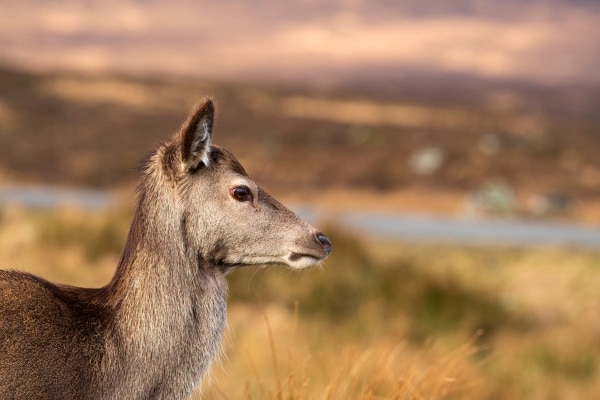
  1. We do not consider deer to be a national problem, indeed in many areas of Scotland the deer populations are well managed at an environmentally sustainable level. We do however accept that certain species in certain areas are a problem. We certainly would not want native deer to be considered as pests to be eradicated.
  2. We believe that the Scottish government should address the impact of all herbivores on natural ecosystems and that this should be based on up to date and valid habitat impact assessments.
  3. As stated above, BASC is the main organisation representing deer stalkers (42,000) and is the main provider of deer management training (approx. 50% of all DSC1/2s annually). As such we are well placed to ensure the sector has the capacity to manage deer, now and in the future.
  4. We believe that the Scottish government should harness the potential of our deer stalker members to act as volunteer deer managers across many parts of Scotland. This is a more long-term, sustainable solution to the management of Scotland’s deer population.
  5. The Scottish government needs to invest in the venison supply chain to ensure that there are no bottlenecks and a demand for all the extra venison that will be produced as a result of an increased cull.
  6. BASC is keen to help deliver the deer management required across Scotland and will work with the Scottish government and its agencies to enable this.
Click the link below for more details:

 
We believe that the Scottish government should harness the potential of our deer stalker members to act as volunteer deer managers across many parts of Scotland. This is a more long-term, sustainable solution to the management of Scotland’s deer population
Good for you generally.

However I have an issue with this position. In my view one of the problems we have is recreational stalkers being too keen on accumulating land and consequently running zoos to take a few prime bucks every year and ignoring the rest of the population. After all the more deer you have the more bucks you have coming up so all the better, eh?

I see this time and time again.

I do not believe deer stalker members should be entrusted as volunteer deer managers without supervision and production of carcasses at a managed larder (ie no more just fiddling the cull returns pretending they are doing the job). At the moment your recreational stalking members are far from a long term sustainable solution to the management of Scotland's deer population, they are in fact one of the problems.

Other than that, well done.
 
Good for you generally.

However I have an issue with this position. In my view one of the problems we have is recreational stalkers being too keen on accumulating land and consequently running zoos to take a few prime bucks every year and ignoring the rest of the population. After all the more deer you have the more bucks you have coming up so all the better, eh?

I see this time and time again.

I do not believe deer stalker members should be entrusted as volunteer deer managers without supervision and production of carcasses at a managed larder (ie no more just fiddling the cull returns pretending they are doing the job). At the moment your recreational stalking members are far from a long term sustainable solution to the management of Scotland's deer population, they are in fact one of the problems.

Other than that, well done.
I’m trying to get back into stalking after long lay-off due to illness.
Trying to get into a syndicate where it’s not about the quality of head but just putting meat on the table for the family is what I’m after.
If I need to get out more to get the cull achieved then fine.
But finding such syndicate for a decent price is proving really hard.

So I understand what you’re saying.
Lastly I didn’t fiddle any cull records as I took a photo of each beast as well as coordinates of the location shot from and strike (as best I could to get shot distance).
Simple to do to provide evidence.
 
Good for you generally.

However I have an issue with this position. In my view one of the problems we have is recreational stalkers being too keen on accumulating land and consequently running zoos to take a few prime bucks every year and ignoring the rest of the population. After all the more deer you have the more bucks you have coming up so all the better, eh?

I see this time and time again.

I do not believe deer stalker members should be entrusted as volunteer deer managers without supervision and production of carcasses at a managed larder (ie no more just fiddling the cull returns pretending they are doing the job). At the moment your recreational stalking members are far from a long term sustainable solution to the management of Scotland's deer population, they are in fact one of the problems.

Other than that, well done.
Thanks, I understand where you are coming from and if the Scottish Government acts on our recommendations there may well be some oversight on that.
 
Good for you generally.

However I have an issue with this position. In my view one of the problems we have is recreational stalkers being too keen on accumulating land and consequently running zoos to take a few prime bucks every year and ignoring the rest of the population. After all the more deer you have the more bucks you have coming up so all the better, eh?

I see this time and time again.

I do not believe deer stalker members should be entrusted as volunteer deer managers without supervision and production of carcasses at a managed larder (ie no more just fiddling the cull returns pretending they are doing the job). At the moment your recreational stalking members are far from a long term sustainable solution to the management of Scotland's deer population, they are in fact one of the problems.

Other than that, well done.

I appreciate that there are land greedy amateurs and professional stalkers out there that hoover up large areas of land.

However if you want good quality animals that produce good heads and excellent carcasses you need a population density that is well below carrying capacity. In other words you need to manage the population well.

If you have too many of any species there will be a huge level of competition and none of them will do well.

So if you are managing deer for good trophies this not at all at odds with managing deer numbers to be below carrying capacity.

If you are managing the deer numbers so that they are of economic value from selling or letting stalking and venison sales you will be optimising numbers for both of these.

Remember that deer stalking estates can provide good economic activity and lots of benefits ti local economy especially through winter months.

Forestry provides minimal economic benefit- once its planted its 30 to 60 years before any return. Minimal local jobs etc. Yes there may be carbon credits etc., but they stay in the hands of the mostly absentee landowners and have minimal effect on the ground.

The net effect of the SNP’s treating of deer as a pest is that many viable sporting estates have let all their staff go. Their housing is now on Air BnB.

For example I know two adjoining estates in Argyle. For the last many years a group of European stalkers would come across for ten days / two weeks in October for the end of the stag season / start of the hinds. A party of ten probably spends best part pf £30k to £40k on local hotels, and stalking fees to local estates.

Last year both estates, which border large areas of Forestry under FLS management could not offer any let stalking as they simply had no deer on their lands. They had all been shot in neighbouring forestry areas. Local hotels normally closed end of November. All shut up beginning of October.

And same story across wide parts of Scotland.

In terms of carbon capture. Drive up to the Flow Country, or just go into the Scottish Borders. Huge swathes of peatbogs have been ruined. Roads pushed through them. Large concrete plinths poured. Large amounts of drainage and wind turbines erected. All owned by EDF ( Electricity de France - the French state owned power company). Nobody is asking how much carbon has been released in the building of these windfarms, nor how much carbon capture is being lost for the future , nor indeed whether these farms will ever breakeven for a carbon perspective.

Coming back to deer being damaging to carbon because they eat young trees, the SNP might want to have a good close look at Hares and Mountain Hares in particular. They are very very good at eating young trees and especially good at making their way through deer fences.

And whilst we are on the subject of fencing, lets just overlook how the fences kill large numbers of birds, in particular black grouse and capercaillie.
 
Last edited:
Back
Top