Freeforester
Well-Known Member
All I will say is if you use tubes get the right bloody size whenever I see new planting done in my area which is full of fallow they put 4 foot tubes on and wonder why the get browsed off.
Lots shoot the buck that, if left to live, keeps all others away. Once he is shot, new pretenders to the kingdom come along, and start thrashing, albeit never the old departed’s former fraying stocks, thus multiplying the damage.

But for sure there’s also an absolute world of poor sylviculture out there, and most foresters fail to understand the tree preferential league according to deer, with oak at the top and Sitka spruce and birch at the bottom. This leads to problems, mostly caused by (their) failure to consider these aspects, whilst the deer and stalker get the blame; the more they shoot, the more damage is created, unless you more or less wipe them out - even though leaving the boss buck would let the overwhelming majority of the trees get away without excessive damage...
Another trend is deer fencing which is grant compliant, but not deer proof.
In the Netherlands they take the sensible approach as advocated by @sillbeam s land manager, it’s certainly the most cost effective way to get them going, as @Greenmist suggests.
But I’ve seen 30% damage done by hares, and the response from the local conservancy was to try to shoot the deer harder, because the hares were out of season! The oaks there are little higher than when they were first planted, the birch are 6- 7metres tall. Fencing keeps as many deer in as out, birch don’t need fencing IME.
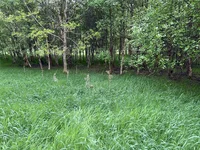
Oaks among birch - lack of thought or indifference ( the ‘forester’ directs but it’s not their money they squander) is the underlying cause, wholly avoidable.
Deer are naturally a woodland creature, and their habits are predictable and known. Whiles the best is to leave one to do the protection of the plantation for you, but to the man with the hammer, every problem looks like a nail.
Last edited: