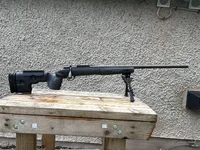
The “T3: why do folk like them?” thread has been interesting, in that one of the strands has become about whether that particular design is “safe enough”, given the particularly features of the safety catch (e.g. it has to be moved to “Off” to open the bolt). More broadly, though, part of the debate appears to be about how “difficult” (or how much of a “faff”) it might be to make a/the rifle safe, for example when getting into or out of a vehicle, getting into a high seat, or crossing a fence etc.
My personal concern is that some of the issues raised in the thread point to underlying poor safety with a rifle, which is arguably a rather broader and more significant issue for all of us as participants in our various branches of the sport.
I was reminded of this very unpleasantly the weekend before last, when on a driven boar shoot in France. We were dropped off along the drives by vehicle, walked in to our firings pulpits (“miradors”, as they are called; 50-100m apart), and each started to sort ourselves out. A few minutes later, I heard a shot. I thought no more about it: given the possibility of boar breaking out before the drive got under way, we had been given to permission to fire when in position.
But at the end of the day I heard that one of the guns had had a negligent discharge, and promptly been escorted off the estate and sent home; I doubt he will shoot there again.
On talking later to his neighbours and a close friend, I understand that what happened was:
- At the end of the previous drive he had unloaded (or, at least, thought he had; see below), removed the magazine, and put the rifle in the slip.
- On taking his post for the next drive, he removed the rifle from the slip and, whilst doing so, it went off, the bullet hitting the ground less than 2ft in from of his feet.
I do not know the precise make of bolt-action rifle (other than it was not a Blaser), but would suggest that this safety failure very likely involved some/all of the following:
- Not pulling the bolt fully to the rear, to extract the round from the breach. This all too often occurs because we worry about losing the “very expensive round” (sic) if we pull the bolt back hard enough to cause it to eject fully. So the temptation is to pull the bolt back just enough to enable us either to catch the round, or to push it back into the magazine again.
- Pushing the bolt forward without physically checking that the round was not still engaged on the bolt, and hence re-chambering the round. Then removing the magazine, and thinking that the rifle is now unloaded.
- It is clearly possible that he just removed the magazine and forgot to cycle the bolt. Same effect.
- Not firing off the action whilst the rifle is under control and pointed to a safe backstop. Not only would this have eliminated the risk of the round still being chambered, but it would also have un-set any set trigger he might have had.
- Touching the trigger, if set, (or even, heaven forbid, pulling it directly) as he removed the rifle from the slip at the start of the next drive.
My personal view is that the only really safe way to unload a bolt-action rifle is:
- Open the bolt firmly and fully. Check the round extracts and ejects fully.
- If the magazine is detachable, leave the bolt fully open, remove the magazine, and then cycle the bolt several times.
- Check both the breech and magazine well are clear.
- Close the bolt, fire off the action into a safe backstop.
BUT, if the rifle has a floor plate magazine, you need to empty this, either by cycling the action, or opening the floor plate. Then check breech and magazine are empty, and fire off the action.
Note that none of this involves the use of the safety to in any way make the process easier or safer: you have to have the rifle fully in your control the whole time, and understand why you are making each movement.
But please do not kid yourself that, if you push the ejected round back down into the magazine and then close the bolt, even supposedly on an empty chamber, your rifle is unloaded. It just has not been made ready yet. Or, at least, you don’t believe that to be the case…..
The vast majority of bolt action rifles made for civilian use in the last century or so have mechanisms derived from military actions. These have generally been proven by being produced in vast quantities, and then used on operations at an intensity that few, if any, of us can comprehend. A consistent lesson from all this has been that safety catches, however well or badly designed, are never a substitute for good personal drills and safety standards. Literally millions of young (and often tired and frightened) soldiers have mastered the “faff” of these basic handling skills; if we cannot, should we be trusted with a rifle to use at all?
PS:
What would you say to the guy whose rifle went off accidentally? How would you treat him, and what would you want before he was shooting next to you again? Genuinely interested to know.