Range to zero a .243 at?

Just out of interest, I ran this through the Sierra Infinity 6 ballistic suite's Maximum Point Blank Range (MPBR) Calculator function. For a scope mounted 1.6" above the bore axis and the Sierra 100gn BTSP Game King at 2,800 fps MV it recommends sight-in at 205yd for a 239yd PBR (ie the bullet does not deviate more than two inches from the sight-line out to that range).

At that zero distance, you'd be +1.93" at 100yd, nearly double what most people suggest / use. However, maximising PBR only gives you another 30 yards maximum range before adjusting the scope elevation setting / holding over compared to the popular 100yd zero + 1" formula. Sighting-in an inch high at 100 sees you out to 210yd before the bullet drop exceeds two inches, our limit if working on a four-inch dia. 'kill-zone'.

So, how many people shoot deer with a .243 at over 200yd range and how important is another 30-40 yards beyond that distance? (As a pure paper puncher, this isn't a rhetorical question to me.)

Obviously a different bullet / MV / scope height affects these figures, but they give some parameters to the debate.
 
Hello, what is the best range to zero a .243 at? What size groups should I be looking at being acceptable?

As the other posters suggest, one inch high for 100yds zero but I would also suggest awareness of cross winds as well. It does not take much to blow these 243 rounds off significantly. If you have access to software, check out the estimated variance.

I was recently running up 100gr Hornady spbt loads on the range recently and they were being blown off by nearly four inches with only a 10mph cross wind at 200 yards - bearing in mind that isnt much more than a light breeze.

Just food for thought.
 
I always zero 1 1/2"-3.5cm high at 100 yards. With a 95gn bullet this will impact approx 2" - 5cm low at 200 yards close approx. This allows me to shoot any species with pretty good accuracy from 40-200 yards. My groups at 100 yards are always within .7" MOA.
Cheers.
 
I zero at 100yds and that will suffice for my stalking.
When I'm having a day long range varminting I use the same zero but dial the shots to compensate for the bullet drop and wind.


1" high at 100yds is not a zero, it simply tells you that you are 1" high at 100yds! Nothing wrong with that providing you have gained the information regarding where your actual zero is.
 
+ 1 :thumb: 1" High at 100 Yds.

Zeroing a hunting rifle to hit a certain number of inches high at 100 yards (or 100 meters) maximizes the point blank range

of the rifle and cartridge and is superior to zeroing at a fixed distance like 200 yards. This system maximizes the distance

in which no "hold over" is necessary.


Rgds, Buck.
 
Last edited:
Now for the can of worms to be opened, group size will be what you get, what you see at 100 maybe larger yet at 200 exactly how much depends in part on the shooter. To some degree the load in question. My zero with my 243 is 2 inches high at 100, so I am good to 325 or so IF my hold is near the spine on the animals found in my state. To learn point of impact at unknown distances with a given zero you must shoot and shoot yet more to see what you can do. I have also built a drop chart with my load out to 400 yds. If the first shot goes well others may not be required on game. Groups are teaching tools for the shooter.
 
Now for the can of worms to be opened, group size will be what you get, what you see at 100 maybe larger yet at 200 exactly how much depends in part on the shooter. To some degree the load in question. My zero with my 243 is 2 inches high at 100, so I am good to 325 or so IF my hold is near the spine on the animals found in my state. To learn point of impact at unknown distances with a given zero you must shoot and shoot yet more to see what you can do. I have also built a drop chart with my load out to 400 yds. If the first shot goes well others may not be required on game. Groups are teaching tools for the shooter.
Pretty sure they found out what they liked in the last 9 years ;)
 
I zero at 100yds and that will suffice for my stalking.
When I'm having a day long range varminting I use the same zero but dial the shots to compensate for the bullet drop and wind.


1" high at 100yds is not a zero, it simply tells you that you are 1" high at 100yds! Nothing wrong with that providing you have gained the information regarding where your actual zero is.
1 inch high at 100 is a zero because you’ve zeroed your scope to shoot 1 inch high at 100 yards.so every shot will be 1inch high at 100 yards.same as zeroing to hit your bullseye or whatever at 100 your rifles then zeroed for 100 yards.You zero your scope for your bullet to hit where your aiming.
 
Will. It depends what you are shooting at. I zero an inch high at 100yds to shoot at roe deer. I got a roe deer at 33 yds the other evening and in the winter will shoot out to about 180 yds in good conditions.

Regards JCS

same as - 1 “ high at a 100 will do everything, 100 grn in Hornady powershock SP Really good all round zero
 
85gn bthp zeroed at 47 yards. checked at 210 yards, doesn't go above or below the Hight of the scope centre to centre barrel for gun out to 243 yards.
So basically if its inside of 250 yards aim normal and its dead, over 250<300 y aim at top of shoulder, same result.
 
I’ve used the 1” high at 100 in Africa and found it useful for longer shots. In the UK I find myself reverting to straight in at 100. If you know your own setup I just adjust off, same as I would do for wind. I certainly don’t faff with turret adjustments. The Streloc lite app is useful in giving you the idea of how much you should be aiming off. You can even set it up for a deer target against your reticle type. Passes the time during some really dull Zoom conferences🤣.
 
So, how many people shoot deer with a .243 at over 200yd range and how important is another 30-40 yards beyond that distance? (As a pure paper puncher, this isn't a rhetorical question to me.)

Me, regularly.

It’s great that proper Maximum Point Blank Range is being discussed, because it sure is misunderstood.

But @finnbear270 is also spot on, a BDC reticle is highly advantageous. So is a ballistic turret and a rangefinder. Several different ways to skin the cat.

So to answer the question properly @WillM, it depends. Depends on (a) your load, (b) your quarry, (c) your scope & reticle.

The 1” high at 100 method is a very simplistic way of zero-ing a rifle. But sometimes simple is good.
 
I’ve used the 1” high at 100 in Africa and found it useful for longer shots. In the UK I find myself reverting to straight in at 100. If you know your own setup I just adjust off, same as I would do for wind. I certainly don’t faff with turret adjustments. The Streloc lite app is useful in giving you the idea of how much you should be aiming off. You can even set it up for a deer target against your reticle type. Passes the time during some really dull Zoom conferences🤣.

move recently changed from the “1” high at 100” method to spot on at 100 as I’ve started using ballistic turrets, it remains to be seen if I will remember to adjust the turret or just hold over a little!🙄

as long as you know where your rounds are going at the ranges you intend to shoot it isn’t an issue.

regards,
Gixer
 
move recently changed from the “1” high at 100” method to spot on at 100 as I’ve started using ballistic turrets, it remains to be seen if I will remember to adjust the turret or just hold over a little!🙄

as long as you know where your rounds are going at the ranges you intend to shoot it isn’t an issue.

regards,
Gixer

My money is you will revert to how you shot before as all that time looking at the turret (and remembering)to turn it the right way will have your head bobbing up and down like a bridesmaids knickers lol

:tiphat:

Tim
 
Agreed, I find turret twiddling often with cold fingers in half light just an added layer of complexity that I can plan out by effective range estimation and familiarity with my set-up. Also, I was taught to use that method from a young age which fits with Tim’s comment about reverting to what you know. I much prefer using my time to observe the animal I am considering shooting to make sure it’s the right beast (age/sex/condition/behaviour etc) to comply with the deer managers cull plan. Unless you’re taking really long range shots where you do have time to ‘dial in’ adjustments as the Americans say...I’d steer clear of it. Just learn your rifle/scope and ammo characteristics.
 
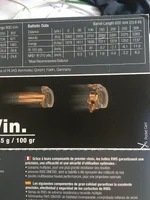
Below is the trajectory Data off a box of RWS 100gn 243 Ammo.

Zero so centre of group is 4cm, or an 1 1/2 high at 100m. 4cm is the length of a 243 case to the shoulder.

And a group of 1 1/2” with all shots from a cold barrel is good enough - this becomes 3” at 200.

looking at the above your bullet strike will be plus or minus 3” out to 200m. Thats good enough for centre of shoulder on any of the bigger deer out to 250. And on Roe, hold 1/3 of the way up out to 200.

This methadolgy is simple and works for all stalking rifle calibres. Its especially important when you shooting different rifles at different ranges and things happen quickly.
FD48553A-6099-4665-8DAE-973A959CA7CB.webp
 
Below is the trajectory Data off a box of RWS 100gn 243 Ammo.

Zero so centre of group is 4cm, or an 1 1/2 high at 100m. 4cm is the length of a 243 case to the shoulder.

And a group of 1 1/2” with all shots from a cold barrel is good enough - this becomes 3” at 200.

looking at the above your bullet strike will be plus or minus 3” out to 200m. Thats good enough for centre of shoulder on any of the bigger deer out to 250. And on Roe, hold 1/3 of the way up out to 200.

This methadolgy is simple and works for all stalking rifle calibres. Its especially important when you shooting different rifles at different ranges and things happen quickly.
View attachment 175495
The only snag in the plan is that someone with an 18" 243 reads the back of the box without realising that those rounds may actually be several hundred fps slower in their rifle. Always good to have actual velocity readings not just factory blurb :thumb:
 
Back
Top