Hard wax oil?

aboynamedjim

Well-Known Member
Hi all, I've just picked up a 1967 marlin 336 & wanted to renew the woodwork. Has anyone has much success with hardwax oils (normally used for tables and the like)? If so any brand or help would be very much appreciated.
 
I recently refinished a couple of shotgun stocks with London Gun Finish. Whilst reading up in advance I saw it said that hard waxes blocked up the grain/pores (in a negative sense) so it was better to use the liquid types for better penetration and longevity.
 
I recently refinished a couple of shotgun stocks with London Gun Finish. Whilst reading up in advance I saw it said that hard waxes blocked up the grain/pores (in a negative sense) so it was better to use the liquid types for better penetration and longevity.
Thanks, were you happy with the result of London Gun finish? My stock is American black walnut not terribly nice example.
 
6F9B15BF-60E4-47B0-994B-63A7B404839C.webp
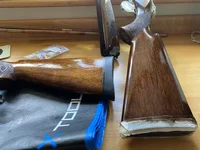
I was- one the left is a Kofs walnut which I did first- should have been braver with stripping back and then oiled-wire wooling between coats. On the right is a poor beech wood Browning 325- I was braver and sanded right back, 5 or more spirit based walnut stain coats and then a dozen finish coats- again, with hindsight I wish I had sanded with oiled 0000 wire wool between finish coats. It’s vastly improved though it will always be a low grade wood.
 
I’ve used the Napier London gunstock kit on a few stocks, the results were superb. For best results you need to sand it right back, stain it and seal the wood. Then it’s a case of applying LOTS of thin coats and wire woolling flat after every coat.
The difference between wax, varnish or lacquer & oil is that oil penetrates into the wood so that the finish becomes part of the wood, whereas all of the other finishes just sit on the surface. 2FEE39B9-B63D-4547-9AB1-10B6C71A5658.webp
 
London Gun Stock finish is what I use if doing shotgun stocks. The finishing coats are applied with resin hardener contained within the oil which is applied in very thin coats, up to 25 coats needed for the best finish. I rub the final coats in using the heel of my palm. As for the comment about hardwax oils blocking up the pores, (filling grain) this is exactly what ALL oil finishes do so makes no sense and is exactly what you want before a finish can be built up. For rifles, I've had good success and a lovely finish using Liberon Fine finishing oil, about 5 to 7 thin coats needed. I use the same oil in my loudspeaker building business and occasionally Osmo hard wax oils, such as poly-X. If using LGF or liberon you can maintain the finish with a little orange oil when needed and buff up with a soft lint free cloth. To begin, I sand back to bare wood then rub with a cloth dampened with white spirits or meths before applying the first oil coats. You can use grain/knot sealer for a faster finish but most oils will penetrate enough to fill softer more open grain anyway. If there's any dents or scratches in the timber, place a lightly damped cloth over the affected area and apply a hot iron to the surface. This will turn the moisture to steam which will swell the wood fibres and raise the grain and you can eliminate most modest dings this way. Just remember to re-sand those areas before oiling.
 
Last edited:
I’ve used the Napier London gunstock kit on a few stocks, the results were superb. For best results you need to sand it right back, stain it and seal the wood. Then it’s a case of applying LOTS of thin coats and wire woolling flat after every coat.
The difference between wax, varnish or lacquer & oil is that oil penetrates into the wood so that the finish becomes part of the wood, whereas all of the other finishes just sit on the surface. View attachment 299804
Nice job. Oils penetrate a little but the final finish comes from building up the coats so yes, these sit on the surface too. Oils are the best choice though imho. They penetrate the surface to bring out the grain contrast better than pure surface lacquers/varnshes.
 
Bea
I’ve used the Napier London gunstock kit on a few stocks, the results were superb. For best results you need to sand it right back, stain it and seal the wood. Then it’s a case of applying LOTS of thin coats and wire woolling flat after every coat.
The difference between wax, varnish or lacquer & oil is that oil penetrates into the wood so that the finish becomes part of the wood, whereas all of the other finishes just sit on the surface. View attachment 299804
Beautiful!
 
I’ve used the Napier London gunstock kit on a few stocks, the results were superb. For best results you need to sand it right back, stain it and seal the wood. Then it’s a case of applying LOTS of thin coats and wire woolling flat after every coat.
The difference between wax, varnish or lacquer & oil is that oil penetrates into the wood so that the finish becomes part of the wood, whereas all of the other finishes just sit on the surface. View attachment 299804
ooooo, look at that! That's beautiful. Not subtle, but beautiful.
 
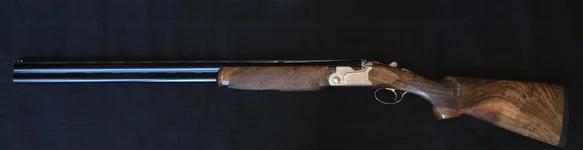
I looked at quite a few examples of this gun and was particularly struck by the grain of this one. From new, Beretta’s finish felt rather ‘dry’ and I felt it didn’t really do justice to the timber, first thing I did when I bought it was to strip the wood back to bare and give it the London oil finish.
The photo really doesn’t do it justice unfortunately, it is much nicer in the hand.

My first attempt at this was with a new Yildiz 28ga junior for my son, the Yildiz come with surprisingly good walnut considering their price. It had a very nice grain running straight through the grip and a nice amount of fiddleback, that also came out really well and when I traded it in a few years later I nearly got what I paid new for it.

The only problem I have is not being able to fully strip the chequering, but with use of a few old toothbrushes they matched the rest of the stock rather well.

As Chester said, I gave them about 25 coats with the final half dozen or so rubbed in by hand and then cut back with the lightest touch and the finest wire wool.

Water just beads and falls off and even when I used a Beretta Gel-tek cheek pad on my son’s Yildiz, to raise the comb slightly, it peeled straight off without marking the finish at all. I have heard that with some types of finish these pads, being sticky, can lift the finish.

I was given the Napier DVD that shows how to use their oil finish kit, if you’re interested I can post a link to my digital copy.

Cheers
 
The walnut is good but it was chosen for its plain straight grain. Not worth dozens of coats of anything else. Polyurethane matte finish: easy to apply and renewable. ~Muir
Muir, you barbarian! And I thought you a civilised sort...
 
Depends on the kind of fIrish you like. Personally, I don't like the shiny look. I followed this video and got good results. Just plain boiled linseed oil and lots of time and patience.

 
Muir, you barbarian! And I thought you a civilised sort...

Nope. Not me. I built myself a 6.5x55 on a Commercial Mauser. Painted the barrel to avoid bluing. Repainted over the scratches several times.
Boiled linseed on a Marlin factory stock? On a hunting rifle? I have better things to do with my time.~Muir
 
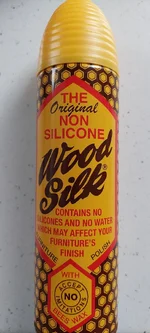
Apart from my Beretta 303 semi auto, all of my guns have oil finished wood. I have used linseed oil based stock oils for over 50 years without any issues. IF the weather is likely to be wet on a shoot day, I spray the woodwork with 'Wood Silk' spray on wax polish the night before. A word of caution though, spray the wood outdoors ! I did one stock in the kitchen which has a plastic tiled floor, my Wife and I spent the following week mimicking 'Dancing on Ice' caused by the overspray !
 

Attachments

  • 20230320_140112.webp
    20230320_140112.webp
    152.4 KB · Views: 2
Back
Top