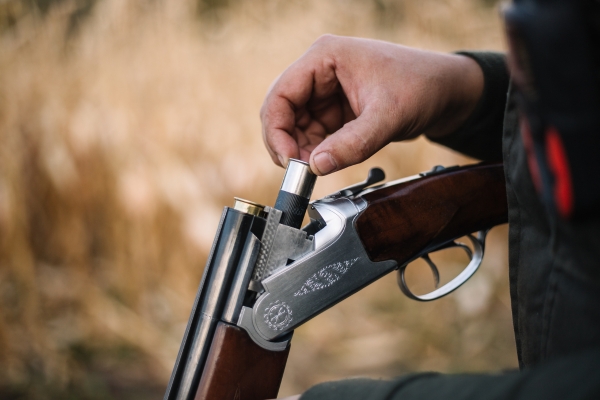
Lead update.

Derogations are neither here nor there. Once you've committed the idiocy of believing the anti-shooting propaganda about lead ammunition, then you've abandoned the principles of sanity and proportionality and you might just as well start burning witches. There is only one position available on lead ammunition which is based on sound science, reason and proportionality and that is that it is not worth banning lead ammunition.

The total amount of lead shot fired in the UK is no more lead than is contained in the soil geology of about 40km2 of soil across much of the UK. The campaign to ban lead is completely irrational.
 
I saw that and I’d encourage you to get a few more shots in before forming an opinion. I’ve shot 1000 of pigeons with steel for feeding birds of prey and although steel is not brilliant its ok at sensible ranges. That’s been my experience any

my son uses copper in his 243 and in 3 years he has shot upwards of 250 deer without any problems. As he says sqweeze trigger, bang, deer flops over and he shots some over a very long range.
Just saying, Tusker
I use copper too, I just don't see that it's a valid argument for banning lead projectiles, nor any of the ridiculous claims that the antis. BASC and other eco loonies come out with
 
It appears that we have governments, regardless of party, that are desperate to throw everything we have at the green, climate change agenda.

This is regardless of the cost to the nation and the fact that our little islands of 1% of the world’s polluters will have no noticeable impact at massive economic cost to ourselves.

I hold no nope that they will see any different point of view other than ‘lead is bad’ and this ban is a foregone conclusion.
 
At the Cheltenham Wildfowling conference, when Harradine said he couldn't tell the difference between shooting lead and steel, the DTI chap pointed out that, although there was no chance of halting the wildfowling lead ban, he thought the RSPCA might find more wounding to be an issue for them to find fault with.l

Tested steel shot again today and it failed again.
Switched to lead and oh look, dead table fare.
View attachment 397846

Looks like I'll be an outlaw soon. But at least my conscience will be clear.
You and me both if Himself is kind enough to let me get to 87/88. Got a good spotted bandana to wear.🤠
 
Interestingly, the FSA does not include venison shot with lead bullets as being a health risk, but only game shot with shotgun pellets or lead balls.
 
I am quite happy using copper although I think my 6.5s used for stalking will need a calibre change. I have read it all and there seems to be little evidence at all for the rifle side of things, possibly more regarding shotguns. ( I cannot see why the majority of of casual shotgun shooters are being penalised when a few people who might one day get an Olympic appearance get a pass!) it may force some of the ammunition manufacturers to to develop more options for projectiles. Assuming depleted uranium is worse than lead!
 
Will have to see if I can find it but not that long ago there was an announcement that the Aussies have stopped their proposed ban on use of lead - there must be some science behind that decision so surely it can be applied just as much here as it can there? @Conor O'Gorman - is BASC aware of this & if so what are they doing about it? (Yes I’m a paid up BASC member & happy to provide details by PM as I’d like you to represent my interests in this respect please.)
I think that might be Victoria in Australia. There were govt proposals to transition away from lead-based ammunition for all game hunting amongst other game regulation proposals and the Sporting Shooters Association of Australia (Victoria) made various arguments against them and the outcome was not to mandate a transition away from lead-based ammunition for deer hunting, but to proceed with an immediate ban on lead ammunition for quail hunting.


The SSSA made various arguments against the proposals and drew on the policy developments over here on lead ammunition in its submissions. There is a Youtube video explaining the ins and outs of it but basically a mix of evidence and politics with some pragmatic decisions needing to be taken.

 
Now we need a legal expert as this is an Annex 15 proposal so possibly can become primary law as a legislative reform order which does not require a parliamentary bill.

over to @Conor O'Gorman

Firstly, as regards the process taking place it's important to remember that the reason for the HSE review of 'lead in ammunition' is Brexit.

Lead in ammunition, and some hazardous substances in tattoo inks and permanent makeup, were the first areas to be reviewed in 2021 under post-Brexit legislation called UK REACH on the control of hazardous chemicals. Northern Ireland is excluded due to the NI protocol and continues to be subject to EU REACH regulations.

Secondly, in June 2023 the HSE proposed its recommendation for a restriction on hazardous substances in tattoo inks and permanent make-up in England, Wales and Scotland. This was the first restriction HSE has proposed since it took on the role of regulatory agency for UK REACH at the start of 2021. See here for more details:


As far as I know there have been no legislative proposals arising from the HSE recommendations for hazardous substances in tattoo inks/permanent make-up or any other substances the HSE has made recommendations for thus far.

Thirdly, since 2021, many more substances have been subject to HSE reviews, again mirroring similar reviews for those substances in the EU (including lead in ammunition). All of this is to ensure continued trade in chemicals with the EU post-Brexit.

This is a new process in the UK and as far as I know there have been no legislative changes as yet.

Fourthly, the following report looks at prioritisation of various hazardous substances reviewed by HSE:


Fifthly, legislative powers to regulate the sale and use of lead ammunition are devolved and there are already lead shot regulations in place in each of England, Wales, Scotland and Northern Ireland. The devolved governments have always had the power to bring in further restrictions (subject to public consultation) regardless of the the HSE review - which only came about because of Brexit.

As per UK REACH process, Defra and the Scottish and Welsh Governments will review the HSE report and decide whether to propose legislation. There is no precedent for the wider UK REACH process being enacted, as far as I know, so this could be the same legislative proposal for England, Wales and Scotland or we could see different laws in different countries - as happened when the lead shot regulations for wildfowl and/or wetlands came into force over 20 years ago.
 
Last edited:
If Brexit was the cause of the HSE review of lead ammunition, why has every other chemical, in particular those used more in workplaces, not been reviewed at the same time?
It seems pretty obvious that this is political, and the Brexit is a red herring - as usual being used as an excuse for completely unrelated faults.
 
Fourthly, the following report looks at prioritisation of various hazardous substances reviewed by HSE:
It seems that CPSA may have further work to do. I note this as "Proposals not considered a priority in 2023/24":

14.​

Description of proposal​

Proposal to restrict the placing on the market and use of substances containing PAHs in clay targets for shooting.

Primary hazards​

Carcinogenic, PBT and vPvB.

Rationale​

Clay targets (also known as clay pigeons) are produced using binders such as coal tar pitch high temperature (CTPHT), petroleum pitch and other types of resins. They are commonly used by sports shooters and small game hunters to practise. During use, these substances can be emitted into the environment, while the collecting of the targets can lead to human exposure.

CTPHT is on Annex XIV of both EU and UK REACH, but authorisation does not apply to the placing on the market of substances in articles, so imports of clays containing CTPHT continue to be permitted.

In July 2021, the European Commission requested that ECHA prepare an Annex XV restriction dossier on substances containing PAHs in clay targets. ECHA proposed to restrict the placing on the market of clay targets containing more than 0.005% by weight of the sum of the concentrations of 18 indicator PAHs, to prevent the import of clays containing CTPHT. A joint opinion by the RAC and SEAC was sent to the European Commission in December 2022 in support of the proposed restriction, which included a 1-year transition period with a 1% concentration limit. The European Commission has not yet decided whether to include the proposed restriction in Annex XVII of the EU REACH Regulation.

The International Sports Shooting Federation already limits PAHs in clay targets for international events such as the Olympics, so the targets used in these events would already be compliant with this proposed restriction. Alternatives with very low or no PAH-content are available, and the UK is a major producer of eco-clay targets, free from CTPHT.

HSE has not received any authorisation applications for CTPHT, which means that it is not legally used in Great Britain for the manufacturing of clays. It has not received any notifications of substances in articles that would indicate imports in large volumes. Any potential imports of clays containing CTPHT are therefore currently limited to volumes under 1 tonne per importer per year, or in concentrations below 0.1% weight for weight.

We will continue to monitor notifications of substances in articles to identify any change in import trends and consider the potential benefits of introducing a restriction in future work programmes.

Also, re lead, these, again "Not a priority in 2023/24"

4.​

Description of proposal​

A proposal to address the risks to the public from lead exposure through direct contact and, predominantly, indirect environmental contact from emissions during PVC articles’ service life, treatment, and disposal as waste.

Primary hazards​

Toxic to reproduction, neurotoxic.

Rationale​

Lead-containing compounds can be used to stabilise PVC. However, the European PVC industry has voluntarily phased out the use of lead in PVC (read more detail on this measure in the VinylPlus Progress Report 2021).

This means that since 2015, virgin PVC produced in the EU (and the UK) should not contain lead. This restriction would only affect imports of lead-containing PVC from outside the EU.

In 2016, a proposal was submitted under EU REACH to restrict the use of lead compounds in finished articles produced from polymers or co-polymers of PVC. However, the European Parliament vetoed the proposal in 2020, which required the EU Commission to submit a revised proposal.

The RAC opinion on the proposal concluded that PVC is a minor source of indirect exposure to lead via the environment, when compared with other sources such as lead shot (HSE have recently published a restriction dossier on lead in ammunition). The EU also identified a potential restriction on PVC and its additives in the Restrictions Roadmap under the Chemicals Strategy for Sustainability. In May 2023 the European Commission decided to include the proposed restriction in Annex XVII of the EU REACH Regulation.

In September 2022 the Environment Agency commissioned a report on additives in PVC to further understand the potential risks to the environment and human health in Great Britain. The evidence gathered will be used to inform the appropriate authorities on the potential issues which may arise from the use of PVC additives, including lead compounds.

11.​

Description of proposal​

A proposal to investigate the risks of using lead in fishing weights and consider if a UK REACH restriction is required through an RMOA.

Primary hazards​

Toxic to wildlife by ingestion.

Rationale​

Fishing weights were historically made from lead because it is readily available, inexpensive, dense and easily mouldable. However, lead is also highly toxic to both human health and wildlife.

In 2019, a proposal was submitted under EU REACH to restrict the use of lead in fishing sinkers and lures as part of a restriction on the use of lead in projectiles. In 2022 RAC and SEAC concluded that restriction is the most appropriate measure to address the identified risks. The European Commission has not yet decided whether to include the proposed restriction in Annex XVII of the EU REACH Regulation.

The prioritisation exercise therefore considered proposals to introduce additional measures on lead fishing weights. Lead fishing weights are not within scope of the proposed restriction on lead in ammunition under UK REACH.

However, lead fishing weights between 0.06g and 28.35g were banned in England in 1986 (similar regulations apply in Wales and Scotland) and the evidence suggests that this ban has addressed the concern. Therefore, this is not a priority for action under UK REACH this year. However, the potential benefits of a restriction under UK REACH to address any uses relevant to fishing that fall outside the scope of the existing bans in Great Britain will be reconsidered when setting priorities in future years.
 
If Brexit was the cause of the HSE review of lead ammunition, why has every other chemical, in particular those used more in workplaces, not been reviewed at the same time?
It seems pretty obvious that this is political, and the Brexit is a red herring - as usual being used as an excuse for completely unrelated faults.

Why do you think Brexit is a 'red herring' in this context?

It is a matter of fact that Brexit was a cause of the HSE review of lead ammunition, as you put it, and let's not forget how this started in 2021, post-Brexit, with premature suggestions for a ban on lead ammunition:

Plans announced to phase out lead ammunition in bid to protect wildlife

The HSE is reviewing the same chemicals that the European Chemicals Agency (ECHA) is reviewing. There is a long list of chemicals involved. ECHA is reviewing lead in ammunition and so is HSE. For more on the post-Brexit role of HSE see:


Over the last three years of the HSE review into 'lead in ammunition', mirroring the ECHA review in the EU, BASC has submitted detailed reports to the numerous HSE consultations and we challenged various proposals we believed were unevidenced, disproportionate to the risks, and/or impracticable.

The key outcomes resulting from BASC, other shooting organisations, and circa 11,000 individuals that provided input to the various stages of the review are as follows:
  • The transition to the restriction proposed for the sale and use of lead shot for live quarry has been extended from three to five years.
  • The transition to the restriction proposed for the sale and use of large calibre rifle ammunition for live quarry has been extended from 18 months to three years.
  • No restrictions proposed for small calibre rifle ammunition
  • No restrictions proposed for airgun pellets.
  • No restrictions proposed for target shooting for 95 per cent of rifle ranges, and no restrictions proposed for the five per cent of remaining rifle ranges that can de-lead.
However, there is much more work ahead and further details are here:

 
So rifle shooters can use lead on a range as the lead can be recovered. Labels on the cartridges will control the use of lead bullets to ensure they are only used for target shooting.

Alas shotgun shooters are less trustworthy and require a ban on all use of lead shoot.

Given that I have FAC and SGC am I schizophrenic??

No doubt HSE have evidence for this conclusion?
 
Down to range, perhaps, and choking of the guns used.

Same as we have been for the last 40 years - these days the birds actually show better
I wondered if it was simply more pellets as most of us are using 32 grams
 
So if all this does go through, where does that leave people that shoot foxes with 243?
Will lead bullets still be allowed for vermin or will that not be allowed either?
 
Back
Top