Stalker62
Well-Known Member
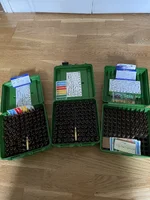
Just had a morning in the Cave, loading up some rounds for the AI.
I have used N140 in all the loads - bullets are 185gr, 175gr and 155gr
From Vihtavuori's web site I have loaded to the maximum for all bullets. What interested me was the lower recommended maximum charge weight for the heavier bullet.
I found this rather helpful explanation - which may (it may not) be informative to others.
It's not that the bullet is heavier, it's that heavier bullets tend to be larger. Larger bullets means it needs to be seated further into the case (due to max OALs for the cartridge design), thus resulting in lower case volume. This lower case volume means two things:
* less powder that can be put in the case (physically, unless you want to go into compressed loads)
* smaller initial volume in which ignition can occur in
Sure, you could try to use the same amount of powder from a lighter load in a heavier load but when considering those two above factors it causes one thing: significantly higher chamber pressures. Igniting the same amount of powder in a much smaller volume results in much higher pressures that eventually lead to (potentially) catastrophic results. That's why most SAAMI specs also list a maximum chamber pressure.
In layman's terms, and the analogy I've seen used and I've always liked is light a firecracker in your hand. One time, with your hand open, and another time with your hand squeezing it tightly. Which will hurt more? The open hand instance is with a smaller/lighter bullet with a larger chamber volume, and the closed hand is the larger/heavier bullet in a smaller chamber volume. Both have the same amount of powder, but depending on the space provided, the explosive reaction needs to go somewhere. That somewhere is your hand, or in the case of the firearm, the receiver. The receiver can only take so much pressure until it fails.
So when reloading specs are done, it's a balancing act (for the sake of this discussion) between the factors of case volume, powder burn rate (which we haven't discussed, but also why you see powder recommendations change depending on the weight/design of the bullet as there are tricks to using a slower burning powder so you don't see that huge pressure spike), and maximum case pressures to insure that there is some safety margin in which the firearm doesn't turn into an IED.
I have used N140 in all the loads - bullets are 185gr, 175gr and 155gr
From Vihtavuori's web site I have loaded to the maximum for all bullets. What interested me was the lower recommended maximum charge weight for the heavier bullet.
I found this rather helpful explanation - which may (it may not) be informative to others.
It's not that the bullet is heavier, it's that heavier bullets tend to be larger. Larger bullets means it needs to be seated further into the case (due to max OALs for the cartridge design), thus resulting in lower case volume. This lower case volume means two things:
* less powder that can be put in the case (physically, unless you want to go into compressed loads)
* smaller initial volume in which ignition can occur in
Sure, you could try to use the same amount of powder from a lighter load in a heavier load but when considering those two above factors it causes one thing: significantly higher chamber pressures. Igniting the same amount of powder in a much smaller volume results in much higher pressures that eventually lead to (potentially) catastrophic results. That's why most SAAMI specs also list a maximum chamber pressure.
In layman's terms, and the analogy I've seen used and I've always liked is light a firecracker in your hand. One time, with your hand open, and another time with your hand squeezing it tightly. Which will hurt more? The open hand instance is with a smaller/lighter bullet with a larger chamber volume, and the closed hand is the larger/heavier bullet in a smaller chamber volume. Both have the same amount of powder, but depending on the space provided, the explosive reaction needs to go somewhere. That somewhere is your hand, or in the case of the firearm, the receiver. The receiver can only take so much pressure until it fails.
So when reloading specs are done, it's a balancing act (for the sake of this discussion) between the factors of case volume, powder burn rate (which we haven't discussed, but also why you see powder recommendations change depending on the weight/design of the bullet as there are tricks to using a slower burning powder so you don't see that huge pressure spike), and maximum case pressures to insure that there is some safety margin in which the firearm doesn't turn into an IED.