

Scotsgun: What 8x57 said about linotype. Here we buy it from alloy dealers. Wheelweights are still legal here and can be had at any scrap yard.
An alloy that will work for your needs is what was once known as "Lyman #2 Alloy" which is a mix of Lead, tin, and antimony in a 10-1-1 ratio, respectively. I believe this can be hardened by heat treating as antimony is the the key there... but don't worry about that now.
To cast you need a mold, a sizer, and lubricant. You already have a heat source so you'll need a small ladle to get the molten metal into the mold. The wax that is stirred into the lead is fefered to as "fluxing" and it just brings impurities to the surface to be skimmed off. It is important. A pea- sized bit of bullet lube stirred in will work. Yes, it may ignite. That's OK.
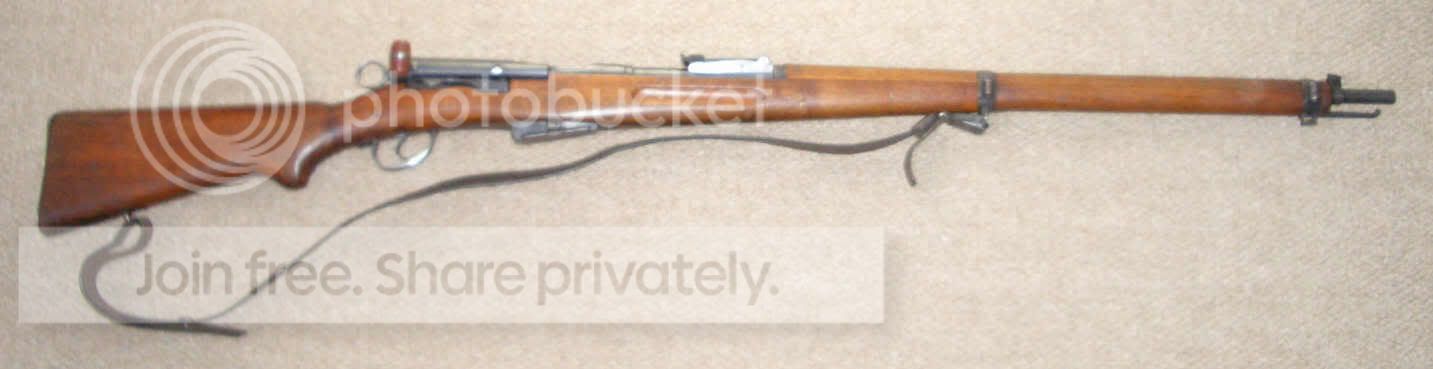
A 190 grain mold would be sweet but I'd shoot for a smaller bullet for now. THe reason is that the Swiss are tight-bored ("bore" meaning the distance from the top of one rifling land to the top of the opposite land) and typical cast bullets for a 30 cal will have a nose that it too fat to slip up into the bore. Usually they are .301" and the Swiss rifles are tyically .299" bore diameter. This forces the bullet to be seated below the shoulder and that is less then optimal. A Lee 160 grain bullet should fit fine.
A "sizer", or "Sizer-lubricator" or called sometimes, "lubrisizer" is a unit like a reloading press that sizes lead bullets by way of interchangable sizing dies, and lubricates the bullets at the same time. They are expensive ($100 US for the basic machine w/o a sizer die) and not necessary, really. Lyman makes the most common one, RCBS is popular and they both take the same dies.
Take a look around for a Lyman Reloading Manual. You'll need this for casting instructions. Casting is not an "intuitive" thing and the Lyman manual will tell you all you need.
It's not as confusing or as hard as it may sound. It just takes a bit of for thought, equipment, some additional care in loading, and a different mind-set than loading for jacketed bullets. In the end, it's a very satisfying endeavor. ~Muir
PS: My most accurate 7,5x55 loads are with cast bullets, hands down.
An alloy that will work for your needs is what was once known as "Lyman #2 Alloy" which is a mix of Lead, tin, and antimony in a 10-1-1 ratio, respectively. I believe this can be hardened by heat treating as antimony is the the key there... but don't worry about that now.
To cast you need a mold, a sizer, and lubricant. You already have a heat source so you'll need a small ladle to get the molten metal into the mold. The wax that is stirred into the lead is fefered to as "fluxing" and it just brings impurities to the surface to be skimmed off. It is important. A pea- sized bit of bullet lube stirred in will work. Yes, it may ignite. That's OK.
A 190 grain mold would be sweet but I'd shoot for a smaller bullet for now. THe reason is that the Swiss are tight-bored ("bore" meaning the distance from the top of one rifling land to the top of the opposite land) and typical cast bullets for a 30 cal will have a nose that it too fat to slip up into the bore. Usually they are .301" and the Swiss rifles are tyically .299" bore diameter. This forces the bullet to be seated below the shoulder and that is less then optimal. A Lee 160 grain bullet should fit fine.
A "sizer", or "Sizer-lubricator" or called sometimes, "lubrisizer" is a unit like a reloading press that sizes lead bullets by way of interchangable sizing dies, and lubricates the bullets at the same time. They are expensive ($100 US for the basic machine w/o a sizer die) and not necessary, really. Lyman makes the most common one, RCBS is popular and they both take the same dies.
Take a look around for a Lyman Reloading Manual. You'll need this for casting instructions. Casting is not an "intuitive" thing and the Lyman manual will tell you all you need.
It's not as confusing or as hard as it may sound. It just takes a bit of for thought, equipment, some additional care in loading, and a different mind-set than loading for jacketed bullets. In the end, it's a very satisfying endeavor. ~Muir
PS: My most accurate 7,5x55 loads are with cast bullets, hands down.


 are you mad


