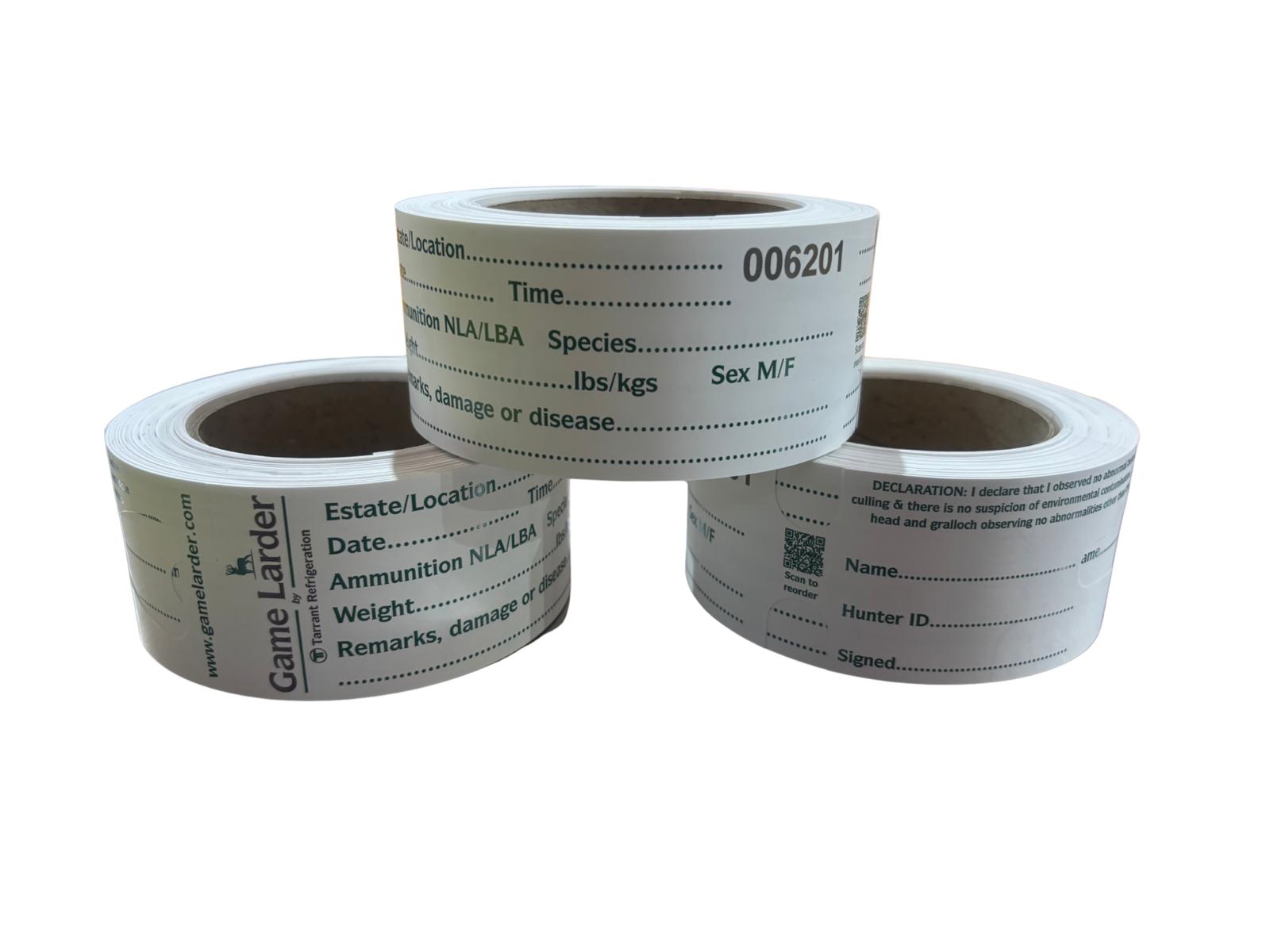
What if there's a carcass issue

Jamie956

Well-Known Member
Hi all
Wasn't sure where to post this really so understand if it's moved
I was told last week (no idea if it's true?) that after April '25 GMH qualifications will only last for 3 years, and after doing my dsc1 just after it lost the addition of LGMH I started looking for a course to book onto, which I can't find any of up here so far (if anyone knows of one please give it a shout out so some of us lot up 'ere might get onto it).
But I've never seen mentioned on here or heard anywhere else if there is or what are the comebacks if a trained hunter puts his number on a carcass and enters it into the food chain but for some reason there's an issue with said carcass. Is the tag just information about the animal or should people check to see if their insurance covers these sorts of things?
Cheers
 
That is a very good question, and something we ought to discuss. Thanks for raising it.

I guess in the first instance, you're going to have to refund whoever bought the carcass from you, if it went to an AGHE and the problem was identified there.
If the venison has travelled further down the food chain than that then I suppose the local authority would initiate a product recall.
I think it would be up to your local authority to take whatever action against you they deem appropriate.
Public & Product Liability insurance ought to cover you if anyone gets sick, provided that you weren't negligent.

Only guessing here. I'm pretty much a novice at all this, really.
Perhaps someone who's been in the business for longer than me can shed a bit of light?
 
If best practice has been followed and the trained hunter has performed due diligence this should never be an issue that can be attributed that far back. The majority of issues (in my view) would be created due to poor practice further along the chain, so the carcass tag really just records the start of the process. Here in Scotland we need to be licensed as a venison dealer to buy and sell venison, with associated records, checks, HACCP, etc, so any issues arising from poor practice, contamination, poor temperature control, etc. should be easily traced to the responsible party. I would think England would be just the same, with the exception of the Venison Dealers License requirements.
 
Last edited:
This is spot-on IMHO as the initial supplier of the carcass has ZERO control over what happens to it after collection
Exactly! The checks and measures are all sensible and more than reasonable in my opinion, and they're pretty effective in establishing a chain of accountability from start to finish.
 
This is spot-on IMHO as the initial supplier of the carcass has ZERO control over what happens to it after collection.

K
I have inspected it so the chain starts with me, I deliver mine so the lads take it/them from the tub on to a rail inspect it, weigh it, take the recorded weight/s to the office. So the control is very controlled. :tiphat:
 
This is spot-on IMHO as the initial supplier of the carcass has ZERO control over what happens to it after collection.

K
Which is true but I get the impression the OP is asking about an issue that the Trained Hunter missed either accidentally or negligently. Maybe serious infection, contamination, disease etc. Something that could be argued they should have noticed and the carcass never made it to the game dealer.
 
I get the impression the OP is asking about an issue that the Trained Hunter missed either accidentally or negligently. Maybe serious infection, contamination, disease etc. Something that could be argued they should have noticed and the carcass never made it to the game dealer.
It should be picked up at the very next step in the chain. I.e. a trained hunter passes a contaminated/diseased/otherwise unfit carcass for inspection to an AGHE, the AGHE should immediately condemn it. If it's a serious transgression EHO should be notified and the trained hunter responsible dealt with appropriately. And so on and so forth down the line.

Each step in the process is intended to act as a safeguard. So it's effectively a gated process. If anything goes awry at any stage (negligence, ignorance, equipment failure, etc.) the very next stage should put the brakes on and highlight that the previous stage resulted in a problem.

It's a very safe and workable system to my mind.
 
Last edited:
Maybe I should of written my first post a bit differently.
Presuming the animal was observed before the shot, then examined externally, then checked properly while been gralloched and being kept clean and at the correct temperature etc etc you get the picture , basically all steps done properly while in possession of the stalker so they've done their bit, then what issues could arise from things that are not visible to the human eye but the stalker might get the finger pointed at him for?
Given how the world is nowadays are you entering a potential blame game when you tag the carcass..."oh I don't know see the man who performed the previous stage" or "ey don't blame us you'll have to see x, y or z about it", basically the bigger companies trying to hang the rope round the single man at the beginning of it all
And has anyone ever heard of such a problem?
it's just something I've never seen mentioned that was all
J
 
If as you say, not visible to the naked eye, you did your due diligence as a trained hunter, then no blame for anything between you shooting it, to the hand over with your tag at the game dealers,
you are not taking samples as in shooting Boar, & you are not equipped to put some slides under a microscope.:thumb:
 
It should be simple , when they come to process the carcass and THEY notice something the hunter should have declared , if they deem suitable they will condemn it and give notice to the hunter who will then forfeit his cash may have to pay a fee for disposal?? ,,
 
Maybe I should of written my first post a bit differently.
Presuming the animal was observed before the shot, then examined externally, then checked properly while been gralloched and being kept clean and at the correct temperature etc etc you get the picture , basically all steps done properly while in possession of the stalker so they've done their bit, then what issues could arise from things that are not visible to the human eye but the stalker might get the finger pointed at him for?
Given how the world is nowadays are you entering a potential blame game when you tag the carcass..."oh I don't know see the man who performed the previous stage" or "ey don't blame us you'll have to see x, y or z about it", basically the bigger companies trying to hang the rope round the single man at the beginning of it all
And has anyone ever heard of such a problem?
it's just something I've never seen mentioned that was all
J
Care to elaborate on who told you a certificate would only last for 3 years as that was in your original post?

As to comeback to the original stalker, if you have done your job you should be fine, taken as a whole venison is low risk, as far as I'm aware there has only been one case that involved an ecoli outbreak in 2015, it was traced back to the game dealer, not sure what the outcome was.
Just to cover your own back, make sure you have the 'correct' insurance cover.
 
Presuming the animal was observed before the shot, then examined externally, then checked properly while been gralloched and being kept clean and at the correct temperature etc etc you get the picture , basically all steps done properly while in possession of the stalker so they've done their bit, then what issues could arise from things that are not visible to the human eye but the stalker might get the finger pointed at him for?
None.
 
Maybe I should of written my first post a bit differently.
Presuming the animal was observed before the shot, then examined externally, then checked properly while been gralloched and being kept clean and at the correct temperature etc etc you get the picture , basically all steps done properly while in possession of the stalker so they've done their bit, then what issues could arise from things that are not visible to the human eye but the stalker might get the finger pointed at him for?
Given how the world is nowadays are you entering a potential blame game when you tag the carcass..."oh I don't know see the man who performed the previous stage" or "ey don't blame us you'll have to see x, y or z about it", basically the bigger companies trying to hang the rope round the single man at the beginning of it all
And has anyone ever heard of such a problem?
it's just something I've never seen mentioned that was all
J
I’d too be interested in the three year claim of your OP?
As @devon deer stalker says if your worried check your insurance.
Also take photos of carcass and galloch if feasible. Very overkill in my opinion.
 
A point on product liability insurance. The industry has a real problem with this (for the reasons mentioned above by @Quixote and @Klenchblaize ). In the case of a claim it is virtually impossible to find where the issue was as so many involved in the chain.

Most (all?) product liability policies cover you for legal costs but not for any fine if you’re found at fault.

I paraphrase, but as long as you’re not the weakest link in the chain then you can’t be found liable. It’s all about burden of proof and, for example, how many individuals/ end consumers have a HACCP in place, have been inspected by LA or have records of temps or can demonstrate food hygiene practices in a domestic kitchen?
 
I think the query was more aimed at the final consumer than any producers in the chain. The very final validation that any food is fit for consumption rests with the end user, all prior checks and balances are designed to ensure it's fit for consumption when it reaches the end stage
 
  • Like
Reactions: 75
It was an agricultural college tutor that said about the 3 year thing, no idea whether it's something they have anything to do with or if it was jyst something he heard, just thought I'd ask as I'm looking for a GMH course to do.
I was only really wondering as a person of less experience and having never heard it mentioned what possible outcomes there are if someone ends up poorly from eating venison one of us put in the food chain that's all
Theres one thing...it doesn't appear to be common so that's good 👍🏻
 
Back
Top