
You are using an out of date browser. It may not display this or other websites correctly.
You should upgrade or use an alternative browser.
You should upgrade or use an alternative browser.
Does heavy rain effect a bullet
- Thread starter mike308
- Start date


 , I would assume you would have a 3 inch bullet drops if zeroed at 100 yds, and a broad side chest shot I would give it an extra inch of bullet drop. - will be good to hear some educated answers to this


bluesako
Well-Known Member
me and my mate who both shoot 17 rems, were told by a guy behind the counter at a shop at minsterly range, that you shouldnt shoot in the rain ? why i asked, because the rain pushes the bullet down and you will miss what your shooting at he said , what a complete tosser to have working in a gun shop, giving people advise like that, i looked at my friend, he looked at me, and both left the shop never to return  bs. ps so with that sound advise we both drove 350 miles up to scotland but when we arrived it was raining so we came home what a load of bollocks
bs. ps so with that sound advise we both drove 350 miles up to scotland but when we arrived it was raining so we came home what a load of bollocks
So does heavy rain slow the bullet?
No.
The chance of you hitting a droplet of water is very very tiny... There is so much air and so little rain drops that the chances are infitesimally small. Also when it's raining the air is less dense so the bullet 'flies' straighter.
Stalker-of-the-deer
Well-Known Member
For all practical purposes at stalking ranges no.
Physical rain won't do anything to a bullets travel.
Nor will wind slow your bullet down.
What I will say is you called it right. If your not confident then you don't take the shot and good on you for deciding not to.
now, if you were shooting over a very long range on a targets then yes the conditions 100% would make a difference.
Its wind direction/angle that is the problem after about 200m a tail or headwind is negligible.
Cold and wet - cold dense air, more drag on bullet you need to factor in more drop. But that's over extremely long distances.
Nothing for us stalkers to worry about!
Physical rain won't do anything to a bullets travel.
Nor will wind slow your bullet down.
What I will say is you called it right. If your not confident then you don't take the shot and good on you for deciding not to.
now, if you were shooting over a very long range on a targets then yes the conditions 100% would make a difference.
Its wind direction/angle that is the problem after about 200m a tail or headwind is negligible.
Cold and wet - cold dense air, more drag on bullet you need to factor in more drop. But that's over extremely long distances.
Nothing for us stalkers to worry about!

Smellydog
Well-Known Member
We stopped shooting the 17 Remington in the rain when foxing. To many misses to be a coincidence.me and my mate who both shoot 17 rems, were told by a guy behind the counter at a shop at minsterly range, that you shouldnt shoot in the rain ? why i asked, because the rain pushes the bullet down and you will miss what your shooting at he said , what a complete tosser to have working in a gun shop, giving people advise like that, i looked at my friend, he looked at me, and both left the shop never to return
I have also seen a hollow point blow up midway to the target. I was watching from behind the shooter in the rain. Made a crack too.
this is an interesting article on the effects of wind, ie cross, head, vertical and horizontal winds. My take from this is that there is little effect on 100yds compared to 600yds

 www.sierrabullets.com
This one on the effects of rain, suggests that rain does indeed have an impact and the rain does hit bullets in motion
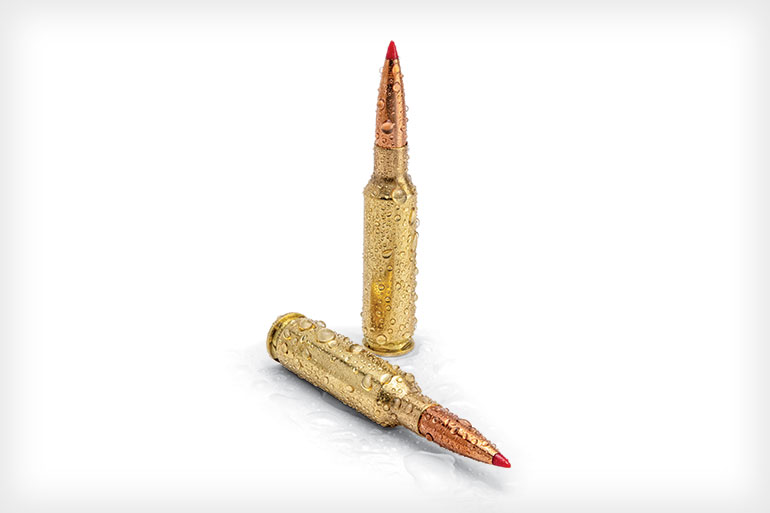
 www.gunsandammo.com
3.2 Effects of Winds - Sierra Bullets
www.sierrabullets.com
This one on the effects of rain, suggests that rain does indeed have an impact and the rain does hit bullets in motion
Effects of Rain on Bullet Trajectory - Guns and Ammo
Does shooting in the rain affect a bullet's trajectory?
www.gunsandammo.com
In your scenario, almost certainly not.Yesterday evening I passed on a shot at a stag at 190 yards because it was raining very heavily plus a strong headwind. I was worried that the two together could slow the bullet.
So does heavy rain slow the bullet?
Firstly headwinds, and tail winds have almost no effect on trajectory. It is the cross wind component that matters. Your bullet is flying at, lets guess, something like 3000 fps. Which is 2046 mph. So even if you have say a force 8 gale blowing (about 40 mph) as long as it is directly along the bullet's path, it is practically irrelevant. However wind can swirl about, so what may seem entirely "in your face" at the firing point could be entirely different further away.
Next, the rain. Your 190 yard shot. Again at say 3000 fps the flight time of your bullet might be 0.2 seconds. What are the chances of it hitting a big raindrop, sufficient to cause a deflection, in that time ? If you drive a car down the road in teeming rain, how much of that actually hits the windscreen in 0.2 seconds ? How fast do your wiper blades sweep it away ?
Thirdly, atmospheric considerations. Generally, here, rainstorms are associated with low pressure. Which makes the air less dense, so bullets (at longer ranges) will rise, not fall.
Fourthly, in heavy storms, atmospheric humidity is pretty much 100%. Which (maybe counter-intuitively until you understand) reduces the air density. Bullets again will fly higher, not lower. Just as in extremely low humidity, air becomes denser and bullets drop.
Long range target (paper or furry) types need to consider the atmospherics primarily. Shooting a stag at 190 yards, far less so.
Considerations should be whether you are comfortable taking the shot, not soaked to the skin, cold, the rifle slippery in the hands, the 'scope, and spectacles beaded or dripping with water (good coatings, for both riflescope and glasses, if you wear them, make a huge difference, as does a wide brimmed hat)
Then water running down inside the barrel, or filling up the mod. Stop that by e.g. taping it over, use a condom, or even one of the fancy orange silicone re-usable plugs that Mauser used to sell for this purpose.
Next question might be whether taping or otherwise sealing the muzzle against water affects accuracy. All that I can say is it seems not, based on some mucking about on the range with the club. Electrical tape, even two layers of gaffer tape, the condom, and even a disposable foam earplug (the club .308 took on that challenge, it was pretty much shot out anyway) had no discernible effect. The club 308 survived unscathed, three times, as did the earplugs Recovered within a few metres, all looking good as new.
Actually I thing the gunsandammo article concludes quite differently. The experimental setup was purpose designed to image a bullet actually hitting a raindrop, which they cleverly managed to do, but tells very little about the chances of that happening in reality.this is an interesting article on the effects of wind, ie cross, head, vertical and horizontal winds. My take from this is that there is little effect on 100yds compared to 600yds
3.2 Effects of Winds - Sierra Bullets
This one on the effects of rain, suggests that rain does indeed have an impact and the rain does hit bullets in motion
Effects of Rain on Bullet Trajectory - Guns and Ammo
Does shooting in the rain affect a bullet's trajectory?
Here is another one An Official Journal Of The NRA | Does Rain Lower Your Bullet's Point of Impact?
What really can mess up a shot though is deflection from even a grass blade, leaf, plant stalk, twig or other such thing. Shooting prone off a bipod, or using a high mag. scope that can't focus on nearer objects does not help. And no "brush buster" chamberings are something of a myth.

Really? A change in atmospheric pressure will overcome the force of gravity? You've got a lot of convincing to do to persuade me that a bullet - which under normal conditions is falling from the moment it leaves the barrel - will suddenly start to go upwards.Thirdly, atmospheric considerations. Generally, here, rainstorms are associated with low pressure. Which makes the air less dense, so bullets (at longer ranges) will rise, not fall.

The only impact of rain on copper is it tarnishes.
K
K
It's odd that the assorted PhDs didn't bother to see if the simulated "raindrop" their bullet hit was the same size as a real raindrop. Measuring from the photos in the article it was abnormally large - not much less than the .30 calibre bullet. Most raindrops are a small fraction of that size.this is an interesting article on the effects of wind, ie cross, head, vertical and horizontal winds. My take from this is that there is little effect on 100yds compared to 600yds
3.2 Effects of Winds - Sierra Bullets
This one on the effects of rain, suggests that rain does indeed have an impact and the rain does hit bullets in motion
Effects of Rain on Bullet Trajectory - Guns and Ammo
Does shooting in the rain affect a bullet's trajectory?
Really? A change in atmospheric pressure will overcome the force of gravity? You've got a lot of convincing to do to persuade me that a bullet - which under normal conditions is falling from the moment it leaves the barrel - will suddenly start to go upwards.
In @Sharpie 's defence: When it's raining the air is less dense so the bullet 'flies' straighter, ie the POi will be higher than if it's not raining as there is less drag. Gravity is unaffected by rain and the same force is applied so you are correct @VSS the bullet is falling from the moment it leaves the barrel.
You jest surely. Rise vs. fall in relation to the sightline of your rifle, mostly related to 'scope height above boreline. Less, BTW, is not always more.Really? A change in atmospheric pressure will overcome the force of gravity? You've got a lot of convincing to do to persuade me that a bullet - which under normal conditions is falling from the moment it leaves the barrel - will suddenly start to go upwards.
Gravity sucks, always downwards. Unless say you are shooting in microgravity but still within Earth's field, or say on the Moon, or Mars. I don't think that say Kestrel, Applied Ballistics, or even Hornady with their 4-dof ideas have a solution for those applications.
For we terrestrials, living in a very thin layer of approx. five mile bottom to top, of 78 percent nitrogen, 21 percent oxygen, 0.9 percent argon. And tiny amounts of other things, water vapour, CO2 etc. however shooting at longer distances than say 190 yards might require some use of "solvers" to do it repeatably.
A headwind will slow the bullet and induce bullet drop whereas a tail wind will induce a bullet to rise. The real issue is by how much.
Interesting brief article.
 bisonballistics.com
Interesting brief article.
Why Headwinds are More Difficult than Crosswinds
How shooting in a crosswind is different than shooting in a headwind.
bisonballistics.com
I remain unconvinced. I accept that a bullet may fall less quickly under certain climatic circumstances (and therefore the point at which it descends through the line of sight will be further away), but I do not accept that a bullet in flight will rise instead of fall due to atmospheric pressure.You jest surely. Rise vs. fall in relation to the sightline of your rifle, mostly related to 'scope height above boreline. Less, BTW, is not always more.
Gravity sucks, always downwards. Unless say you are shooting in microgravity but still within Earth's field, or say on the Moon, or Mars. I don't think that say Kestrel, Applied Ballistics, or even Hornady with their 4-dof ideas have a solution for those applications.
For we terrestrials, living in a very thin layer of approx. five mile bottom to top, of 78 percent nitrogen, 21 percent oxygen, 0.9 percent argon. And tiny amounts of other things, water vapour, CO2 etc. however shooting at longer distances than say 190 yards might require some use of "solvers" to do it repeatably.

I took the 'rise' to mean that the bullet would impact higher than normal.I remain unconvinced. I accept that a bullet may fall less quickly under certain climatic circumstances (and therefore the point at which it descends through the line of sight will be further away), but I do not accept that a bullet in flight will rise instead of fall due to atmospheric pressure.
So if your bullet (rifle zeroed at 100m) would normally drop 4" at 200m, in the conditions discussed, the bullet would impact say 1" higher than normal (only dropping 3" from the 100m zero), so 'rise'. This would be noticeable if you dialled your scope up, or aimed off, then found the impact was indeed higher than expected on the target.

It was purposely set up to do just that. An extreme case. Which proved something, and mostly nothing.It's odd that the assorted PhDs didn't bother to see if the simulated "raindrop" their bullet hit was the same size as a real raindrop. Measuring from the photos in the article it was abnormally large - not much less than the .30 calibre bullet. Most raindrops are a small fraction of that size.
Back to my analogy, drive along as fast as you dare through a torrential rainstorm. The raindrops flood downwards from the sky at just the same rate, and volume density. That cross section of raindrop vs. clean air remains the same, and very small. Another analogy, when the rain pours down, you can either stand still, batten down your hat and coat, even raise your umbrella and stick it out. Or you can make a run for it to shelter, if not prepared and get very wet, even at jogging pace, probably down your front.
Lets say even a big .30 bullet, blasting 200 metres in a fraction of a second through almost entirely air, with a fractional percentage of relatively tiny water drops, is most unlikely to have a capture cross section to actually hit one. Nevermind several.
I never said that, that would be nonsensical. Just that it's point of impact will probably be higher than otherwise under more standard conditions of atmospheric pressure/altitude, humidity and temperature.I do not accept that a bullet in flight will rise instead of fall due to atmospheric pressure.
Which is why external ballistics calculators can take this into account. Or even be integrated with some very fancy gadgets which also measure pressure, temperature and humidity. As well as integrating with rangefinders, and windmeters with directional vanes, and compasses, clicked in to GPS location to sort out the latitude correction variables depending which direction you are shooting , whilst eschewing boring stuff like ballistic coefficients, G1, 5, 7 etc. but preferring proprietary doppler radar characterisation. Yes some people love this sort of gadgetry.
But quite what this has to do with declining an otherwise straightforward shot at a medium range stag, in a bit of inclement weather, I'm not sure. But better to be safe than sorry.
Similar threads
- Replies
- 8
- Views
- 589
- Replies
- 40
- Views
- 2K


- Replies
- 49
- Views
- 2K
